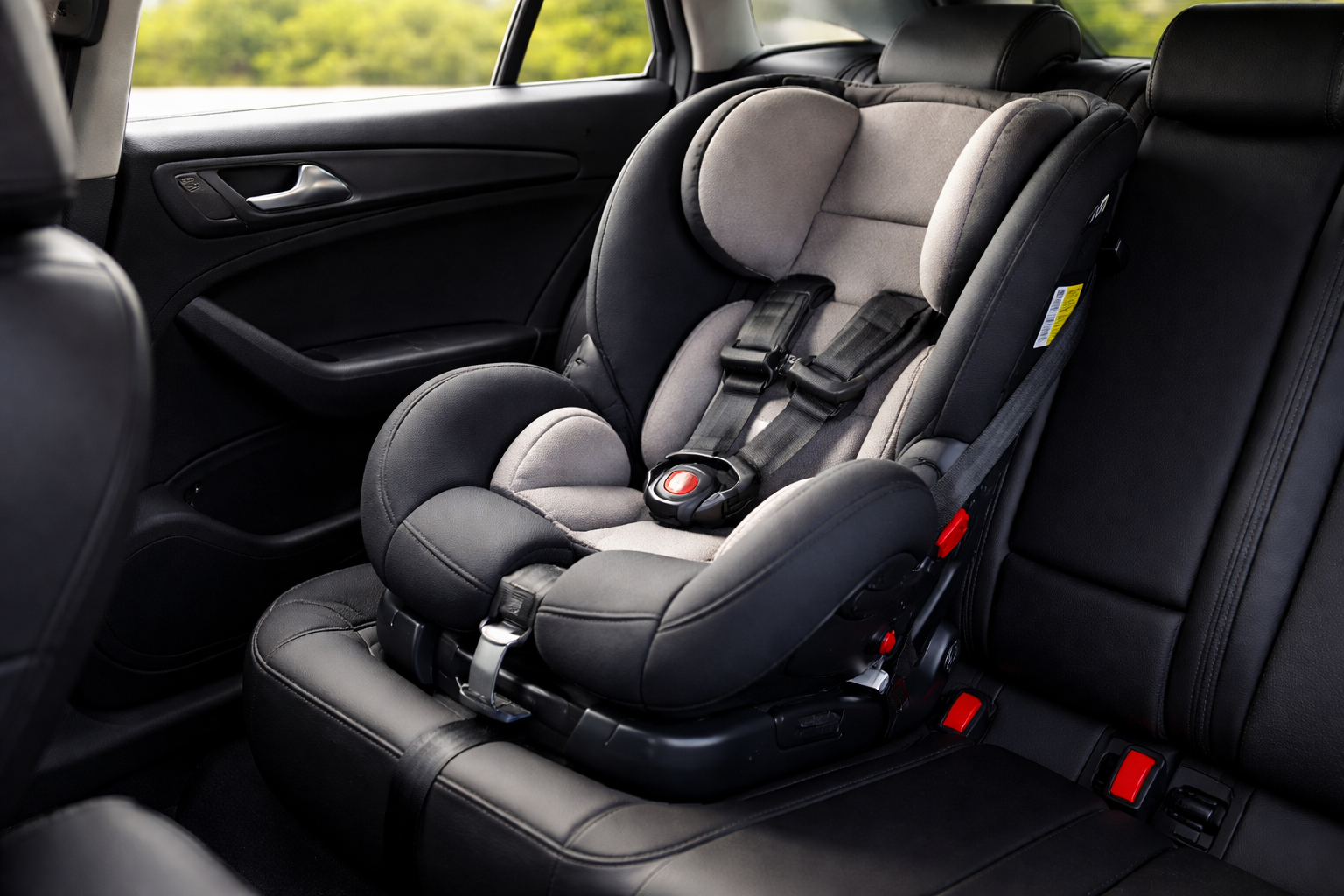

Children rely entirely on adults to protect them. On the road, that protection begins before the engine starts, with the correct use of a child restraint system. While regulations are clear, enforcement campaigns repeatedly show that misuse remains widespread.
Protection only works when systems are correctly fitted and consistently used.
Contents
Why Child Restraints Are Essential
Children are not small adults. Their bodies are still developing, with different proportions and weaker skeletal structures. Standard seat belts are not designed to protect them effectively.
Child restraint systems are engineered to distribute impact forces appropriately for a child’s size and stage of development. Without them, injury risk increases dramatically, even at relatively low speeds.
The Most Common Mistakes
Typical errors include:
- Using the wrong size or type of seat,
- Installing the seat incorrectly,
- Leaving harnesses too loose,
- Allowing the shoulder strap to sit incorrectly,
- Switching to a forward-facing seat too early.
Each of these reduces the level of protection the system is designed to provide.
Short Journeys Are Not Safer
Many parents lower their guard on familiar, short trips — school runs, quick errands, or visits nearby. Yet collision risk does not disappear because a journey is brief.
Impact forces remain the same regardless of distance travelled.
Rear-Facing Protection
Where possible, rear-facing child seats provide significantly greater protection for young children, particularly in frontal collisions. The design supports the head, neck, and spine more effectively during sudden deceleration.
Following manufacturer guidance and current safety recommendations is critical.
Regular Checks Matter
Child seats should be checked periodically to ensure:
- They remain securely fitted,
- Straps are adjusted correctly as the child grows,
- There is no wear or damage,
- Installation remains compliant with vehicle specifications.
Growth happens gradually. Adjustments must keep pace.
Responsibility Every Time
Children cannot remind adults to secure them correctly. Responsibility rests entirely with the driver and supervising adults.
Taking a few extra seconds to check installation and harness tension is not inconvenience — it is protection.
Child restraint systems are among the most effective life-saving measures available for young passengers. Getting it right, every single time, is one of the most important decisions made before any journey begins.
Discover more from N332.es - Driving In Spain
Subscribe to get the latest posts sent to your email.