

Winter brings colder mornings, frosty evenings, and the natural urge to wrap up warm. Thick coats, scarves, gloves, and layered clothing are a sensible response to the cold — but once inside a vehicle, they can create unexpected safety risks. Many drivers are unaware that what they wear can directly affect their ability to control the vehicle and stay protected in a collision.

Contents
Bulky Clothing Restricts Movement
Heavy coats and thick jackets limit shoulder and arm movement, making it harder to steer precisely, react quickly, or turn to check blind spots. This restriction may be subtle, but in an emergency situation — such as sudden braking or evasive steering — even a small delay can have serious consequences.
Before driving, it is advisable to remove bulky outerwear and keep it within reach instead. This allows full freedom of movement and better vehicle control.
Seatbelts Must Fit Correctly
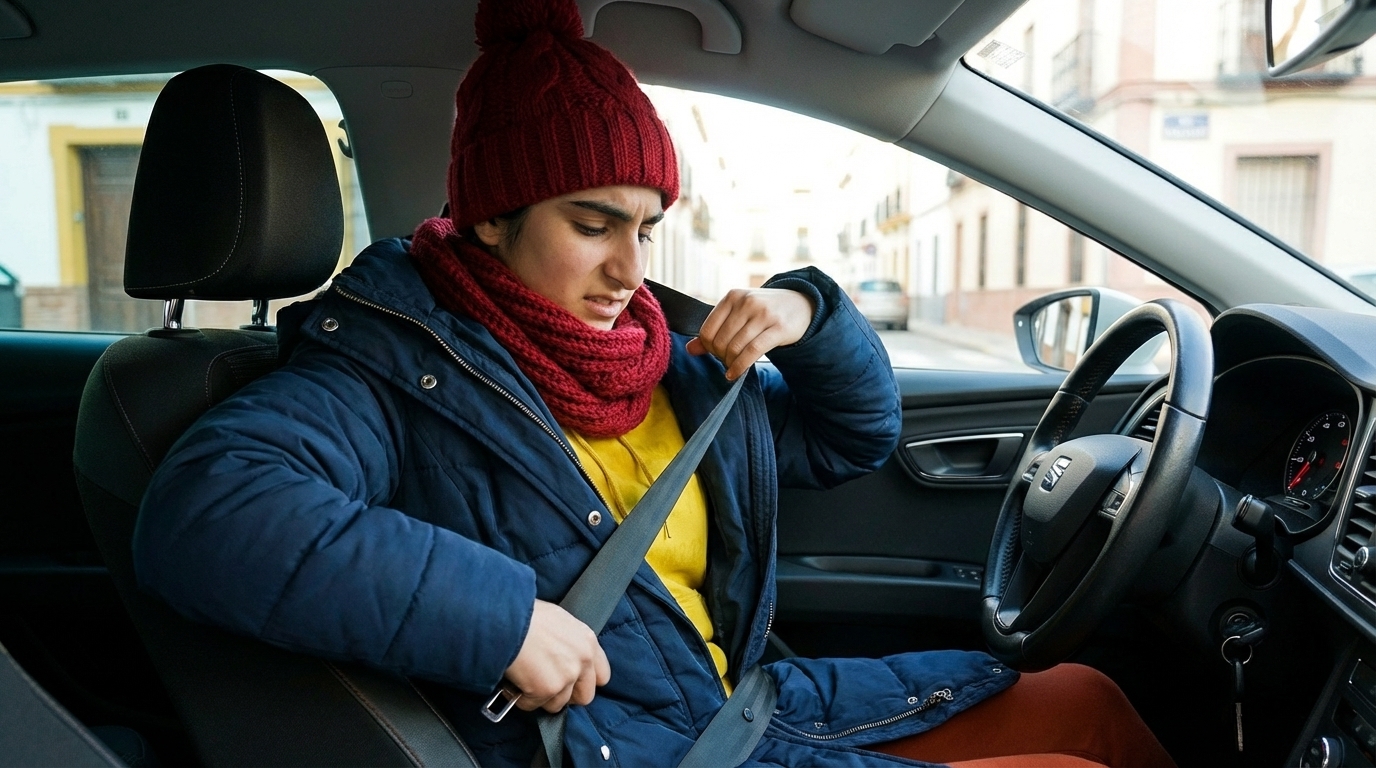
Seatbelts are designed to sit close to the body. Thick coats create space between the belt and the torso, reducing its effectiveness in a collision. In a sudden stop, the body may move more than intended before the belt restrains it, increasing the risk of injury.
Removing heavy coats ensures that the seatbelt lies flat and snug across the shoulder and chest, offering maximum protection.
Scarves, Hoods, and Visibility Issues
Scarves and high collars can restrict neck movement, making it harder to check mirrors or look over the shoulder. Hoods may also reduce peripheral vision, particularly when reversing or navigating tight spaces.
Clear visibility in all directions is essential, especially in winter when light levels are lower and roads are busier during peak hours.
Gloves and Grip
Some drivers wear gloves to keep their hands warm, but not all gloves are suitable for driving. Thick or slippery materials can reduce grip on the steering wheel, affecting steering precision.
If gloves are worn, they should allow good tactile feedback and a secure grip. Otherwise, warming the car briefly before setting off is often the safer option.
Passengers and Children Matter Too
Children wearing thick coats or padded jackets may not be properly restrained by seatbelts or child seats. In these cases, it is safer to remove bulky clothing and use blankets once the belt or harness is correctly fastened.
This is particularly important on short journeys, where complacency can creep in.
A Simple Winter Routine
Before driving in cold weather:
- Remove bulky outer clothing.
- Adjust the seat and mirrors comfortably.
- Fasten the seatbelt securely against the body.
- Ensure full freedom of movement and clear visibility.
Staying warm is important, but staying safe is essential. By dressing appropriately for driving, winter journeys become more comfortable, controlled, and secure for everyone in the vehicle.
Discover more from N332.es - Driving In Spain
Subscribe to get the latest posts sent to your email.

You must be logged in to post a comment.