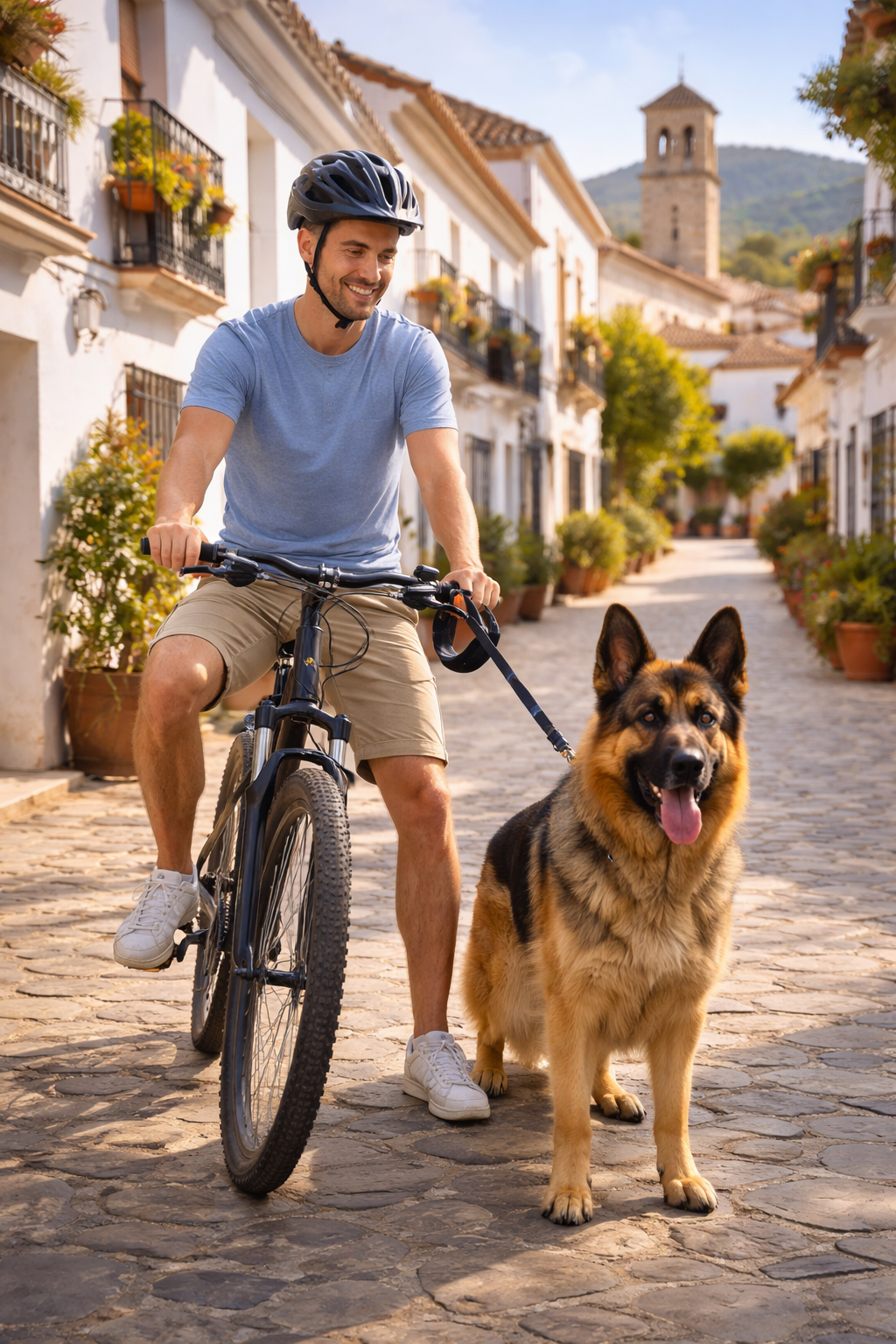

It is a sight that appears regularly on roads, cycle paths, and promenades: a cyclist riding while a dog runs alongside, attached by a lead. While it may seem like an efficient way to exercise both human and animal, it is in fact one of the most dangerous practices seen on shared routes.
This behaviour puts lives at risk and breaches animal welfare principles.
Contents
Why the Practice Is So Dangerous
Dogs are unpredictable by nature. Sudden noises, other animals, pedestrians, or unfamiliar smells can cause them to stop, pull, or change direction instantly. When a dog is attached to a moving bicycle, any sudden movement can destabilise the cyclist.
A minor pull on the lead is enough to cause a fall. At speed, that fall can place the cyclist directly into traffic or into the path of other road users.
The Risk to the Animal
Dogs running alongside a bicycle are at risk of:
- being dragged if they stumble,
- suffering injuries to joints and paws,
- becoming exhausted without warning,
- panicking and bolting into traffic.
The animal has no control over speed, direction, or stopping distance. What may appear to be “keeping up” can quickly become distress or injury.
A Hazard for Other Road Users
A cyclist being pulled unexpectedly can swerve into other cyclists, pedestrians, or vehicles. The lead itself may become a hazard, stretching across paths or roadways in a way that others cannot anticipate.
Drivers approaching such a situation face an impossible prediction problem: neither the cyclist nor the animal behaves in a predictable way.
Animal Welfare and Legal Responsibility
Animal welfare rules exist to protect animals from harm, stress, and injury. Forcing a dog to run at cycling speed, without the ability to stop or rest naturally, conflicts with those principles.
In addition, cyclists are required to remain in full control of their vehicle. Holding a lead attached to an animal removes that control.
Safer Alternatives for Exercise
Dogs benefit from regular, appropriate exercise, but it should always be suited to their physical abilities and instincts. Safer options include:
- walking at a natural pace,
- using designated off-road areas,
- allowing free movement in secure spaces,
- separating cycling and dog walking into different activities.
Responsibility Means Thinking Beyond Convenience
What appears convenient can carry serious consequences. Cycling with a dog on a lead risks injury to the animal, the cyclist, and others who share the space.
True care means choosing methods that protect wellbeing — not shortcuts that endanger it.
Discover more from N332.es - Driving In Spain
Subscribe to get the latest posts sent to your email.