

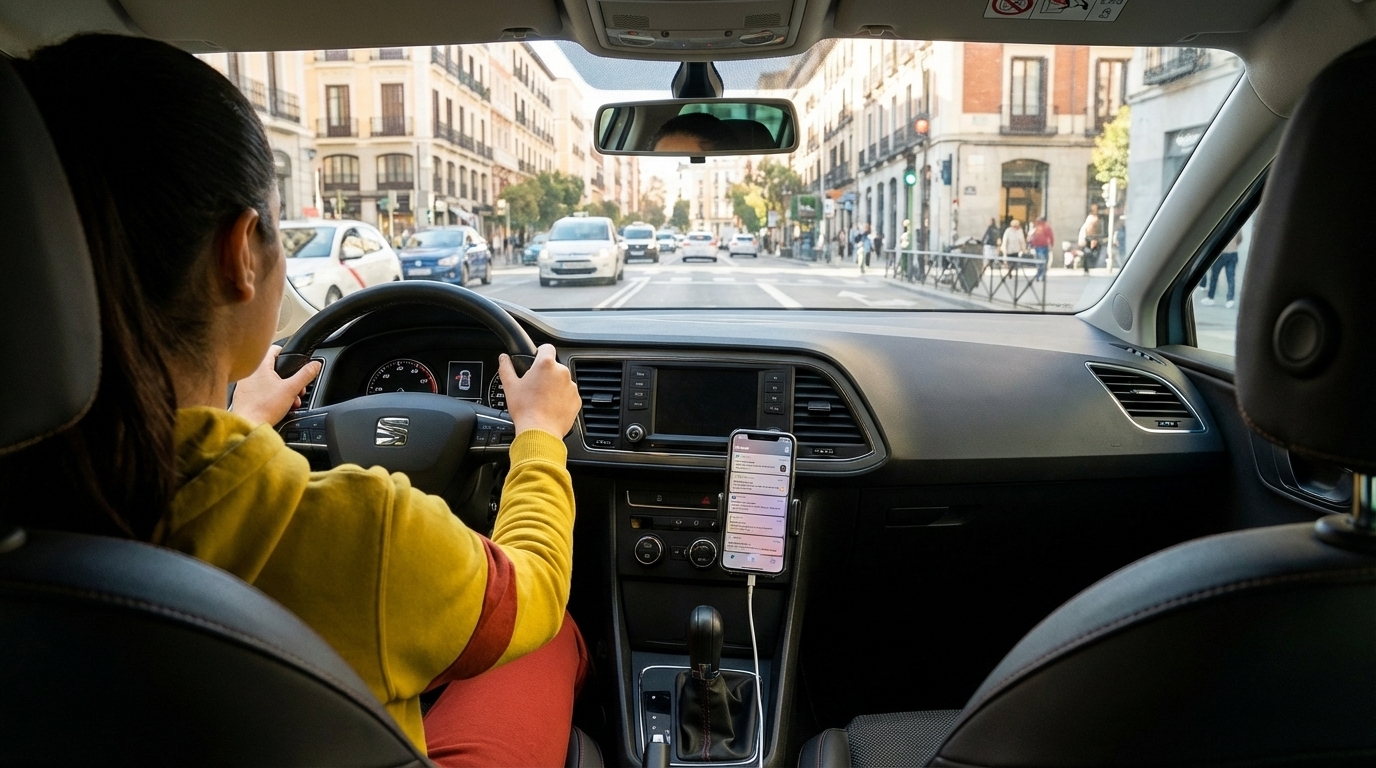
For many people, January means adjusting to new technology. New mobile phones, upgraded operating systems, and unfamiliar features quickly become part of everyday life. While this is usually harmless at home, it can become extremely dangerous once driving is involved.
Distraction remains one of the leading causes of serious road collisions, and unfamiliar devices significantly increase that risk.
Contents
Why New Phones Are More Distracting
Even experienced drivers who normally use their phones responsibly can become distracted when using a new device. Muscle memory no longer applies, menus are unfamiliar, and basic tasks such as adjusting volume or answering a call require more attention than expected.
This leads to longer glances away from the road and a greater mental load, reducing reaction times when something unexpected happens.
Set Everything Up Before Driving
One of the most effective ways to reduce distraction is to prepare the phone before entering the vehicle. This includes:
- pairing the phone with the car’s hands-free system,
- setting navigation favourites and contacts,
- adjusting notification settings,
- disabling non-essential alerts.
Learning how the phone works at home, in a calm environment, avoids temptation to experiment while driving.
Hands-Free Does Not Mean Risk-Free
Hands-free systems reduce physical distraction, but they do not remove cognitive distraction. Conversations, message alerts, and navigation changes still divert attention away from driving.
Drivers should keep interactions brief and avoid adjusting settings while the vehicle is moving. If something needs attention, the safest option is to pull over and stop.
Passengers and New Devices
Passengers, particularly children and teenagers, may also receive new phones during the festive period. Notifications, sounds, and requests for help can distract the driver.
Setting clear expectations — such as asking passengers not to hand phones forward or request help while driving — helps maintain focus.
A Moment’s Distraction Is Enough
At 50 km/h, a car travels almost 14 metres per second. Looking away from the road for just two seconds means driving blind for nearly 30 metres. In busy urban environments or at junctions, that distance can be the difference between stopping safely and a serious collision.
Start the Year With Better Habits
January is the perfect time to build safer routines. By setting up new phones at home, resisting the urge to interact while driving, and prioritising attention on the road, drivers reduce risk for themselves and everyone around them.
Discover more from N332.es - Driving In Spain
Subscribe to get the latest posts sent to your email.


You must be logged in to post a comment.