Many road safety improvements involve technology, infrastructure, or enforcement. The Dutch Reach is different. It costs nothing, requires no equipment, and takes only a second — yet it has the potential to prevent serious injuries and save lives.
The danger it addresses is one that many drivers underestimate.
Contents
Dooring: A Hidden but Serious Risk
“Dooring” occurs when a vehicle door is opened into the path of a cyclist or scooter rider. The rider either collides directly with the door or swerves suddenly into traffic to avoid it. Both outcomes can be catastrophic.
These incidents often happen in urban areas, on roads that drivers consider familiar and low risk. That familiarity is part of the problem.
What Is the Dutch Reach?
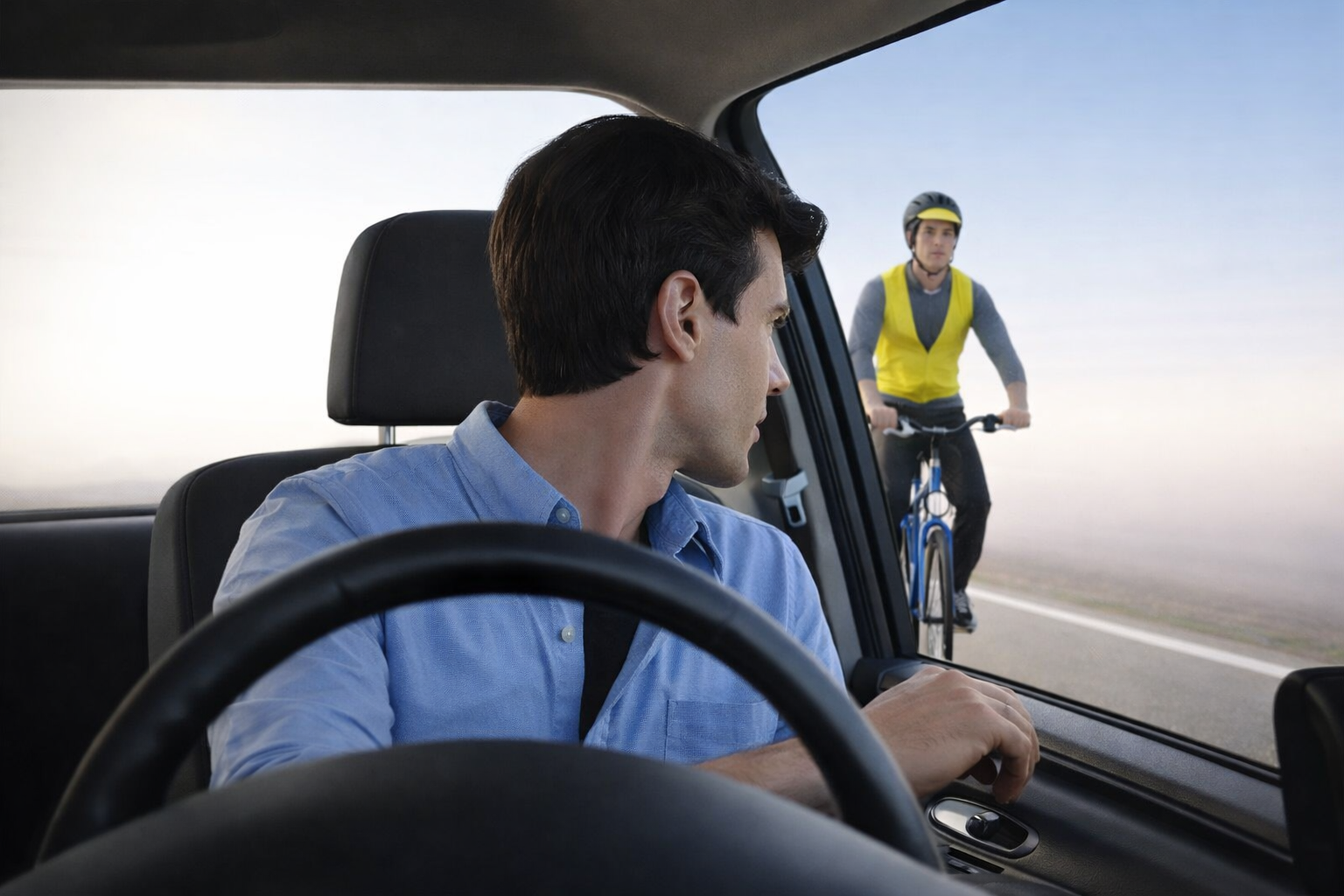
The Dutch Reach is a simple method of opening a car door using the hand furthest from the door. For the driver sat in the left seat, this means using the right hand to open the door.
This small change naturally causes the upper body to rotate, forcing the head and shoulders to turn. As a result, the driver looks behind them and into the area where cyclists and other road users may be approaching.
It is not about remembering to look — it is about making looking unavoidable.
Why It Works So Well
Many dooring incidents happen because drivers rely solely on mirrors or peripheral vision. Cyclists can move quickly and quietly, often appearing just as the door is opened.
By physically turning the body, the Dutch Reach improves awareness of blind spots and closing speeds. It replaces assumption with observation.
It Protects More Than Cyclists
While the Dutch Reach is often discussed in relation to cyclists, it also protects:
- scooter riders,
- motorcyclists filtering through traffic,
- pedestrians walking close to parked vehicles,
- children stepping into the road unexpectedly.
Any road user travelling alongside parked vehicles benefits when doors are opened thoughtfully.
Make It a Habit, Not a Thought
The strength of the Dutch Reach lies in habit formation. Once practised consistently, it becomes automatic. There is no need to consciously remember to check — the action itself prompts the check.
Teaching this habit to children, new drivers, and regular passengers helps embed safer behaviour across generations.
Small Actions, Real Impact
Road safety does not always require dramatic change. Sometimes it requires a different way of performing the most ordinary actions.
The Dutch Reach is a reminder that small movements can have profound consequences. By adopting it as a routine habit, drivers can reduce risk, protect vulnerable road users, and make everyday journeys safer for everyone.
Discover more from N332.es - Driving In Spain
Subscribe to get the latest posts sent to your email.