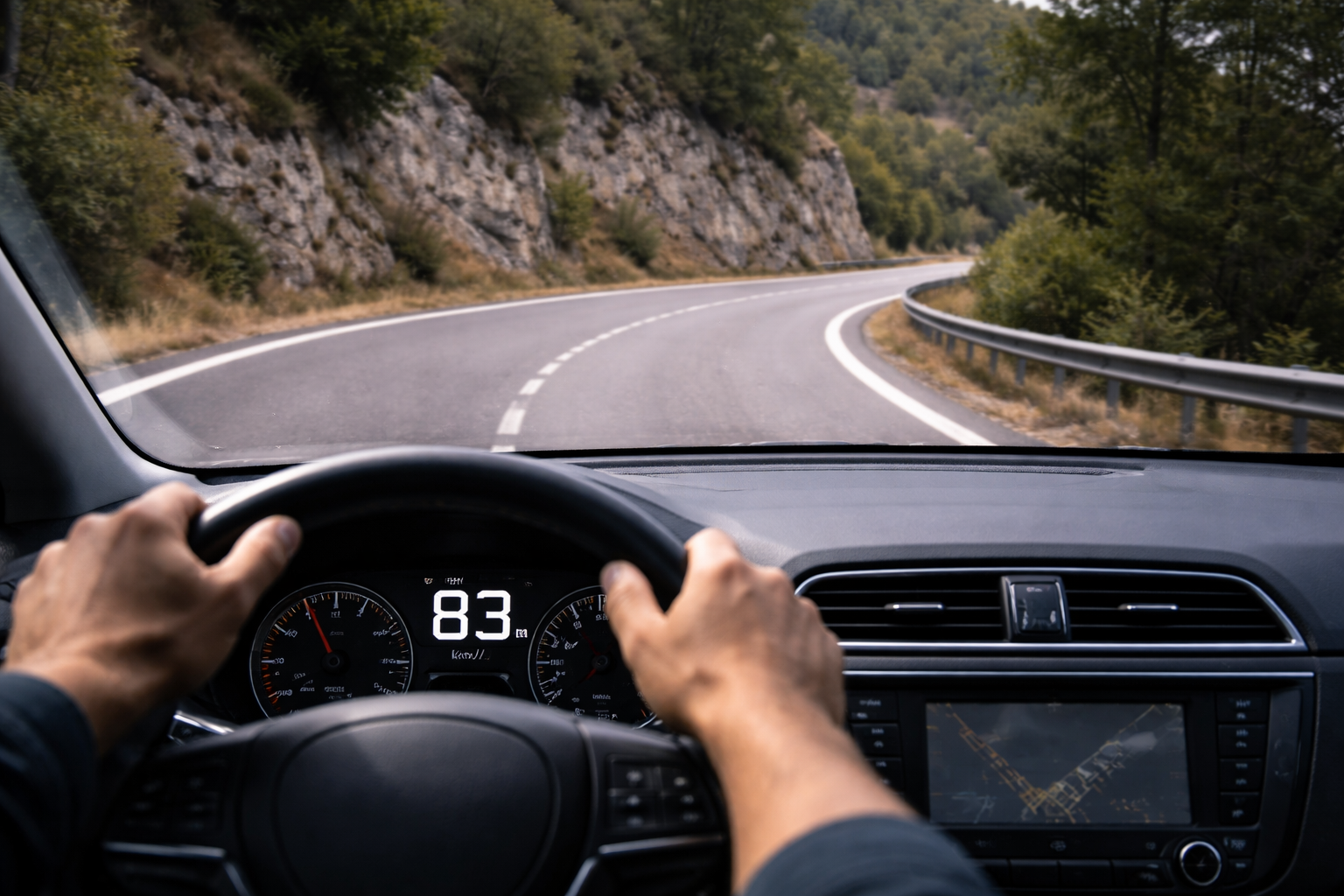

When people think about road collisions, they often imagine vehicles striking each other. Yet on many rural and interurban roads in Spain, one of the most frequent and serious types of incident involves a single vehicle leaving the road entirely.
These collisions often have severe consequences — and they are frequently preventable.
Why Leaving the Road Is So Dangerous
When a vehicle leaves the carriageway, it may encounter:
- roadside obstacles such as trees, barriers, or poles,
- uneven ground or ditches,
- sudden changes in surface grip,
- rollover conditions due to slope or terrain.
Unlike controlled braking on a road surface, these environments offer little opportunity to regain control once the vehicle has departed the lane.
Speed Reduces the Margin for Error
Inappropriate speed is one of the most common contributing factors. It is important to understand that “inappropriate” does not always mean exceeding the legal limit.
Driving at a speed that is too high for the conditions — including bends, surface quality, or visibility — reduces the driver’s ability to respond safely.
At higher speeds:
- steering corrections become more difficult,
- braking distances increase,
- recovery from minor errors becomes less likely.
Rural Roads Require Greater Attention
Many of these incidents occur on rural roads where:
- bends may be sharper than expected,
- visibility is limited by terrain or vegetation,
- road surfaces may be uneven or degraded,
- animals or debris may appear suddenly.
Familiarity with a route can lead to overconfidence, increasing the risk of misjudging a bend or hazard.
Loss of Control Happens Quickly
A small misjudgement — entering a bend slightly too fast, braking too late, or reacting suddenly — can lead to loss of traction. Once control is compromised, particularly at speed, the opportunity to correct the situation is limited.
This is why prevention is far more effective than recovery.
Adapting Speed to Conditions
Safe driving requires constant adjustment:
- reducing speed before bends,
- increasing caution on unfamiliar roads,
- allowing for changing surface conditions,
- recognising that visibility limits stopping distance.
Speed should always match the environment, not just the posted limit.
A Preventable Pattern
Collisions involving vehicles leaving the road are not random events. They follow a pattern — speed, misjudgement, and reduced margin for error.
Breaking that pattern starts with awareness and adjustment.
Staying on the road is not guaranteed. It is achieved through decisions made before reaching the hazard.
Discover more from N332.es - Driving In Spain
Subscribe to get the latest posts sent to your email.