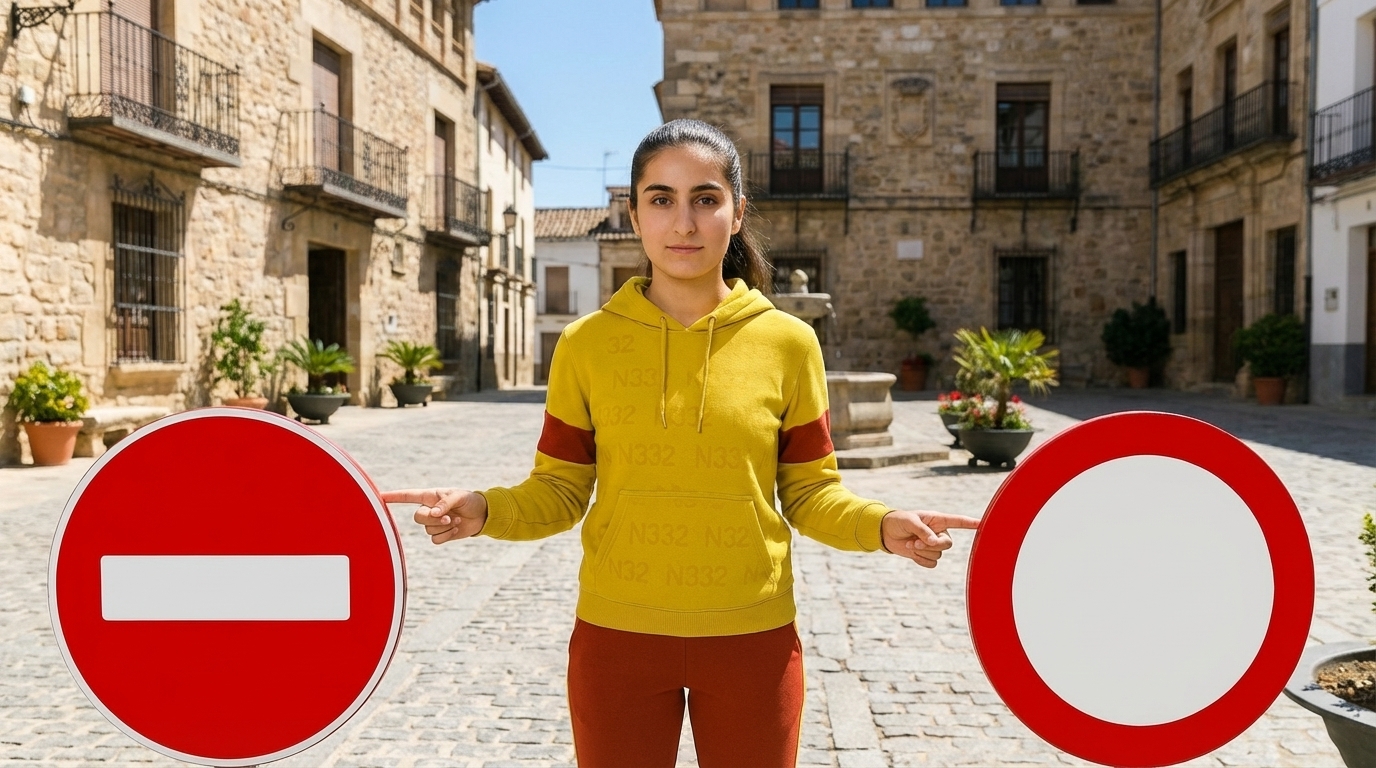
Road signs are designed to give clear instructions at a glance, yet some of the most familiar signs are also the most misunderstood. In Spain, confusion between the No Entry sign and the No Vehicles sign is surprisingly common, despite the fact that they prohibit very different types of movement.
Understanding the distinction is essential for safe and lawful driving.
Contents
The No Entry Sign: One Direction Only
The No Entry sign is a red circle with a horizontal white bar. It means that vehicles are not permitted to enter from that direction, but traffic may still be allowed in the opposite direction, or even further along the road.
This sign is typically used to enforce:
- one-way streets,
- restricted access points,
- exit-only lanes,
- controlled traffic flow in urban areas and car parks.
Driving past a No Entry sign means entering a lane against the flow of traffic, creating a high risk of head-on collisions. It is treated as a serious offence.
The No Vehicles Sign: Total Vehicle Prohibition
The No Vehicles sign shows a red circle with a plain white background. This sign prohibits all vehicle movement in both directions, regardless of entry or exit.
It is commonly used in:
- pedestrian zones,
- historic town centres,
- temporary event areas,
- streets restricted to non-motorised access.
Unlike No Entry, this sign is not about direction. It means vehicles should not be there at all, unless an exemption is clearly stated.
Why the Confusion Matters
Many drivers assume both signs mean the same thing and follow other vehicles without checking carefully. This leads to drivers entering pedestrian-only areas or restricted zones unintentionally.
Because enforcement is often camera-based, drivers may not realise the mistake until a fine arrives weeks later.
Moreover, in times of temporary restrictions, such as due to flooding, a common occurrence at this time of year, the sign is used to show the road is closed.
Look for Supplementary Signs
Both signs are often accompanied by additional plates showing exemptions, such as:
- access for residents,
- delivery times,
- authorised vehicles only,
- specific hours of restriction.
Drivers must read these carefully. If no exemption applies, the prohibition must be respected.
A Common UK Comparison
While similar signs exist in the UK, the No Vehicles sign is less frequently encountered, which adds to confusion for visiting drivers. In Spain, however, it is widely used and strictly enforced.
A Simple Way to Remember
- No Entry: vehicles may use the road — just not from this direction at this point.
- No Vehicles: vehicles are not permitted at all.
Taking a moment to recognise the difference helps prevent fines, avoid conflict with pedestrians, and keep traffic flowing safely.
And, remember, by definition, “vehicles” includes bicycles, mopeds, electric scooters, as well as their larger motorised cousins.
Discover more from N332.es - Driving In Spain
Subscribe to get the latest posts sent to your email.