
Spain has taken a decisive step towards regulating personal mobility vehicles with the approval of a Royal Decree establishing a National Registry for Light Personal Vehicles. The measure directly affects electric scooters and other VMPs and removes one of the key legal obstacles that has, until now, delayed the introduction of mandatory insurance.
The new framework confirms that registration will become compulsory for electric scooters used on public roads, creating a formal link between the vehicle, its owner, and future insurance requirements.
Contents
Mandatory registration via the DGT
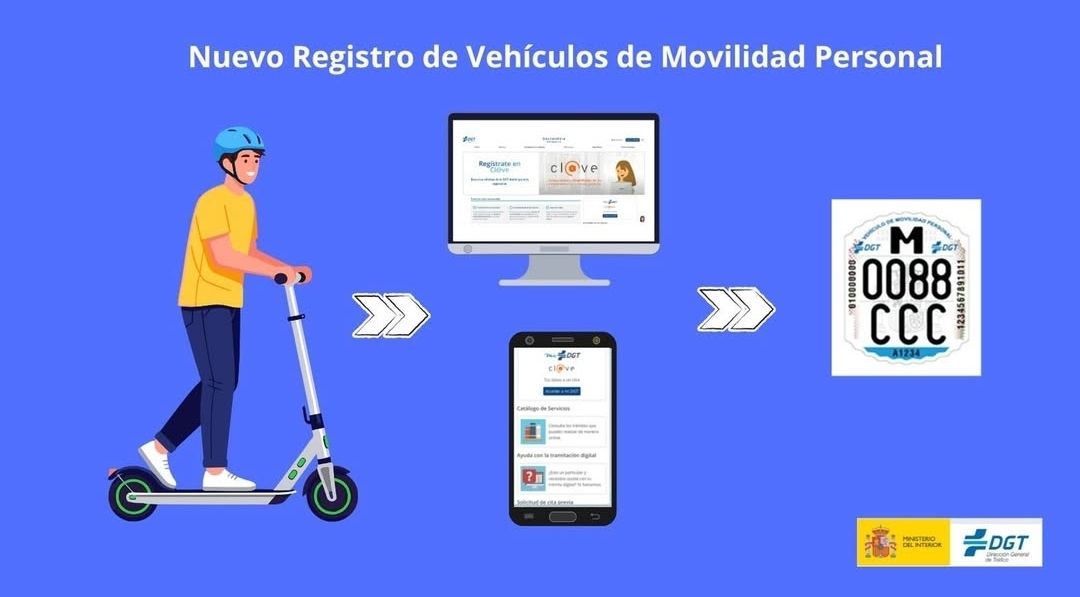
Under the approved Royal Decree, all owners of personal mobility vehicles, or their legal guardians in the case of minors, will be required to register their vehicle through the electronic headquarters of the Dirección General de Tráfico (DGT).
This registration will be a prerequisite for taking out mandatory insurance, effectively resolving the long-standing issue of how such insurance could be enforced without a centralised vehicle register.
The process is described as straightforward and fully digital. Once completed, owners will receive a digital registration certificate, which will allow them to request an official identification sticker for their vehicle.
A key step towards mandatory insurance
Until now, the absence of a national register has been one of the main reasons preventing the implementation of compulsory insurance for electric scooters in Spain. Without a formal system to identify vehicles and link them to individual owners, enforcement was not considered viable.
By creating a national VMP registry, the Royal Decree lays the legal groundwork for insurance obligations to be introduced in a practical and enforceable way. While the note does not specify insurance start dates, the sequence is clear: registration first, insurance next.
When will it come into force?
The registry will become operational once the regulation is formally published in the Boletín Oficial del Estado (BOE). According to the information provided, this is expected to happen in the coming days.
From that point, the DGT’s electronic platform will begin accepting registrations, marking the start of a new regulatory phase for electric scooters and other personal mobility vehicles in Spain.
What this means for scooter users
For scooter users, this represents a significant shift. Registration introduces formal accountability, clearer enforcement, and greater alignment with how other road vehicles are regulated. It also signals that electric scooters are now firmly embedded within Spain’s wider road safety and mobility framework, rather than existing in a grey area between pedestrian and motor vehicle rules.
Further details are expected once the full text of the Royal Decree is published, including any transitional periods, technical requirements for identification, and how the registry will interact with insurance providers.
Discover more from N332.es - Driving In Spain
Subscribe to get the latest posts sent to your email.

You must be logged in to post a comment.