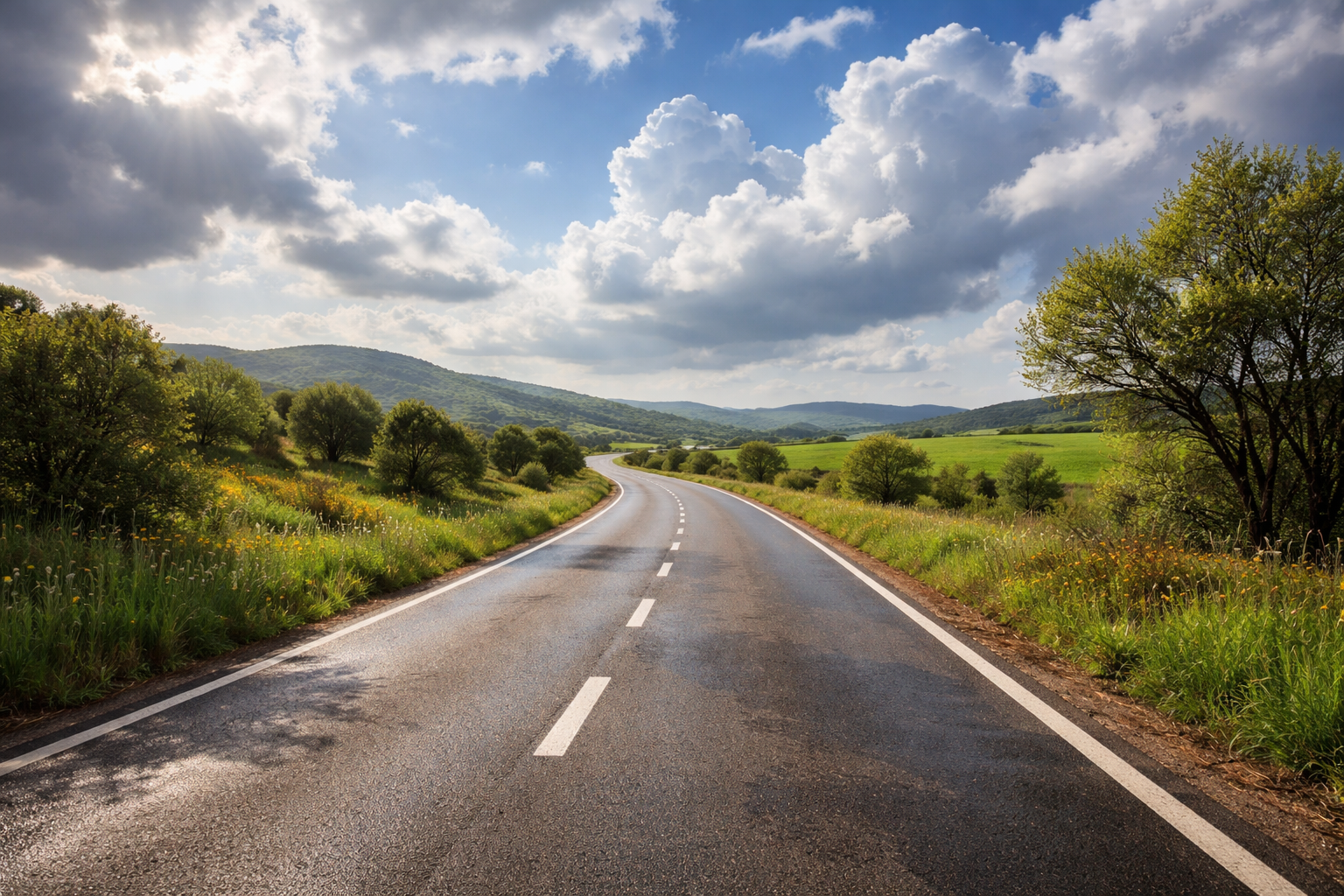

March is often seen as the beginning of improvement. The days grow longer, temperatures begin to rise, and winter feels as though it is fading. Yet transitional months are among the most unpredictable for drivers. Spring does not arrive overnight. It arrives in phases — and the road reflects that instability.
Understanding how seasonal change affects driving conditions is an important step toward reducing risk.
Contents
Temperature Fluctuations Affect Road Surfaces
As temperatures rise during the day and fall again at night, road surfaces expand and contract. This repeated cycle can worsen cracks, potholes, and uneven surfaces left behind after winter.
Drivers may notice:
Rougher surfaces,
Loose debris at road edges,
Repaired sections with reduced grip,
Uneven tarmac in rural areas.
These subtle changes affect braking distance and vehicle stability, particularly on bends.
Tyres React to Warmer Conditions
Tyre pressure changes with temperature. As air warms, pressure increases. If tyres were already slightly overinflated, rising temperatures can reduce optimal contact with the road.
Equally, worn tyres that performed adequately in winter may struggle on warming, more abrasive surfaces.
Checking tyre pressure and tread depth at the start of spring is a simple but effective safety measure.
Changing Light Conditions
Spring sunlight can create new glare patterns, especially during early mornings and late afternoons. Lower sun angles combined with cleaner air often produce stronger glare than drivers expect.
Sunglasses and clean windscreens are not optional extras. They are safety tools.
Rain After Dry Spells
Early spring rain often follows long dry periods. When water mixes with built-up oil and debris on the surface, it creates a particularly slippery layer.
The first rainfall after dryness is frequently more dangerous than prolonged wet weather, as grip is temporarily reduced.
Behaviour Must Adapt to Conditions
Many drivers psychologically shift into “better weather mode” as temperatures rise. This can lead to higher speeds and reduced caution, even though conditions remain unstable.
Seasonal optimism should never replace situational awareness.
Transition Means Uncertainty
Spring is a month of transition. Roads may feel safer, but they remain influenced by winter damage and new environmental factors. Recognising that March is a bridge between seasons — not a clean break — helps drivers remain alert.
Adapting gradually, checking vehicles, and anticipating unpredictable conditions ensures that the arrival of spring does not quietly increase risk on the road.
Discover more from N332.es - Driving In Spain
Subscribe to get the latest posts sent to your email.