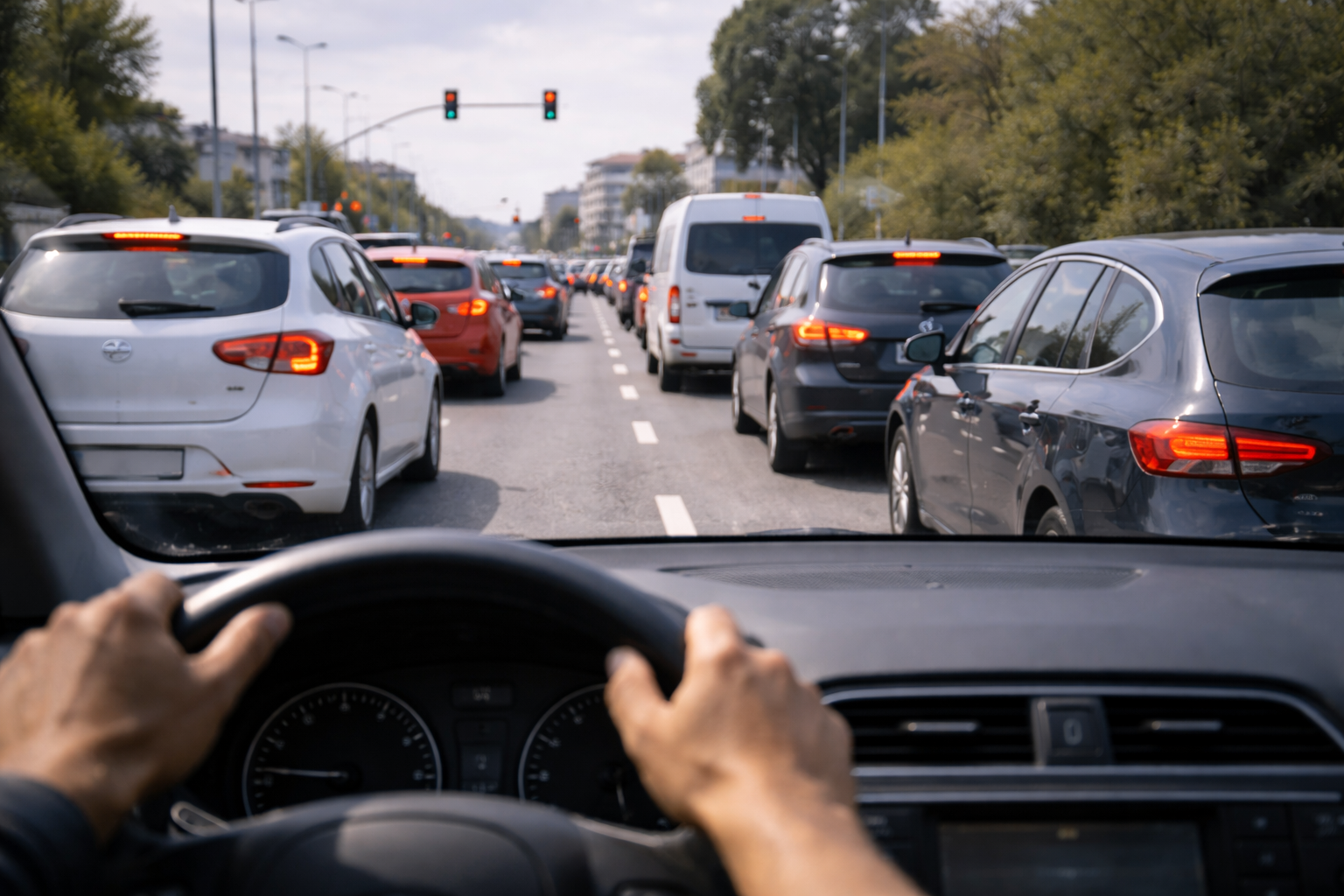

Holiday travel brings a noticeable change to the road environment. Routes that are usually quiet become congested, journey times increase, and drivers face unfamiliar levels of traffic density. Easter is one of the first major peaks of the year, and with it comes a shift in behaviour.
Managing that change is essential for staying safe.
More Vehicles, Less Space
As traffic builds, the available space between vehicles reduces. Following distances shrink, lane changes become more frequent, and opportunities to correct mistakes decrease.
In these conditions, even minor errors can have immediate consequences. Maintaining space becomes more important, not less.
Pressure Builds Quickly
Delays, queues, and slower speeds can lead to frustration. Drivers may feel pressure to make up time, change lanes frequently, or follow other vehicles too closely.
This pressure often results in:
- sudden braking,
- aggressive acceleration,
- unnecessary overtaking,
- reduced attention to surroundings.
Recognising this pressure is the first step in managing it.
Patience Is a Safety Tool
In heavy traffic, patience is not simply a virtue — it is a practical safety measure. Accepting that delays are part of the journey reduces the temptation to take risks.
Traffic flow improves when drivers maintain steady speeds and predictable behaviour rather than reacting impulsively.
Anticipation Reduces Risk
Looking further ahead allows drivers to anticipate changes in traffic flow. Brake lights several vehicles ahead, merging traffic, or lane closures all provide early warning signs.
Reacting early rather than suddenly helps maintain control and reduces the risk of collisions.
Fatigue and Concentration
Stop-start traffic can be more tiring than continuous driving. Constant braking, clutch use, and monitoring of surrounding vehicles increase mental load.
Taking breaks, even during slower journeys, helps maintain focus and reduces irritation.
Respecting Different Driving Styles
Holiday traffic includes a wide range of drivers — from experienced commuters to those travelling unfamiliar routes. Some may hesitate, others may be overly cautious, and some may make unexpected decisions.
Allowing space and avoiding assumptions about other drivers’ behaviour reduces conflict.
The Journey Is Shared
Heavy traffic reminds us that roads are shared spaces. Progress depends on cooperation, not competition. Drivers who remain calm, predictable, and patient contribute to smoother flow and safer outcomes.
Holiday travel may take longer, but arriving safely is always the priority.
Discover more from N332.es - Driving In Spain
Subscribe to get the latest posts sent to your email.