

Drivers are often taught a basic rule for following distance, yet spacing on the road should never be static. It must adapt to conditions, speed, vehicle load, and surface grip. March is a transitional month, and those transitions demand attention.
Maintaining adequate space is one of the simplest and most effective safety measures available.
Contents
Reaction Time Remains Constant
Human reaction time does not improve with experience. On average, it takes around one second to perceive a hazard and begin braking. During that second, the vehicle continues travelling at full speed.
Following too closely removes the buffer that compensates for this unavoidable delay.
Spring Conditions Are Variable
In March, roads may alternate between dry warmth and sudden rainfall. As previously noted, first rain after dry spells can reduce grip significantly.
If following distance remains unchanged in deteriorating conditions, stopping space may be insufficient.
Tyres and Surface Grip Matter
Warmer temperatures alter tyre pressure and surface characteristics. Reduced grip increases stopping distance, particularly during abrupt braking.
Drivers should increase spacing when:
- Road surfaces appear damp or polished,
- Traffic density increases,
- Visibility reduces,
- Travelling downhill.
Heavier Loads Require More Space
Vehicles carrying additional weight — passengers, luggage, or cargo — require longer distances to stop. Heavier mass increases momentum, demanding greater braking effort.
Spacing should increase accordingly.
Tailgating Reduces Options
Following too closely limits escape routes. If the vehicle ahead brakes suddenly, there may be insufficient time to react safely.
In multi-lane traffic, maintaining space also allows for smoother merging and fewer abrupt lane changes.
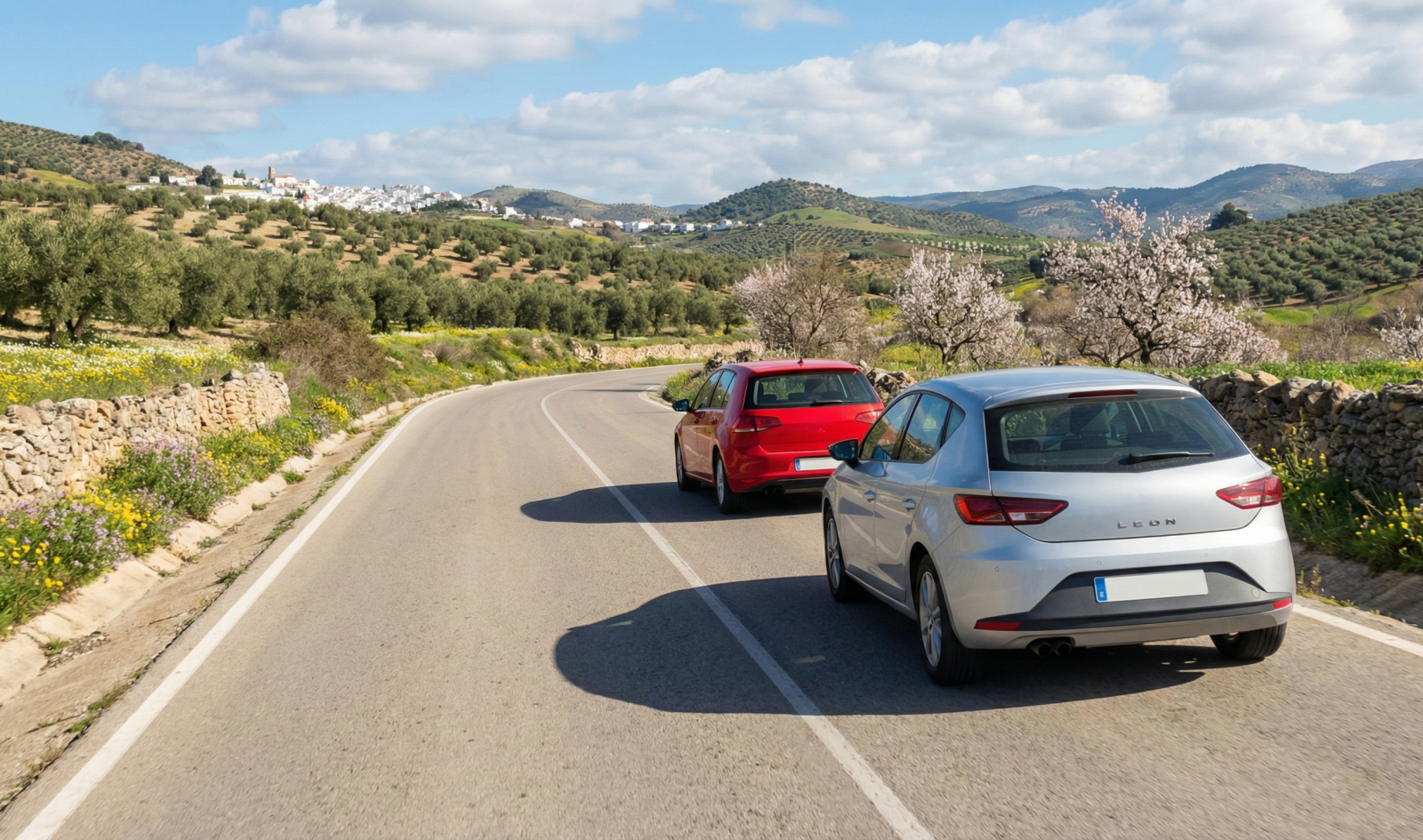
Adapting Rather Than Reacting
Safe drivers anticipate rather than react. Increasing following distance slightly may feel unnecessary in light traffic, yet it creates flexibility if conditions change unexpectedly.
The time difference between a safe gap and an unsafe one is often measured in seconds — but those seconds are critical.
Space Is Protection
Following distance is not about politeness. It is about physics and reaction time. Spring’s changing conditions reinforce the need for adaptable spacing.
A modest increase in distance dramatically improves safety. Space is not wasted road — it is protection built into the journey.
Discover more from N332.es - Driving In Spain
Subscribe to get the latest posts sent to your email.

You must be logged in to post a comment.