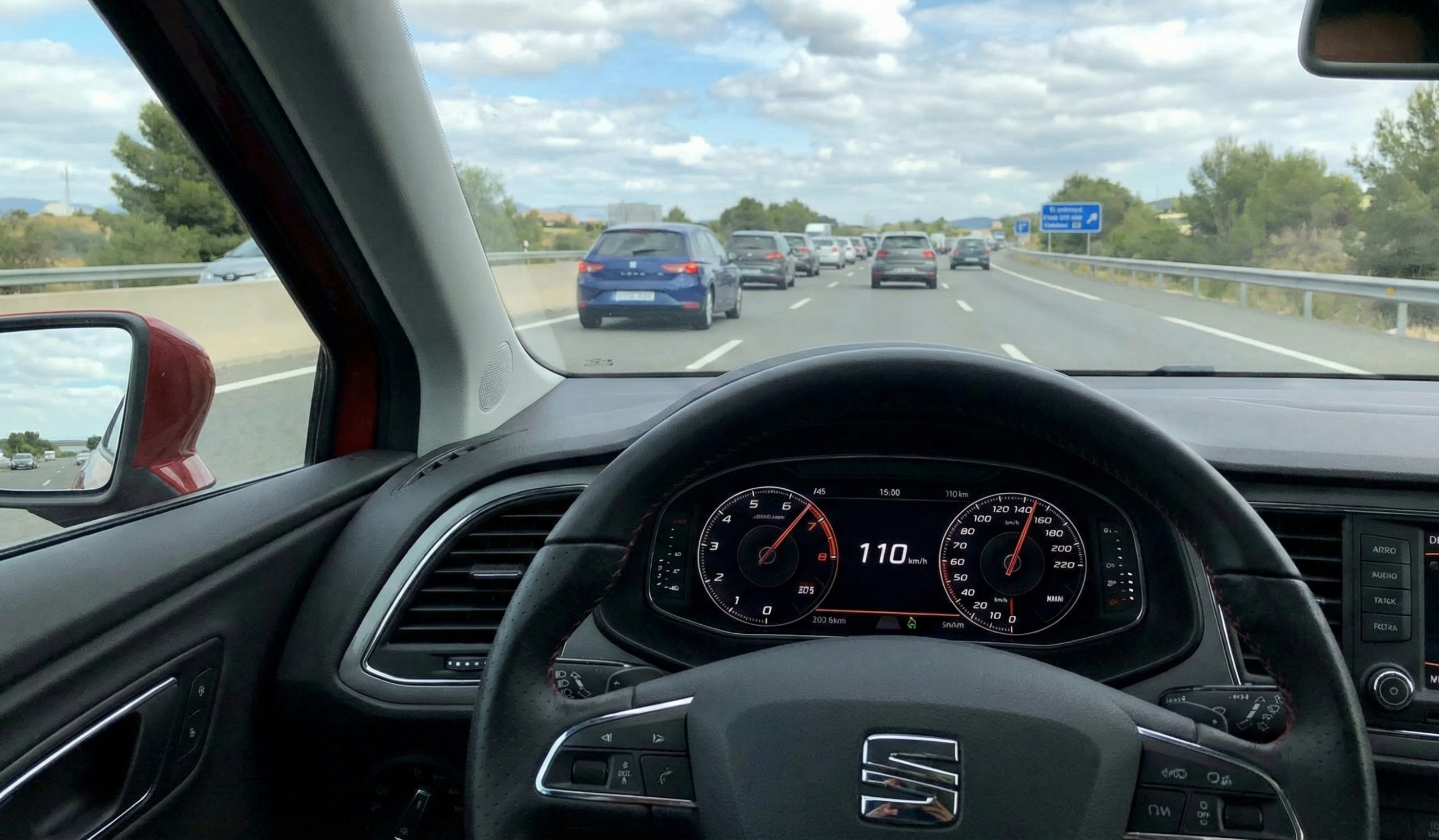

Speed is often discussed in terms of enforcement and limits, yet the real issue lies in physics. Road safety is governed by reaction time, braking distance, and the laws of motion — not by confidence or driving experience.
Understanding how speed affects these factors changes the way we think about “just a little faster”.
Contents
Reaction Time Is Fixed
The average human reaction time to an unexpected hazard is around one second. In that second, the vehicle continues travelling at full speed.
At 50 km/h, a vehicle covers approximately 14 metres before braking even begins. At 70 km/h, that distance increases to nearly 20 metres.
Those extra metres are travelled blind to the developing situation.
Braking Distance Increases Exponentially
Stopping distance does not increase proportionally with speed. It increases exponentially. Doubling speed more than doubles braking distance.
A vehicle travelling at 100 km/h requires significantly more distance to stop than one travelling at 80 km/h. The difference can determine whether a collision occurs or is avoided.
Small Increases, Large Consequences
Drivers often justify small increases over the limit, believing them insignificant. Yet a rise from 50 km/h to 60 km/h increases both reaction distance and braking force dramatically.
The margin for error narrows quickly.
Urban Risk Is Often Underestimated
In towns and cities, lower speed limits exist because of the proximity of pedestrians, cyclists, junctions, and parked vehicles. At urban speeds, a few extra kilometres per hour can determine the severity of injury in a collision.
Speed directly influences impact force. Lower speed significantly improves survival rates.
Perception vs Reality
Modern vehicles are quieter and more stable than ever. This comfort can mask the true sensation of speed. A driver may feel in control, yet physics does not adjust to comfort.
Grip, tyre condition, weather, and road surface further affect stopping capability.
Time Saved Is Minimal
The perceived time gained by driving slightly faster is often negligible, particularly in urban traffic. The risk taken rarely matches the benefit achieved.
Speed Is a Choice
Unlike weather or unexpected hazards, speed is fully within driver control. Choosing to reduce speed increases available reaction time, reduces stopping distance, and lowers collision severity.
Physics does not negotiate. It responds instantly. Respecting that reality is one of the most powerful safety decisions any driver can make.
Discover more from N332.es - Driving In Spain
Subscribe to get the latest posts sent to your email.