

While cycle lanes across Spain frequently feature miniature STOP signs and road markings, traffic law makes no distinction regarding physical dimensions: cyclists are legally mandated to bring their bicycle to a complete standstill and place at least one foot on the ground. Beyond avoiding substantial fines, pausing fully gives the brain essential time to counter inattentional blindness and assess traffic, mitigating the catastrophic risk of a side-on collision when joining a major carriageway.
We have explored the vital significance of the STOP sign at length in previous articles. As any regular driver or rider knows, coming to a halt is not merely a formality enforced by traffic law, accompanied by the threat of a heavy financial penalty in euro and the loss of driving licence points. The physical act of stopping provides the human brain with the critical time window required to fully process visual data, catch up with current road conditions, and actively overcome inattentional blindness. Without a full halt, a moving road user can easily look directly towards approaching hazards and still fail to register them.
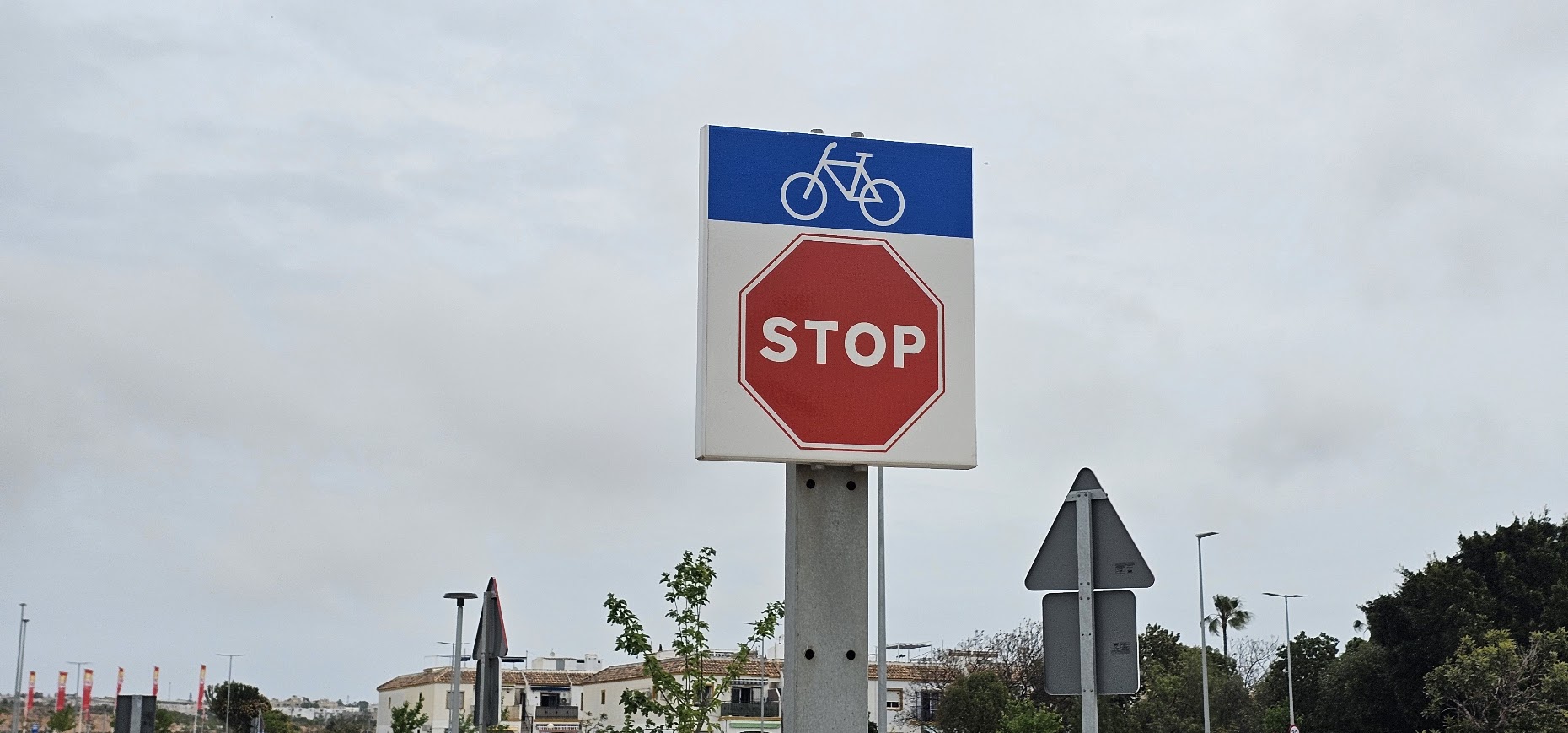
However, a misconception persists among two-wheeled road users when navigating dedicated cycle lanes and cycle paths across Spain. Mounted beside these tracks or painted directly onto the tarmac, you will frequently spot STOP signs and transverse stop lines that are visibly smaller in size compared to their standard roadside counterparts.
Make no mistake: size does not matter.
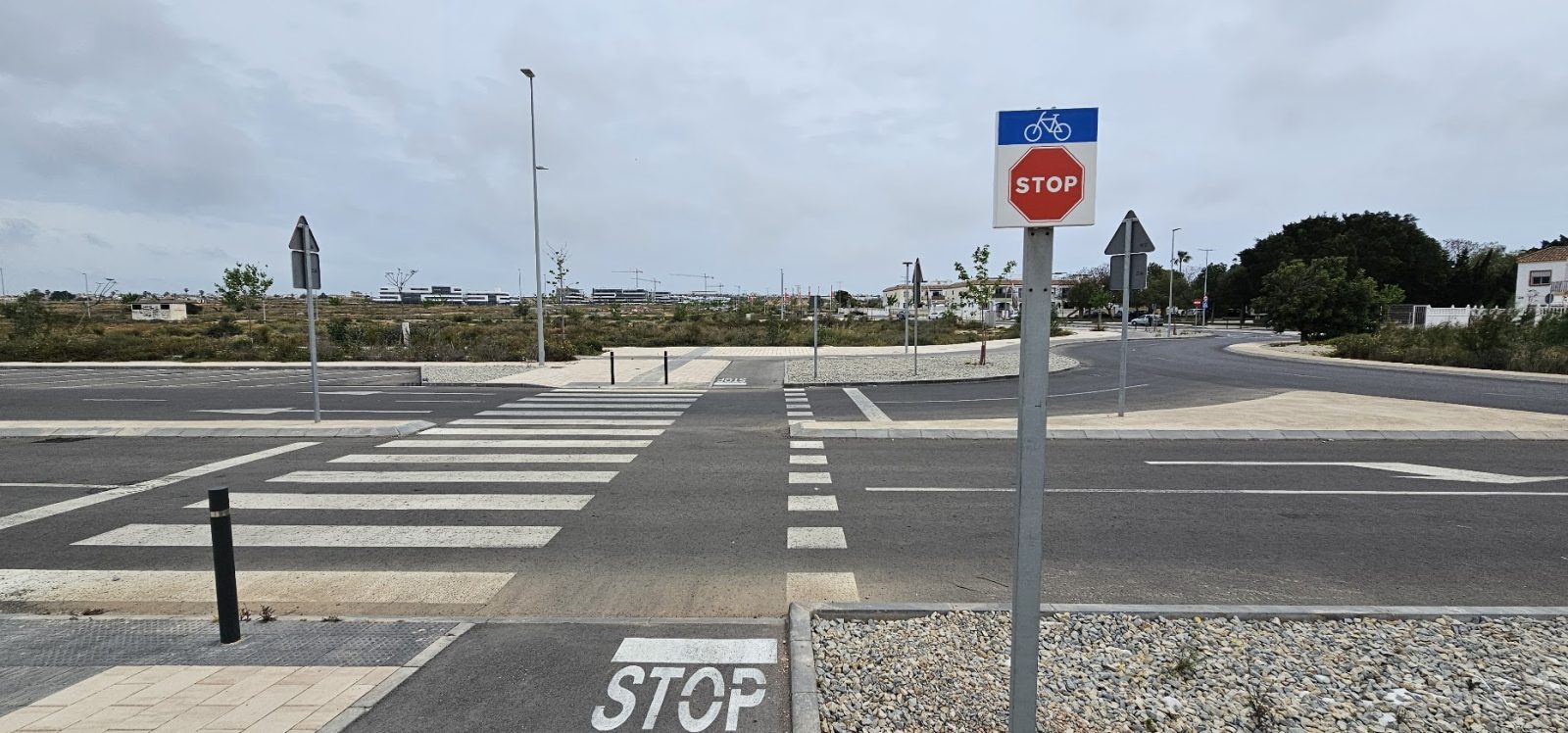
A smaller STOP sign or a reduced-scale stop line on a cycle route possesses the exact same legal weight as the full-sized version situated at a multi-lane junction. If the sign or marking indicates STOP, you are legally obligated to stop.
Furthermore, on a two-wheeled vehicle such as a bicycle, the legal definition of completing a stop requires stability. It is mandatory for the rider to place at least one foot firmly on the ground. Simply executing a track stand, slowing down to a roll, or hovering on the pedals does not constitute bringing the vehicle to a complete halt under Spanish regulations.
Joining or crossing a primary carriageway from a minor road or a dedicated pathway inherently presents significant vulnerability and hazard. For a cyclist, that exposure is magnified tenfold. Emerging into the path of larger, faster-moving motor traffic without stopping leaves the rider completely unprotected against a side-on impact. A lateral collision at a junction carries devastating consequences and can easily prove fatal.
Regardless of whether a sign is miniature or standard, the rule remains absolute: if it says STOP, you must bring the bicycle to a complete halt, put your foot down, and allow your senses the time they need to ensure the route ahead is clear.
Discover more from N332.es - Driving In Spain
Subscribe to get the latest posts sent to your email.

You must be logged in to post a comment.