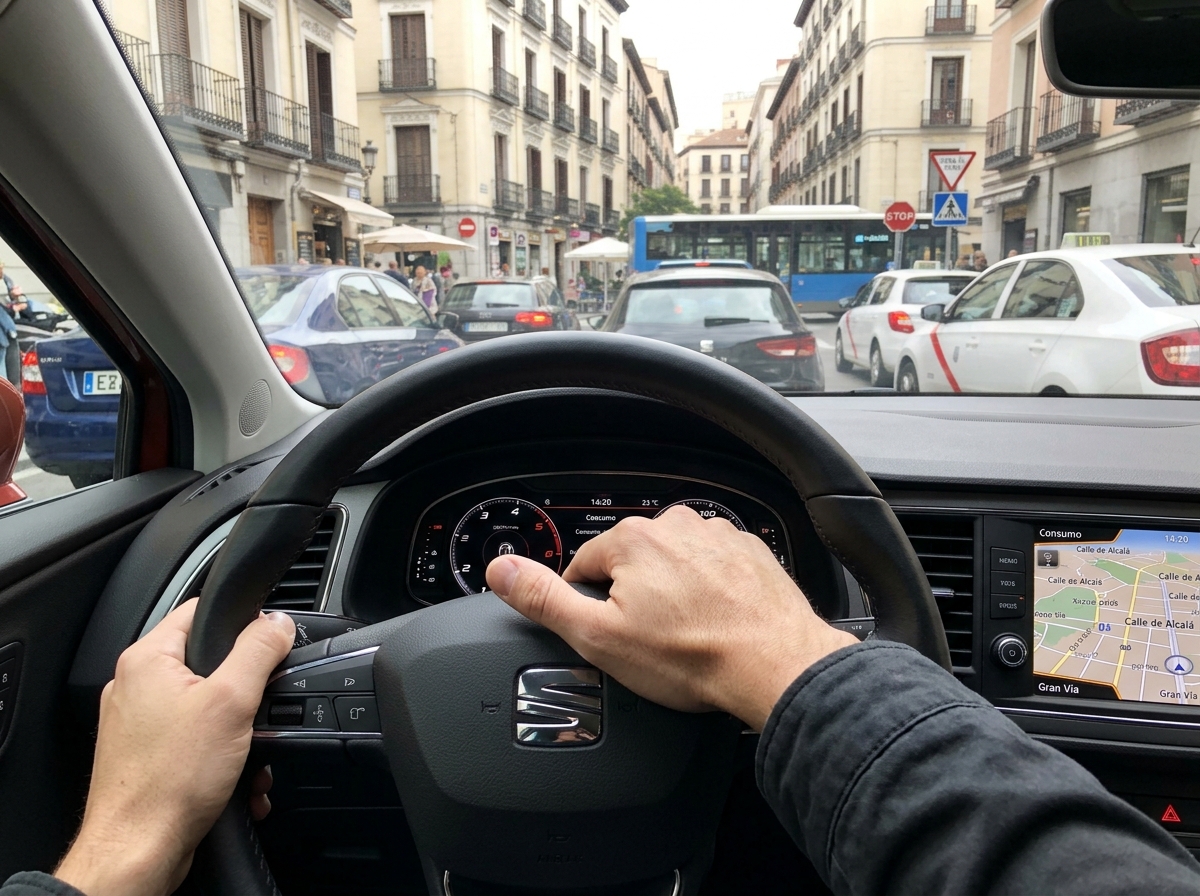

TL;DR: While many motorists treat the car horn as an acoustic vent for irritation or an alternative to expletives, sounding it in anger or impatience is strictly unlawful under Article 110 of Spanish traffic law, creating dangerous distractions that can panic other road users rather than preventing collisions.
For far too many motorists, the vehicle horn has evolved into an acoustic outlet for anger, used to replace expletives, demonstrate impatience, or vent general road frustration. Yet blasting the horn in irritation is not merely bad manners. Under Spanish road traffic law, it is completely illegal and carries serious safety implications.
A car horn functions as an audible alarm. When used inappropriately, it becomes an intense distraction that can easily induce panic in a motorist who may have simply made an honest driving error. Startled by an unexpected blast, that driver can react erratically, making unpredictable manoeuvres and turning a minor mistake into an active, unintentional hazard.
The lawful use of acoustic signals is strictly regulated under Article 110 of the General Traffic Regulations (Reglamento General de Circulación). The rule establishes from the outset that horns must emit a non-strident sound and may only be used exceptionally or where explicitly outlined by road safety legislation. Unmotivated, gratuitous, or exaggerated sounding of the horn is outright prohibited.
For non-priority vehicles, the law restricts horn use to three specific, practical scenarios:
First, drivers may sound the horn to avoid a potential collision, particularly when travelling on narrow roads with multiple curves. Where visibility around blind bends is severely compromised on tight carriageways, sounding the horn alerts oncoming motorists to your approach. This gives approaching vehicles adequate warning to scrub off speed, keep tightly to their right-hand edge of the road, and allow both vehicles to pass one another safely.
Second, outside populated areas, a driver may use an acoustic signal to alert the motorist ahead of their intention to overtake. Sounding the horn briefly prior to the manoeuvre informs the leading vehicle of the pass, prompting them to hold their position along the right-hand edge of the lane without unexpectedly wandering across the carriageway.
Third, motorists may use the horn to announce their presence to other road users under the provisions of Article 70, which governs non-priority vehicles travelling in emergency services or special situations. A clear practical application occurs when attempting to pass long vehicles or combinations exceeding 12 metres outside built-up areas. Giving a brief warning sound alerts the drivers of these extended vehicles to your presence, encouraging them to create a larger safety gap between each other so you can complete an overtaking manoeuvre safely.
On single-carriageway roads with one lane in each direction, once drivers of such long vehicles realise you intend to pass, they may choose to assist by activating their right indicator or moving an arm backwards and forwards to signal that the road ahead is clear. This assistance is a professional road courtesy rather than an obligation, but it relies on clear, safe communication rather than aggression.
Sounding the horn to chastise someone who hesitated at a green light, to hurry a motorist during a parking manoeuvre, or to vent irritation at another driver’s mistake breaches Spanish traffic law. Keep your hand off the horn unless you are genuinely preventing danger.
Discover more from N332.es - Driving In Spain
Subscribe to get the latest posts sent to your email.