
TL;DR: Motorists approaching the annual check of their mandatory connected V-16 emergency beacon can safely inspect internal batteries and light function without sending a false distress call to the DGT, thanks to a mandatory 100-second grace window built into official technical specifications.
With connected V-16 emergency beacons having become mandatory across Spain on 1 January this year, motorists are now approaching the 12-month mark of carrying these devices full-time. As with any critical piece of emergency equipment, conducting periodic checks to ensure the beacon is charged and functional is vital for road safety. However, many drivers hesitate to test their devices, fearing that switching them on will instantly transmit their location and register a false breakdown with traffic authorities.
This concern is understandable, but it is based on a misunderstanding of how the technology works. Official technical regulations governing certified V-16 connected beacons in Spain—specifically Ministerial Order PCI/810/2018 and subsequent DGT technical annexes for V-16 connectivity—include an intentional safety margin known as the 100-second grace window.
Under these DGT technical specifications, a connected beacon must remain switched on continuously for 100 seconds before transmitting its very first telemetry packet to the DGT 3.0 platform. Regulators introduced this 100-second buffer specifically to filter out accidental activations, such as an item rattling around in a glove compartment or luggage pressing against a power switch in the boot, whilst simultaneously providing motorists with an intentional, risk-free window to verify device operation.
When a certified unit is activated, the internal SIM or eSIM modem powers up, locks onto the Narrowband IoT (NB-IoT) or LTE-M cellular network, and seeks a GNSS satellite fix. The device firmware is strictly mandated not to broadcast an emergency status or dispatch GPS coordinates to the DGT access point until that continuous 100-second threshold has elapsed. Only if the beacon remains active past the 100-second mark will it transmit the activation signal and GNSS coordinates to DGT 3.0, followed by regular location updates every 100 seconds while stationary (or more frequently if in motion) until turned off.
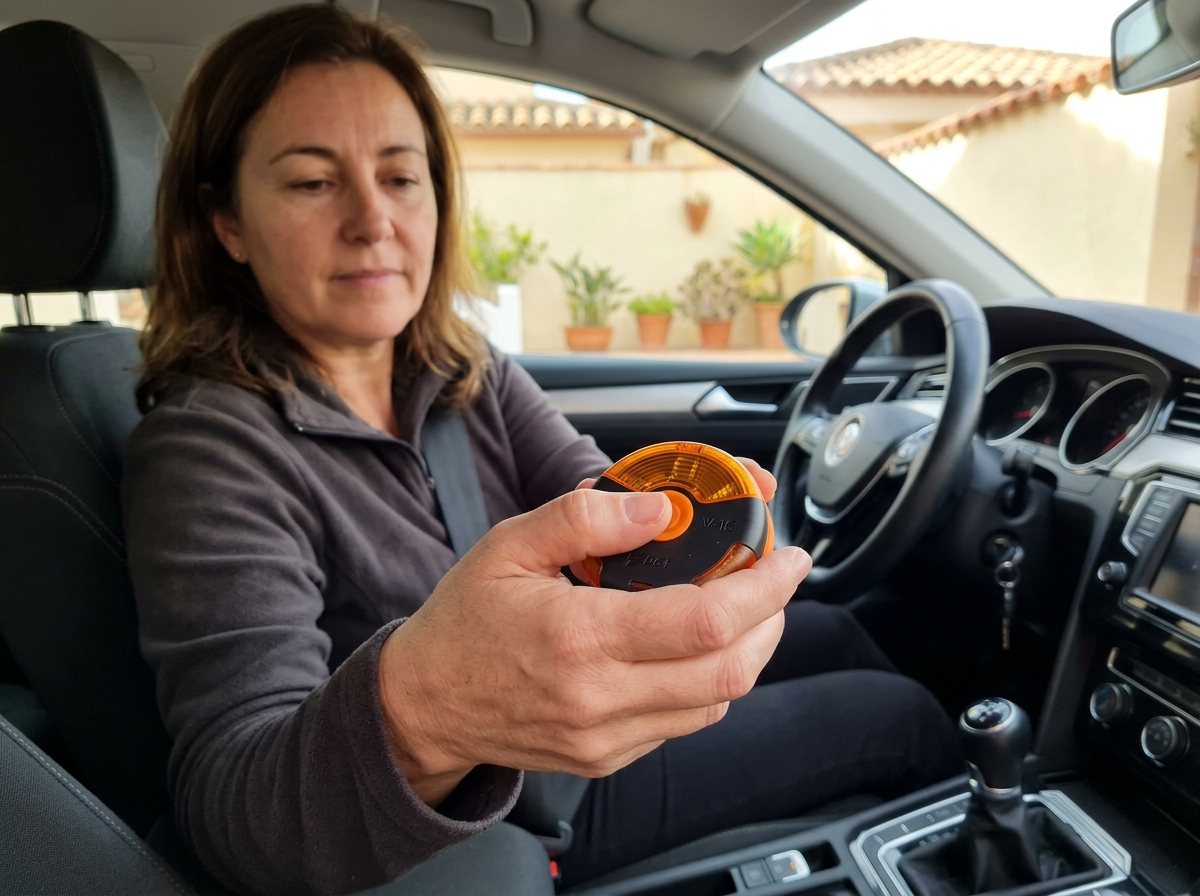
To inspect your V-16 safely, apply the 30-second rule. Switch the beacon on, observe the strobe intensity, inspect any multi-colour battery indicator LED fitted to the unit, and switch the device off within 20 to 30 seconds. This allows ample time to confirm the light works and assess battery health while staying well clear of the transmission threshold.
Crucially, you must never switch the device on and leave it unattended on a kitchen counter or worktop while distracted. Allowing the beacon to run past 100 seconds triggers real telemetry that is routed directly to the DGT National Traffic Management Centre.
Finally, check the hardware itself. Certified V-16 beacons include pre-paid connectivity valid for at least 12 years, with the expiry date printed on the casing or base. However, this connectivity guarantee does not mean internal alkaline batteries last indefinitely. Routine annual inspections remain essential to ensure cells have not depleted or corroded inside the housing, keeping your vehicle fully compliant and ready for any roadside emergency.
Discover more from N332.es - Driving In Spain
Subscribe to get the latest posts sent to your email.