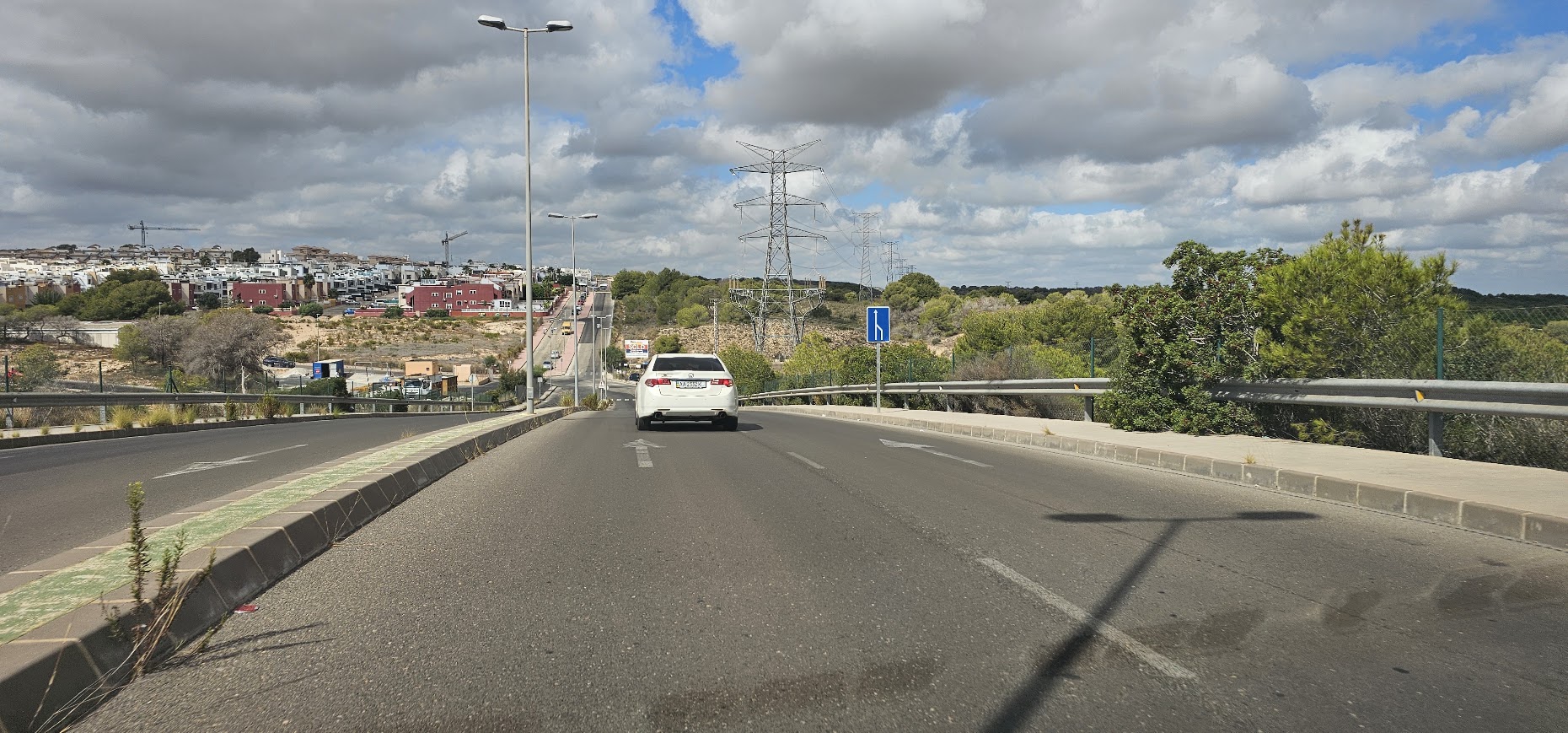

TL;DR: Joining a busy main carriageway from a slip road, such as the N-332 junction at Torrevieja north heading towards the Orihuela Costa, requires a clear understanding of Articles 72 and 73 of Spanish traffic law, which establish that while joining traffic must give way, main road drivers are legally expected to facilitate entry, a process made far smoother when drivers adopt the courtesy of the zipper method and maintain space rather than bunching up.
Joining a high-speed or heavily congested main road from a slip road can be an intimidating manoeuvre, particularly at notoriously busy junctions such as the N-332 at Torrevieja north when heading towards the Orihuela Costa. Navigating these access points safely requires an understanding of how Spanish traffic regulations divide responsibility between the driver attempting to enter and the drivers already established on the carriageway.
The foundational rules governing this manoeuvre are laid out in Article 72 of the traffic regulations. The law is clear: any driver joining the flow of traffic from an access road, service area, adjacent property, or standing position must ensure they can complete the move without presenting danger to other road users. Priority belongs to the vehicles already travelling on the main road. The driver joining must evaluate the position, trajectory, and speed of passing traffic, signal the manoeuvre using their indicators in accordance with legal requirements, and give way.
Where an acceleration lane is present, specific instructions apply. Drivers must observe approaching traffic right from the start of the lane to establish whether joining is safe, coming to a complete stop at the beginning of the lane if strictly necessary. Once a safe opportunity is identified, the driver should accelerate along the lane to achieve a speed appropriate to the main road before smoothly entering the carriageway. Failing to give way when joining traffic is officially classified as a serious infraction.
At the same time, Article 73 places a complementary responsibility on motorists already on the main carriageway. It states that drivers on the main road must facilitate the entry of joining vehicles as far as possible. Accelerating to deliberately close a gap and block an entering vehicle is contrary to safe driving principles and the spirit of the law. In populated areas, this obligation to facilitate progress becomes even stricter when dealing with collective passenger transport vehicles, such as public buses pulling out from designated stops; other motorists must move over if safe or reduce their speed, stopping if needed, while bus drivers must still take precautions and indicate clearly.
This balance between priority and cooperation is where the practical concept of the “zipper method” proves its value. Although not a formal statute in Spanish legislation, the zipper technique is widely recognised and used internationally as an effective way to maintain momentum. The principle is simple: vehicles on the main carriageway and vehicles in the merging lane alternate one by one, like the interlocking teeth of a zip fastener.
To make this work, drivers must avoid the instinct to squeeze close to the car ahead to defend their position. Much like the rules governing safe following distances, deliberately bunching together creates sudden braking waves, halts momentum, and increases collision risks. Leaving a generous gap allows merging vehicles to slot in without forcing anyone to brake sharply. By respecting legal obligations and adopting practical courtesy, drivers at busy merging points like Torrevieja north can significantly reduce stress and keep traffic moving smoothly for everyone.
Discover more from N332.es - Driving In Spain
Subscribe to get the latest posts sent to your email.