
TL;DR: While most drivers assume their speedometer provides an exact measurement, vehicle speedometers are legally designed to never under-report your speed, relying on wheel rotation geometry that changes if non-standard tyres or incorrect pressures are used, potentially eroding your radar margin of error and contributing to a speeding fine.
Before looking at how tyres can influence your exposure to traffic penalties, it is worth understanding a simple truth about your vehicle: your speedometer is not telling you the exact truth. Speedometers routinely provide a reading slightly higher than your actual road speed, and they do so for two fundamental reasons.
First, manufacturers are legally required to ensure this discrepancy under European regulations. To pass vehicle manufacturing standards, a speedometer must be calibrated so that it can never show a speed lower than the pace at which the car is actually travelling. It must always indicate a safer, slightly higher figure, meaning every speedometer is programmed to overestimate slightly.
Second, the discrepancy comes down to geometry. A car speedometer does not look at the road surface directly. Instead, it relies on a mechanism that monitors how fast the wheels are turning, translating those rotations into the speed displayed on your dashboard.
This mechanical reality is precisely why speed cameras and radar devices have an official margin of error. That margin does not exist to give motorists permission to exceed the posted limit; rather, it accommodates the fact that vehicle speedometers are imprecise and radar equipment may have slight calibration variances.
This brings us to the question of tyres and wheels. In Spain, the ITV vehicle inspection monitors technical parts of the vehicle thoroughly, including the tyres and wheels. These components must strictly match the measurements specified on the vehicle’s technical documentation (the technical inspection card). Whilst changing wheel or tyre sizes might be popular amongst some motorists, doing so in Spain requires going through a formal certification process at an ITV station to confirm that the alteration is approved and legal. For the vast majority of motorists, fitting non-approved sizes is simply not permitted.
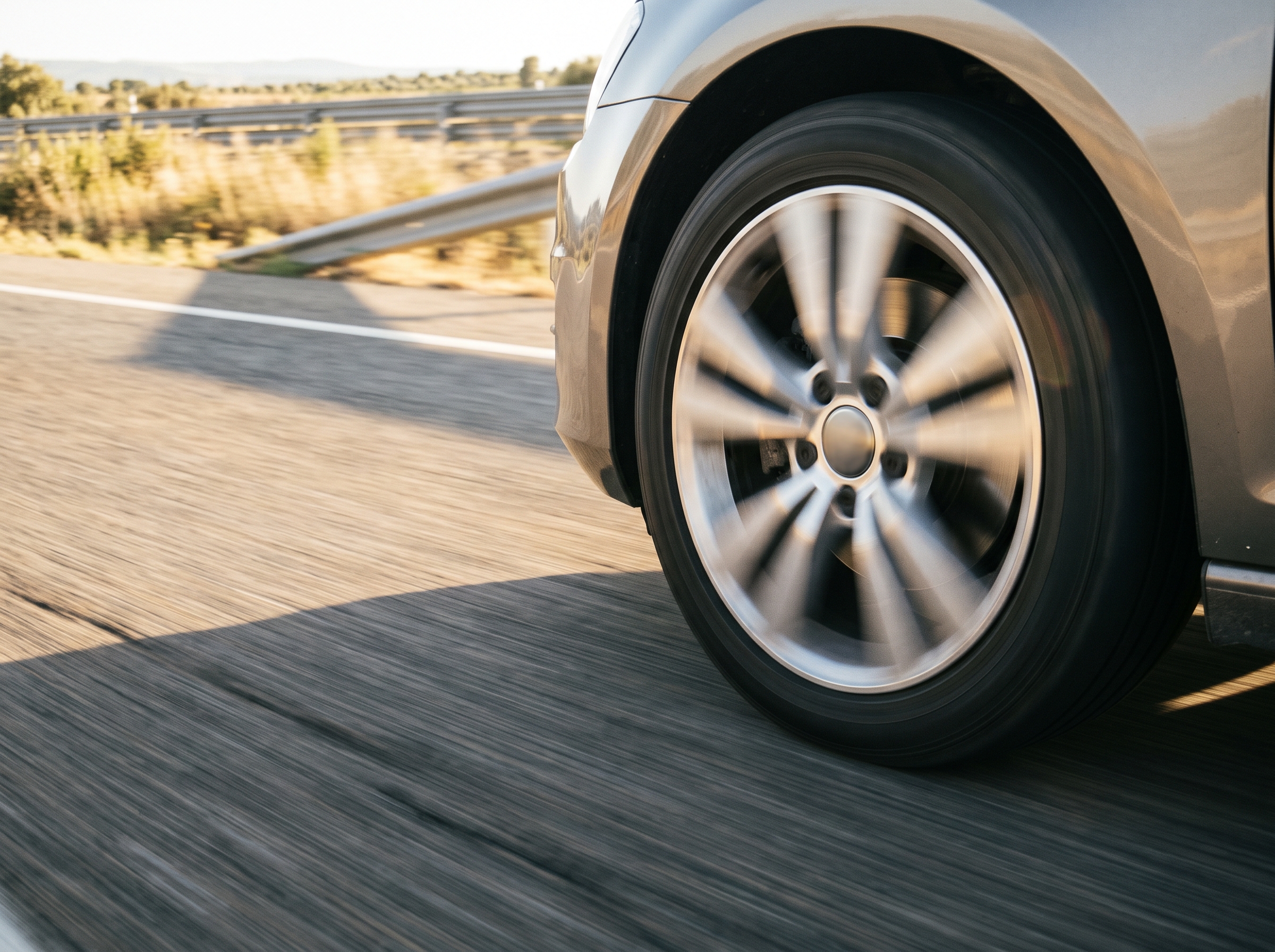
Geometry also explains why wheel and tyre dimensions have a direct bearing on speed calculation. At any given moment, the patch of tyre in contact with the road is entirely stationary to maintain grip and traction, whilst the opposite point at the very top of the wheel travels at twice the speed of the centre hub. The vehicle’s onboard systems calculate speed by translating the rotational pace of that circle.
If you change your tyres to a different size, or if your tyres are severely under-inflated or over-inflated, the overall rolling diameter of the wheel changes. An over-inflated tyre increases the effective diameter, whilst an under-inflated tyre decreases it. This alterations changes the distance covered per rotation and alters the time it takes for a fixed point on the wheel to complete a revolution.
While the resulting variance on the speedometer may only represent a small margin of one or two per cent, that difference directly alters the safety buffer built into your instrument panel. If that margin shifts in the wrong direction, you may be travelling faster than you think, edging closer to the threshold of a radar penalty.
Sticking to the approved tyres listed on your vehicle documentation and maintaining the correct pressures ensures both ITV compliance and an accurate speedometer buffer. The simplest advice remains the best: monitor your speed, adhere strictly to posted limits, and keep your vehicle properly maintained.
Discover more from N332.es - Driving In Spain
Subscribe to get the latest posts sent to your email.