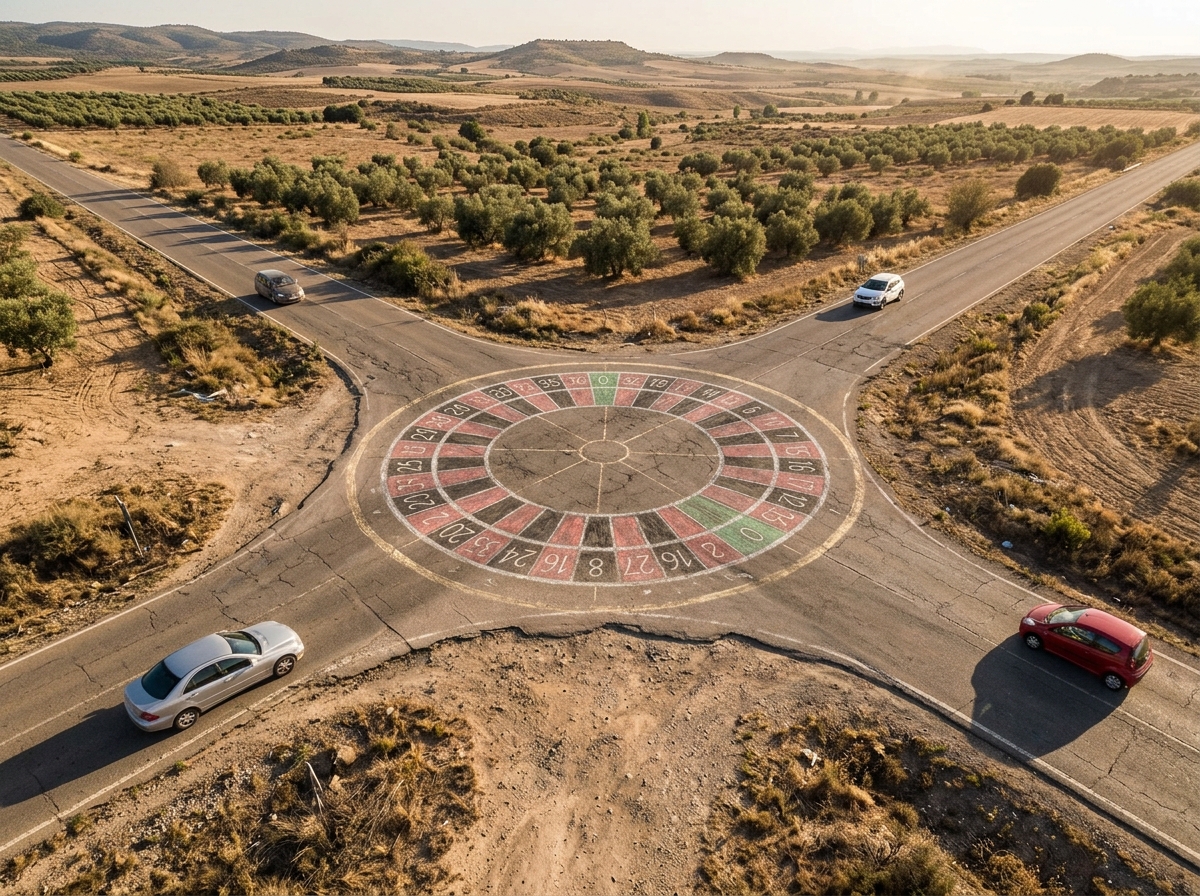

TL;DR: When learning to drive, instructors and examiners routinely tested drivers on unmarked junctions to evaluate observation skills in high-risk environments, yet many motorists now pass through these junctions daily without realizing that, under Spanish traffic law, approaching traffic must yield priority to vehicles coming from the right unless specific statutory exceptions apply.
Cast your mind back to when you first learned to drive. One of the classic scenarios driving instructors deliberately chose was taking learner drivers towards an unmarked junction. It served two clear functions: it demonstrated the legal priority rules in practice, and it severely tested observation skills in what remains one of the most hazardous situations you can encounter on the road. On the practical driving test itself, examiners frequently did the exact same thing to see whether a candidate was genuinely alert.
Now ask yourself, and answer honestly: when was the last time you actively paid attention to or even thought about the rules of an unmarked junction? Many motorists cross through unmarked crossings on their daily commute without a second thought. Assuming priority simply because you are travelling straight ahead or on what feels like the wider road is a dangerous game of roulette. If there are no road markings, signs, or traffic lights governing the crossing, you do not automatically have the right of way.
Spanish traffic law establishes the default position under Article 57 of the General Traffic Regulations (Reglamento General de Circulación). The primary rule states that in the absence of signs indicating traffic priority, drivers are strictly obliged to give way to vehicles approaching from their right.
However, the legislation outlines specific exceptions where this general “give way to the right” requirement does not apply:
- Vehicles travelling on paved roads always have priority over vehicles emerging from unpaved roads or tracks, regardless of which side they approach from.
- Vehicles travelling on rails, such as trams and trains, have priority over all other road users due to their braking distances and lack of manoeuvrability.
- At roundabouts, vehicles already circulating on the circular carriageway have priority over vehicles waiting to join.
- Vehicles travelling on motorways or dual carriageways (autopistas and autovías) hold priority over traffic waiting to join from acceleration lanes or access slips.
Outside of these clear exceptions, if two streets meet and there is no Stop sign, Give Way triangle, or road marking present, the vehicle approaching from the right has legal priority. Assuming other drivers will stop for you invites serious side-impact collisions. Staying safe means scanning every junction ahead, actively checking for the presence or absence of priority signs, and being prepared to yield to the right whenever the crossing is unmarked.
Discover more from N332.es - Driving In Spain
Subscribe to get the latest posts sent to your email.