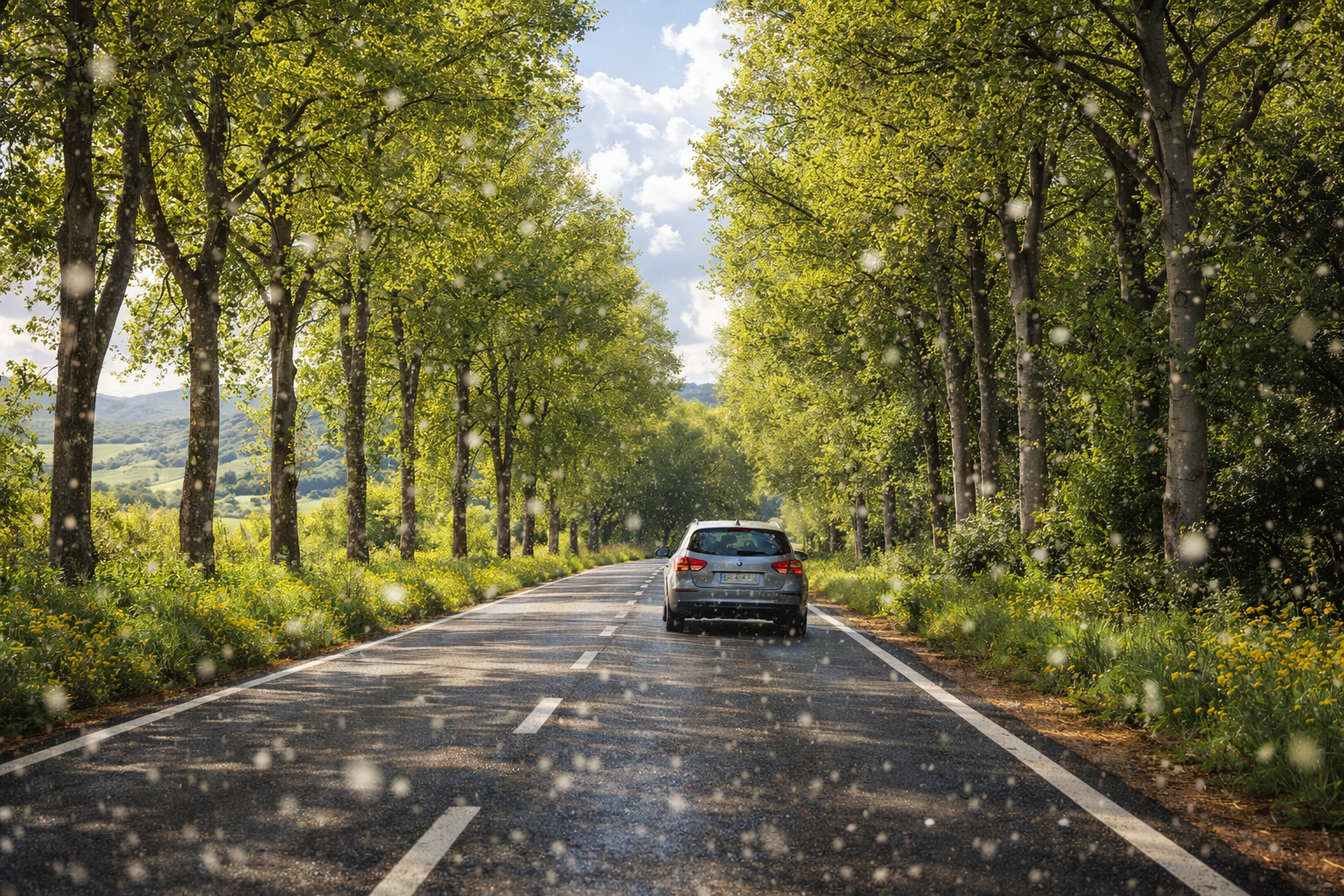
Spring brings colour, warmth, and longer days, but it also brings pollen. For millions of people, seasonal allergies are an annual inconvenience. On the road, however, they can become something more serious.
Sneezing, watery eyes, congestion, and fatigue are not just discomforts. They directly affect a driver’s ability to see clearly, concentrate fully, and react quickly.
Contents
A Split Second Without Vision
A forceful sneeze at 90 km/h can mean travelling dozens of metres with eyes closed. Even brief eye irritation can blur vision at critical moments, such as when approaching junctions or reacting to sudden braking ahead.
Repeated sneezing or eye rubbing increases distraction and reduces situational awareness.
Fatigue and Mental Fog
Allergic reactions do not only affect the nose and eyes. They place strain on the body, often leading to tiredness, irritability, and reduced concentration.
Drivers may feel slightly “off” without recognising that their hazard perception and decision-making are compromised.
Medication Can Compound the Problem
Many antihistamines and allergy treatments cause drowsiness or slower reaction times. Even non-drowsy formulations can affect individuals differently.
Drivers should always check packaging carefully and seek advice from a pharmacist if unsure about side effects.
Pollen Inside the Vehicle
Pollen enters cars through open windows, ventilation systems, and clothing. Once inside, it can circulate continuously, prolonging symptoms throughout the journey.
Replacing cabin filters regularly and keeping windows closed during high pollen periods can significantly reduce exposure.
Underestimating the Risk
Because allergy symptoms are familiar, they are often dismissed. Drivers continue as normal, assuming the impact is minor. Yet combined effects — glare, sneezing, congestion, medication, fatigue — create a cumulative reduction in performance.
Road safety depends on recognising when we are not at our best.
Simple Preventative Measures
Drivers can reduce pollen-related risk by:
- checking pollen forecasts before long journeys,
- cleaning windscreens and interior surfaces,
- using air conditioning instead of open windows,
- carrying tissues within easy reach,
- delaying travel if symptoms are severe.
Spring Awareness Is Road Awareness
Pollen is a natural part of the season, but its effects on driving are not harmless. Recognising the connection between allergies and road performance allows drivers to make better, safer decisions.
Spring may feel like a fresh start. Staying alert ensures it remains a safe one.
Discover more from N332.es - Driving In Spain
Subscribe to get the latest posts sent to your email.