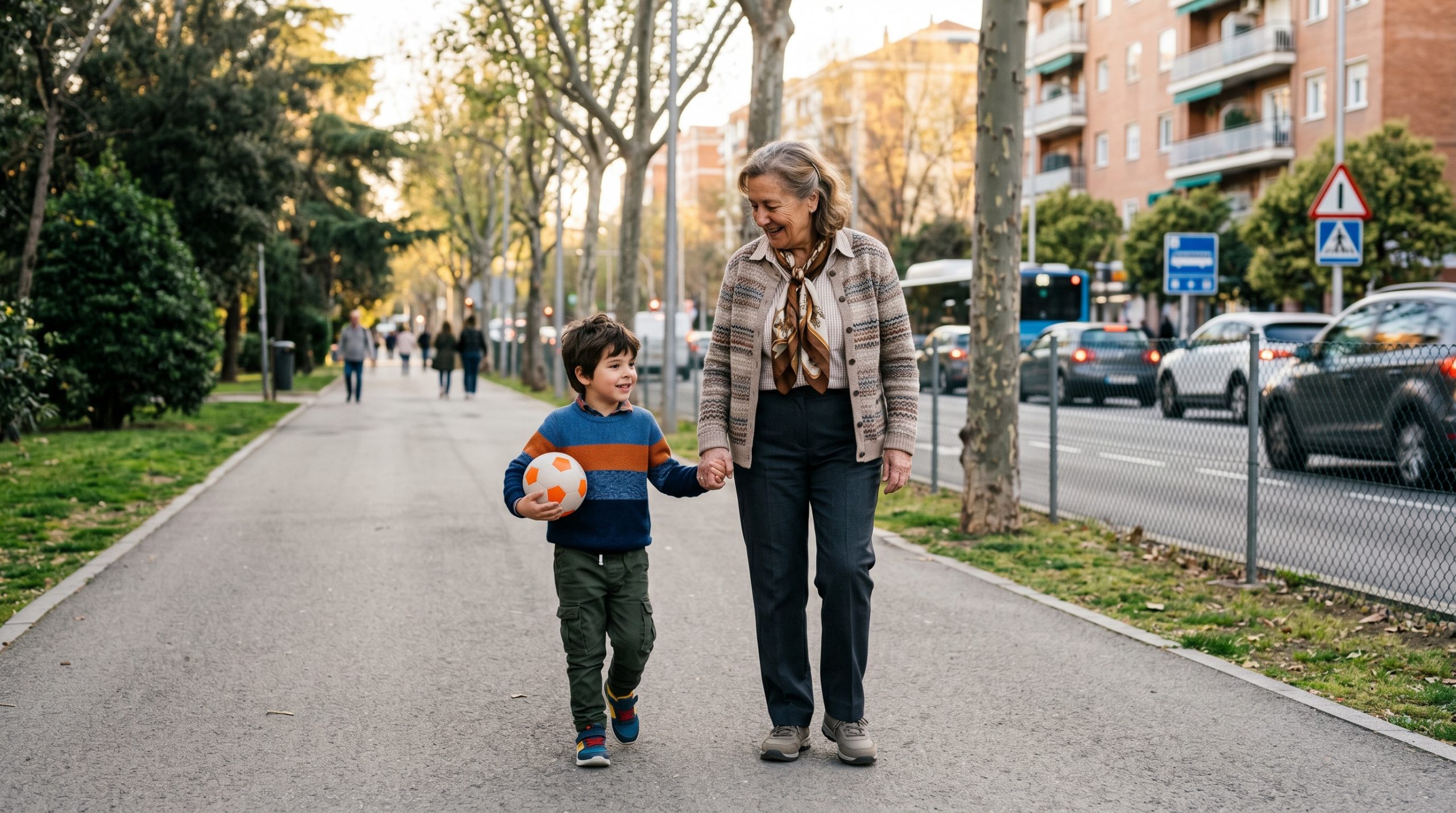

Road safety is often discussed in terms of vehicles, technology, and enforcement, but some of the most important factors on our roads are human. Not everyone experiences traffic in the same way, and some people are naturally more vulnerable than others.
Children and older people are two of the clearest examples.
For children, roads are still environments they are learning to understand. Judging the speed of an approaching vehicle, estimating distance, or predicting driver behaviour are skills that develop gradually over time. Younger children can also be impulsive, distracted, or focused on something entirely unrelated to the traffic around them.
A ball rolling into the road, a friend calling from the opposite pavement, or the excitement of arriving somewhere can instantly override caution.
Children are also physically smaller, making them harder to see, particularly between parked vehicles or near larger traffic. At crossings and junctions, a driver may only see a child at the very last moment.
Older people face different challenges, but vulnerability remains just as real. Reduced mobility, slower reaction times, hearing difficulties, and changes in eyesight can all affect how safely and comfortably someone navigates the road environment.
Crossing times that feel perfectly reasonable to a healthy adult may feel rushed and stressful to an elderly pedestrian. Busy roundabouts, fast-moving urban traffic, and increasingly silent electric vehicles can create additional difficulties.
Modern roads are also becoming more complex. Electric scooters, bicycles, motorcycles, and delivery vehicles move differently from traditional traffic and can appear unexpectedly in shared urban spaces. For people with reduced hearing or slower reactions, these rapidly changing environments can become intimidating.
This is why speed matters so much.
Driving slightly slower near crossings, schools, residential areas, and busy pedestrian zones creates more time for everyone. More time to react, more time to see hazards developing, and more time for vulnerable road users to make safe decisions.
Importantly, slowing down is not only about obeying speed limits. It is about adapting to conditions and recognising where vulnerability exists.
A road may legally allow 50 km/h, but if visibility is poor, children are present, or pedestrians are crossing unpredictably, responsible drivers understand that the safest speed may be considerably lower.
Road safety is not simply about protecting ourselves. It is also about recognising when others may need additional patience, additional space, and additional understanding.
Because the strongest road users often have the greatest responsibility.
Discover more from N332.es - Driving In Spain
Subscribe to get the latest posts sent to your email.