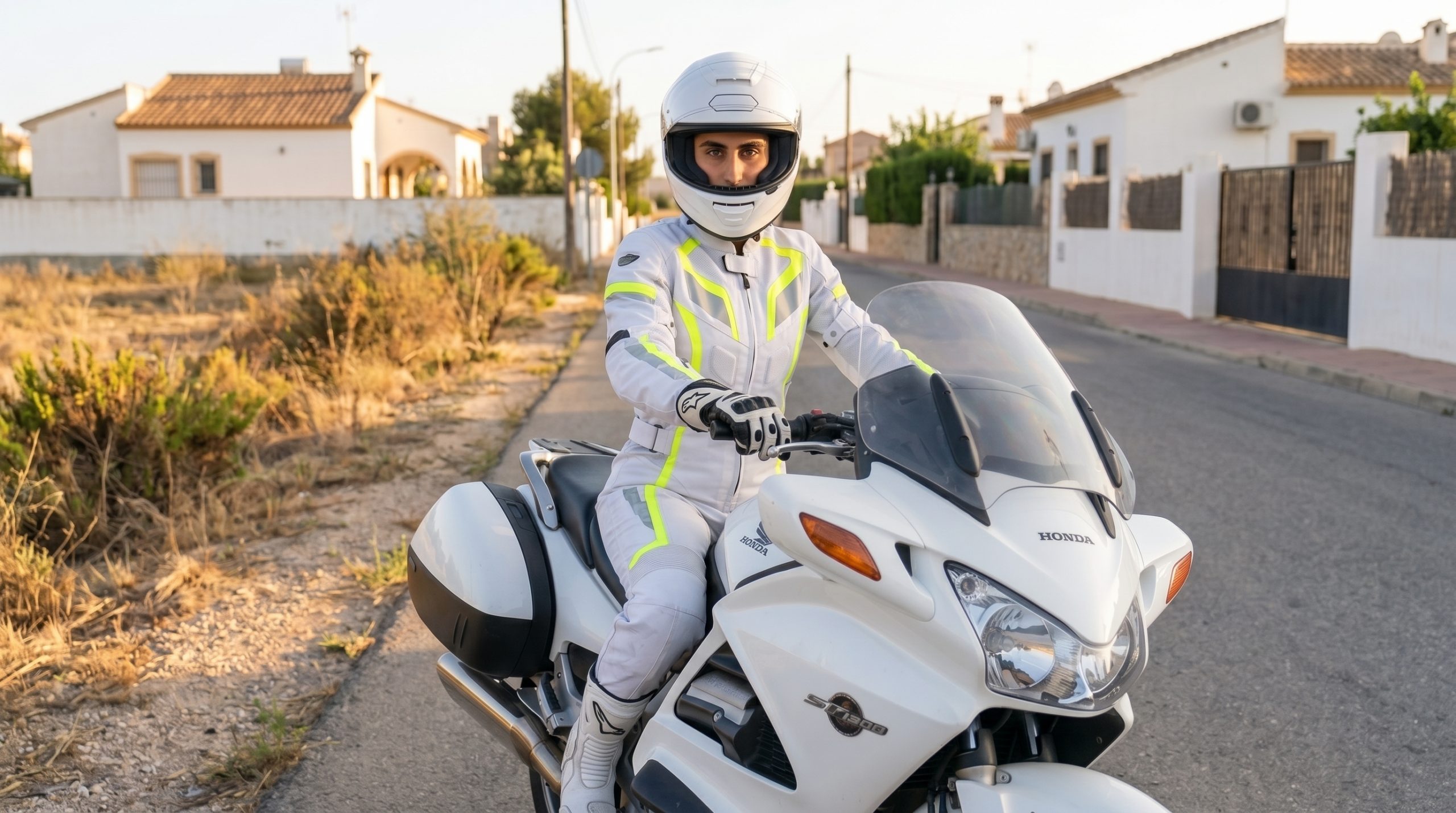
A motorcycle can be an enjoyable and practical way to travel.
It can also expose its rider to something a car occupant rarely has to consider.
There is very little between the rider and the road.
That is why protective equipment matters.
From 1 October 2026, Spanish legislation introduces additional mandatory protection requirements for motorcycle and moped users. Closed footwear covering the whole foot becomes compulsory on all roads, while protective gloves become compulsory on interurban roads. Professional riders using motorcycles must also wear a high-visibility vest while riding.
These changes recognise a simple reality.
A motorcycle rider is vulnerable.
The law sets a minimum
Every safety regulation establishes a minimum standard.
That is important.
But minimum legal compliance should not necessarily be the goal.
A rider can ask a different question:
“What can I do to give myself the best protection reasonably possible?”
The answer goes beyond simply wearing what the law requires.
Clothing matters
A rider in shorts and a T-shirt may feel perfectly comfortable on a warm day.
The problem comes if they fall.
A motorcycle does not need to be travelling at high speed for contact with the road to cause significant injury.
Even a relatively simple fall can result in extensive abrasions and wounds.
Protective motorcycle clothing is designed to reduce that risk.
The DGT’s own research indicates that protective clothing with appropriate protectors can reduce the probability of injury by between 23 and 45 percent depending on the body region, while reducing abrasions and open wounds in protected areas by up to 90 percent.
That is a powerful argument for wearing it even when the law does not specifically require every item.
Gloves protect more than hands
Our instinctive reaction when falling is often to put our hands out.
That makes the hands particularly vulnerable.
The DGT reports that gloves can reduce hand injuries by around half.
From October, protective gloves become a legal requirement for motorcycle and moped users on interurban roads, subject to the technical requirements that will be established for the equipment. Until the relevant ministerial order takes effect, the transitional provision applies to the characteristics of gloves currently used.
But a responsible rider should not view gloves simply as something required on a particular type of road.
Hands need protection wherever a fall can occur.
Footwear is equally important
The new rules require closed footwear covering the whole foot on all types of road.
Again, this makes practical sense.
Feet and ankles can be exposed to impact, abrasion and twisting injuries.
The DGT’s research indicates that boots can reduce injuries to feet and ankles by around one third.
Good motorcycle footwear can also provide support and protection that ordinary trainers or sandals simply cannot.
Professional riders face additional requirements
People who ride motorcycles professionally spend considerably more time exposed to road risk.
Delivery riders, for example, may spend many hours on the road and in a wide range of conditions.
From October, professional motorcycle riders must wear a high-visibility vest while riding. The new rules also extend high-visibility requirements to professional riders using bicycles, cycles and VMPs.
Visibility is particularly important when somebody is spending much of the working day among other vehicles.
But visibility is useful for everyone
Private riders should not interpret the professional requirement as meaning that visibility is only important for people at work.
A rider who is easier to see is easier for other road users to anticipate.
Reflective elements.
High-visibility clothing.
Good lighting.
Positioning.
All can contribute to being noticed.
The helmet remains fundamental
There is also an important timing point in the new legislation.
The requirement for motorcycle helmets to meet the new homologation standard does not take effect on 1 October 2026.
That particular provision comes into force on 1 October 2027.
The existing requirement to wear a protective helmet remains, of course.
This distinction is worth explaining because road-safety information is only useful when the dates are correct.
Protection is not an admission of weakness
Some riders dislike the idea that protective clothing is somehow excessive.
It is worth looking at the issue differently.
A seat belt does not mean a driver expects to crash.
A helmet does not mean a motorcyclist expects to fall.
Protective clothing simply recognises that the consequences of an unexpected event can be severe.
The same principle applies to a car’s airbags.
We do not use them because we expect a collision.
We have them because we understand that collisions sometimes happen.
Good practice goes beyond the law
From October, the law will require more.
That is welcome.
But responsible riders can go further.
Wear proper motorcycle trousers.
Use a protective jacket.
Choose gloves that provide genuine protection.
Wear boots designed for riding.
Consider additional armour and an airbag system where appropriate.
And always adapt riding to the road, weather and traffic conditions.
The best protective equipment is not the equipment that just meets the legal minimum.
It is the equipment that gives the rider the best realistic protection while remaining practical enough to wear consistently.
The objective is simple
Nobody rides a motorcycle planning to fall.
Nobody sets out expecting a collision.
But road users do not control everything that happens around them.
A car driver may fail to see a motorcycle.
A surface may become slippery.
A vehicle may change direction unexpectedly.
A rider may lose balance.
The best response is therefore not fear.
It is preparation.
The new rules recognise the vulnerability of motorcycle users.
Good riding goes one step further.
It recognises that vulnerability and prepares for it.
Because on a motorcycle, the road is always much closer than it is when sitting inside a car.
And the right equipment can make an enormous difference when the unexpected happens.
Discover more from N332.es - Driving In Spain
Subscribe to get the latest posts sent to your email.