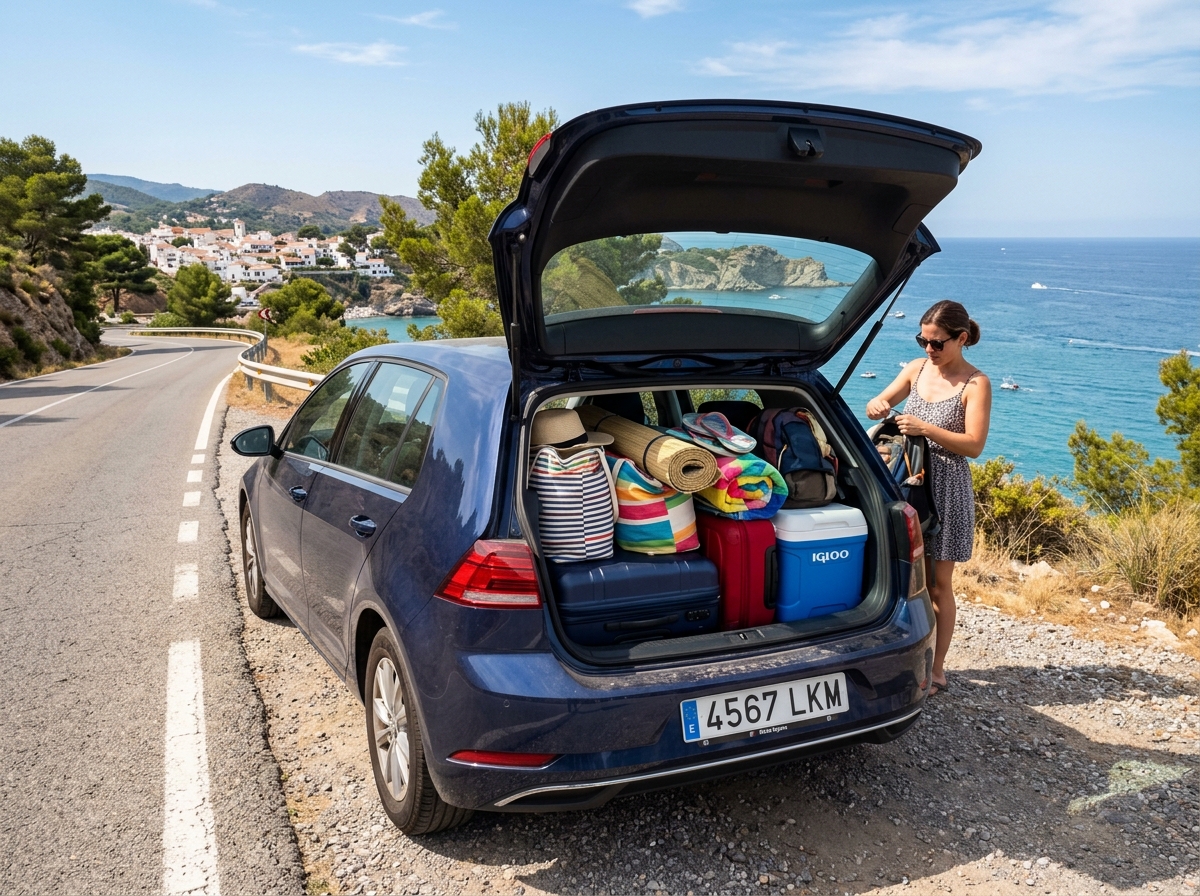

There is a familiar sight on Spain’s roads every summer. Cars filled with suitcases, beach umbrellas, inflatable toys, cool boxes, bicycles, and everything else needed for a family holiday.
Packing for a journey is almost a tradition in itself. The challenge is often not deciding what to take, but finding somewhere to put it.
Yet how you load your vehicle has a direct impact on both safety and comfort. A poorly packed car becomes harder to control, takes longer to stop and, in the event of a collision, everyday objects can become dangerous projectiles.
Loading your car correctly is therefore every bit as important as checking the tyres or topping up the engine oil.
Contents
Every Vehicle Has a Maximum Weight
Every vehicle is designed to carry a maximum permitted weight, known as the Maximum Authorised Mass (MAM).
This includes:
- the vehicle itself
- the driver
- passengers
- luggage
- pets
- accessories
Many drivers are surprised by how quickly this limit can be reached.
Four adults, holiday luggage, bicycles and a roof box can easily add several hundred kilograms to the vehicle.
Although most family cars are capable of carrying these loads, exceeding the manufacturer’s limits affects handling, braking and tyre performance.
Weight Changes How Your Car Behaves
A lightly loaded car behaves very differently from one carrying five people and a full boot.
Acceleration becomes slower.
Braking distances increase.
Cornering requires more care.
Suspension works harder.
Tyres generate more heat.
None of these changes are dramatic on their own, but together they reduce the safety margins built into the vehicle.
This is particularly noticeable on long motorway descents or winding mountain roads, where brakes and tyres remain under continuous demand.
Heavy Items Go Low and Forward
Professional load distribution follows one simple principle.
Place the heaviest items as low and as close to the rear seats as possible.
Doing so helps maintain the vehicle’s centre of gravity and reduces unnecessary movement during braking.
Large suitcases should sit on the boot floor.
Lighter bags can then be stacked on top.
Avoid placing heavy objects on parcel shelves or balancing them above other luggage.
If the load shifts suddenly, even a modest suitcase can strike passengers with tremendous force.
Loose Objects Are More Dangerous Than They Appear
Imagine travelling at motorway speed when a driver brakes suddenly.
Everything inside the vehicle continues moving forwards until something stops it.
That includes:
- cameras
- laptops
- drinks bottles
- toys
- handbags
- shopping bags
- cool boxes
Objects that seem harmless while stationary can become serious hazards during emergency braking.
Before setting off, ask yourself a simple question.
“If I had to brake as hard as possible right now, where would this item end up?”
If the answer is “inside the passenger compartment”, it probably needs securing.
Roof Boxes Require Extra Care
Roof boxes are excellent for increasing luggage space, but they also change how the vehicle behaves.
Additional weight higher above the road raises the centre of gravity, making the vehicle slightly more susceptible to crosswinds and body roll.
Drivers should also remember that overall vehicle height increases.
Multi-storey car parks, garages and height restrictions become much easier to forget when concentrating on holiday traffic.
Roof loads should always remain within both the vehicle manufacturer’s limits and the roof box manufacturer’s recommendations.
Tyres Need Adjusting Too
Many vehicles require different tyre pressures when carrying heavy loads.
Ignoring this recommendation places unnecessary strain on the tyres, increasing wear and reducing stability.
Before travelling, consult the tyre pressure information supplied by the manufacturer.
It usually takes only a few minutes to make any necessary adjustments.
Visibility Matters
Packing should never reduce the driver’s ability to see clearly.
Rear windows covered completely by luggage make reversing and lane changes significantly more difficult.
If carrying particularly bulky items, ensure mirrors provide an adequate rearward view and allow extra time when manoeuvring.
Remember that holiday traffic often includes cyclists, motorcyclists and pedestrians who may be harder to spot.
Think About What You’ll Need During the Journey
One common mistake is packing everything so tightly that essential items become inaccessible.
Keep within easy reach:
- drinking water
- sunglasses
- medication
- phone charger
- important documents
- snacks
- tissues
Avoid unpacking half the boot at every service station simply to reach something needed during the journey.
A little planning beforehand makes the trip considerably more enjoyable.
Safe Packing Is Part of Safe Driving
Loading a vehicle correctly is not about squeezing in one final suitcase.
It is about ensuring the vehicle continues to perform as its engineers intended.
Every kilogram influences braking.
Every loose object influences safety.
Every decision made while packing continues to affect the journey long after you have left home.
Start Your Holiday the Right Way
Packing the car often marks the beginning of a holiday.
Take an extra few minutes to do it properly.
Distribute weight evenly.
Secure loose objects.
Check tyre pressures.
Maintain good visibility.
Because arriving with everything safely intact is far better than discovering that one hurried packing decision has turned a relaxing holiday into an avoidable problem.
Discover more from N332.es - Driving In Spain
Subscribe to get the latest posts sent to your email.