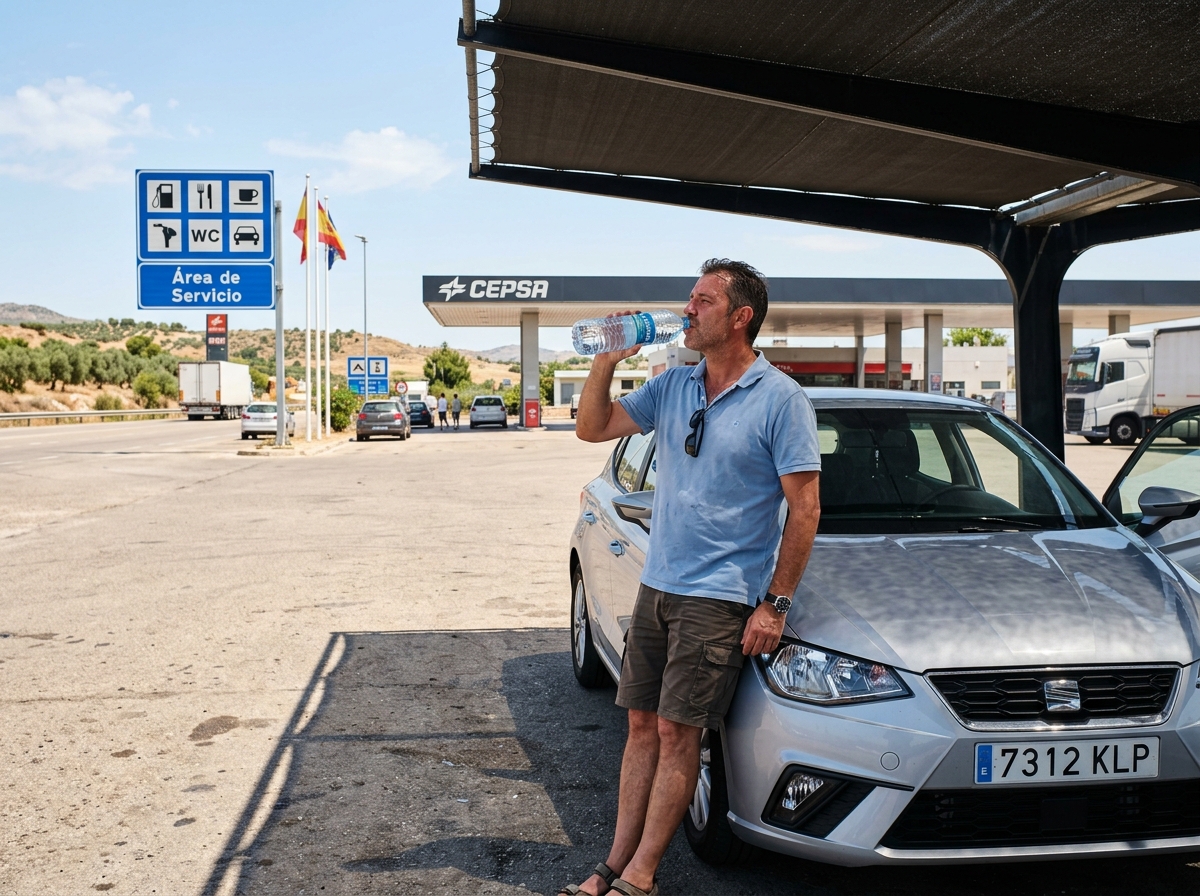

Summer driving in Spain has a unique appeal. Clear skies, dry roads and long daylight hours encourage people to explore, whether travelling to the coast, visiting family, or discovering somewhere new. Yet while many drivers focus on preparing their vehicles for the hotter months, they often overlook something even more important: themselves.
Heat affects every driver, regardless of age or experience. Unlike heavy rain or poor visibility, its impact is largely invisible. You cannot see dehydration, fatigue or reduced concentration developing, yet all three can quietly influence your judgement behind the wheel.
Understanding these hidden effects can help make every summer journey safer.
Contents
Your Brain Works Harder Than You Think
Driving is one of the most demanding everyday activities most people perform.
Every second, your brain is processing hundreds of pieces of information. Speed, distance, road signs, traffic lights, pedestrians, cyclists, mirrors, satnav instructions and changing road conditions all require constant attention. Most of this happens automatically, thanks to experience, but it still requires energy.
Hot weather increases the effort.
As your body works to regulate its temperature, more energy is diverted towards cooling itself. Perspiration increases, dehydration begins, and concentration gradually declines.
The change is rarely dramatic.
Instead, it happens little by little, often without the driver noticing.
Small Mistakes Become Bigger Risks
Most collisions are not caused by dramatic recklessness.
They result from ordinary people making ordinary mistakes.
Missing a mirror check.
Following another vehicle a little too closely.
Taking slightly longer to react to traffic slowing ahead.
Forgetting to indicate.
These are exactly the kinds of errors that become more likely when the body is under physical stress.
Heat doesn’t necessarily create dangerous drivers.
It simply makes small lapses more likely.
Dehydration Starts Earlier Than You Think
Many people assume dehydration only becomes a problem when they feel thirsty.
In reality, thirst is often one of the later warning signs.
Even mild dehydration can reduce concentration, increase tiredness and affect decision-making. Drivers may become irritable, impatient or find it harder to remain focused during long motorway journeys.
The solution is straightforward.
Drink water regularly throughout the day rather than waiting until you feel thirsty. During longer journeys, carry sufficient water for everyone in the vehicle and use planned rest stops as an opportunity to rehydrate.
This becomes particularly important when travelling with children or older passengers, who may become affected by heat more quickly.
Air Conditioning Is There to Help
Air conditioning has transformed summer driving, but it works best when used sensibly.
Some drivers make the mistake of setting the temperature as low as possible in an attempt to cool the vehicle quickly. While tempting after entering a hot car, an excessively cold cabin can become uncomfortable and create a significant temperature difference each time you stop.
Instead, allow the hot air to escape first by opening doors or windows briefly before setting off. Once moving, adjust the air conditioning to maintain a comfortable, consistent temperature rather than an extreme one.
Comfort supports concentration.
Fatigue Is Not Always Obvious
One of the biggest misconceptions about tiredness is that people always recognise it.
Unfortunately, they often don’t.
The brain adapts surprisingly well to gradual fatigue, making drivers believe they remain fully alert when, in reality, reaction times are already slowing.
Coffee is frequently seen as the solution, but while caffeine may temporarily increase alertness, it does not replace proper rest. Once its effects begin to wear off, many people experience what researchers describe as the “rebound effect”, where feelings of tiredness can return suddenly, sometimes more strongly than before.
This is why professional drivers, emergency services and road safety organisations all continue to promote one simple message.
If you’re tired, stop.
Rest is not a sign of weakness.
It is part of responsible driving.
Holiday Driving Is Different
Summer journeys often involve unfamiliar roads, heavier traffic and longer distances.
Drivers may also be sharing the road with tourists, rental vehicles, cyclists, motorcyclists and pedestrians who are unfamiliar with the area.
Busy roads demand patience.
Unfortunately, heat tends to reduce it.
Many arguments inside vehicles begin not because of the destination, but because everyone is becoming uncomfortable. Children become restless, queues become frustrating and delays seem longer than they really are.
Recognising this before it happens allows drivers to respond calmly rather than emotionally.
Looking After Your Passengers
The driver is not the only person affected by summer temperatures.
Children can become uncomfortable surprisingly quickly, while older passengers may struggle with prolonged exposure to heat.
Pets should never be left inside a parked vehicle, even for a few minutes, as internal temperatures rise far more rapidly than many people realise. Likewise, medicines, food and electronic equipment can all be damaged by excessive heat.
Planning regular breaks benefits everyone.
It allows passengers to move around, cool down and arrive feeling refreshed rather than exhausted.
A Comfortable Driver Is Usually a Safer Driver
Road safety is sometimes portrayed as a list of rules.
In reality, it is often about understanding human behaviour.
Drivers who are comfortable, well rested and properly hydrated generally make better decisions than those who are rushing, tired or struggling with the heat.
Looking after yourself is therefore not separate from road safety.
It is an essential part of it.
Enjoy the Journey
Spain offers some of Europe’s most enjoyable driving routes, from coastal roads and mountain scenery to historic towns and vibrant cities.
Summer should be a season for enjoying those journeys, not simply enduring them.
By preparing yourself as carefully as you prepare your vehicle, allowing time for regular breaks, staying hydrated and recognising the hidden effects of heat, you give yourself the best possible chance of arriving safely and enjoying every mile along the way.
Because sometimes, the most important safety system in any vehicle is the person sitting behind the wheel.
Discover more from N332.es - Driving In Spain
Subscribe to get the latest posts sent to your email.