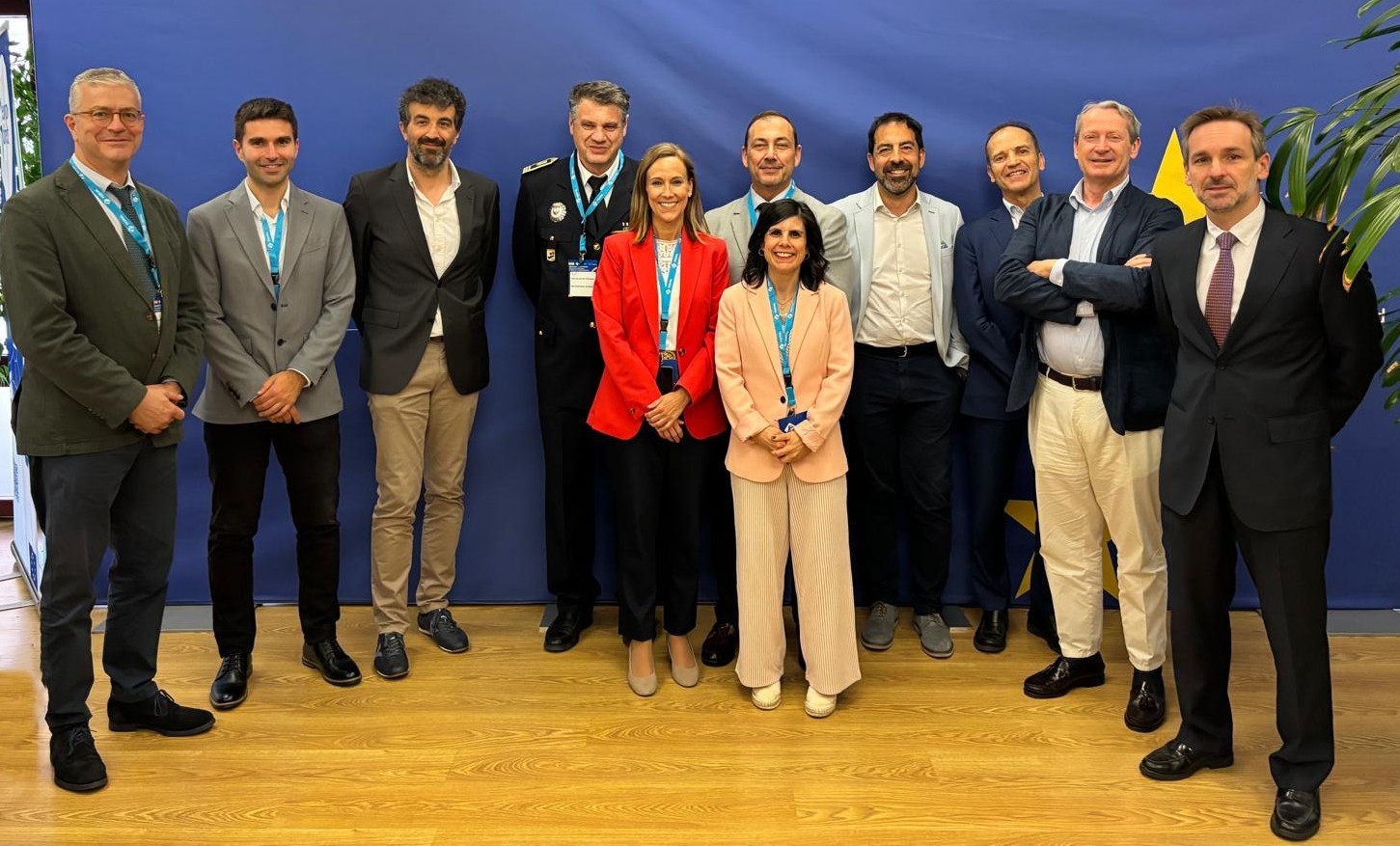
Spain has solidified its position as the European leader in road safety commitment, accounting for 25% of all entities registered in the European Road Safety Charter (ERSC). This leadership was highlighted during a conference titled “Impulsando el compromiso con la seguridad vial a través de la Carta Europea” (Boosting the commitment to road safety through the European Charter), organised in Madrid by the Spanish Foundation for Road Safety, FESVIAL, which acts as the official ambassador for the charter in Spain.
The ERSC is the largest civil society platform dedicated to road safety, comprising more than 4,000 public and private entities across the European Union. Spain leads the membership ranks with 926 registered bodies. Furthermore, the country consistently submits the highest number of applications for the Excellence in Road Safety Awards, showcasing a strong collaborative effort between public administrations, private businesses, and social organisations.
Contents
Multi-Ministerial Support for Safer Roads
The event, held at the Representation of the European Commission in Spain, brought together key figures from the Dirección General de Tráfico (DGT), public administrations, transport companies, and safety experts. During the session, the Ministry of Education, Vocational Training and Sports, alongside the Ministry of Labour and Social Economy—via the Instituto Nacional de Seguridad y Salud en el Trabajo (INSST)—announced their formal commitment to promoting the charter.
This joint effort aims to embed road safety culture directly into school curricula and implement preventative road safety strategies within the workplace. Lucio Calleja, from the Ministry of Education, noted that since 2021, safe, sustainable, and healthy mobility has evolved from a superficial topic into integrated content across various educational stages. Meanwhile, Blanca Ruiz de Zárate from the INSST emphasised that reducing commuting and work-related traffic accidents is a priority that requires structured management within companies.
Award-Winning Spanish Initiatives
The conference also served as a platform to highlight highly successful Spanish road safety projects that have been recognized on a European scale. Representatives from transport company ALSA, the Ayuntamiento de Madrid, the Axencia Galega de Infraestruturas, and Volvo Cars España shared details of their award-winning or finalist initiatives:
- ALSA (“Evitando Riesgos”): The company utilizes artificial intelligence tools to detect and prevent risky driving behaviours, focusing on driver training and overcoming initial internal reticences to technology.
- Ayuntamiento de Madrid (Policía Municipal): Gerardo del Rey, Chief Commissioner of the Policía Municipal de Madrid, defended the need for local councils to take an active, budgeted, and measurable role in managing road safety, moving beyond simply recording statistics to actively influencing responsible behavior.
- Axencia Galega de Infraestruturas: Winners in 2024 for their “Plan de Sendas de Galicia”, they have executed nearly 300 kilometres of pedestrian and cycling paths to protect vulnerable road users in highly dispersed rural populations.
- Volvo Cars España: Winners in 2025 for an innovative educational programme that has spent 12 editions teaching young children practical road safety values.
A Focus on Vulnerable Road Users
The safety of motorcyclists was brought to the forefront by José Miguel Tolosa, the provincial head of traffic for Cantabria (DGT). Tolosa warned that the risk of a motorcyclist dying in a traffic accident can be up to 40 times higher than that of someone travelling in a car, noting that more than 400 motorcyclists lose their lives each year in Spain.
Andrea Dall’Oglio, director of the European Road Safety Charter, praised Spain’s proactive stance, stating that Spanish organizations are at the absolute forefront of developing initiatives that reduce road casualties across the European Union.
Entities wishing to submit entries for the 2026 Excellence in Road Safety Awards have until 10 June to apply. The categories for this year include Road Education, Technology, Urban Environment, and two newly introduced categories: Occupational Road Safety and Vulnerable Users.
Discover more from N332.es - Driving In Spain
Subscribe to get the latest posts sent to your email.