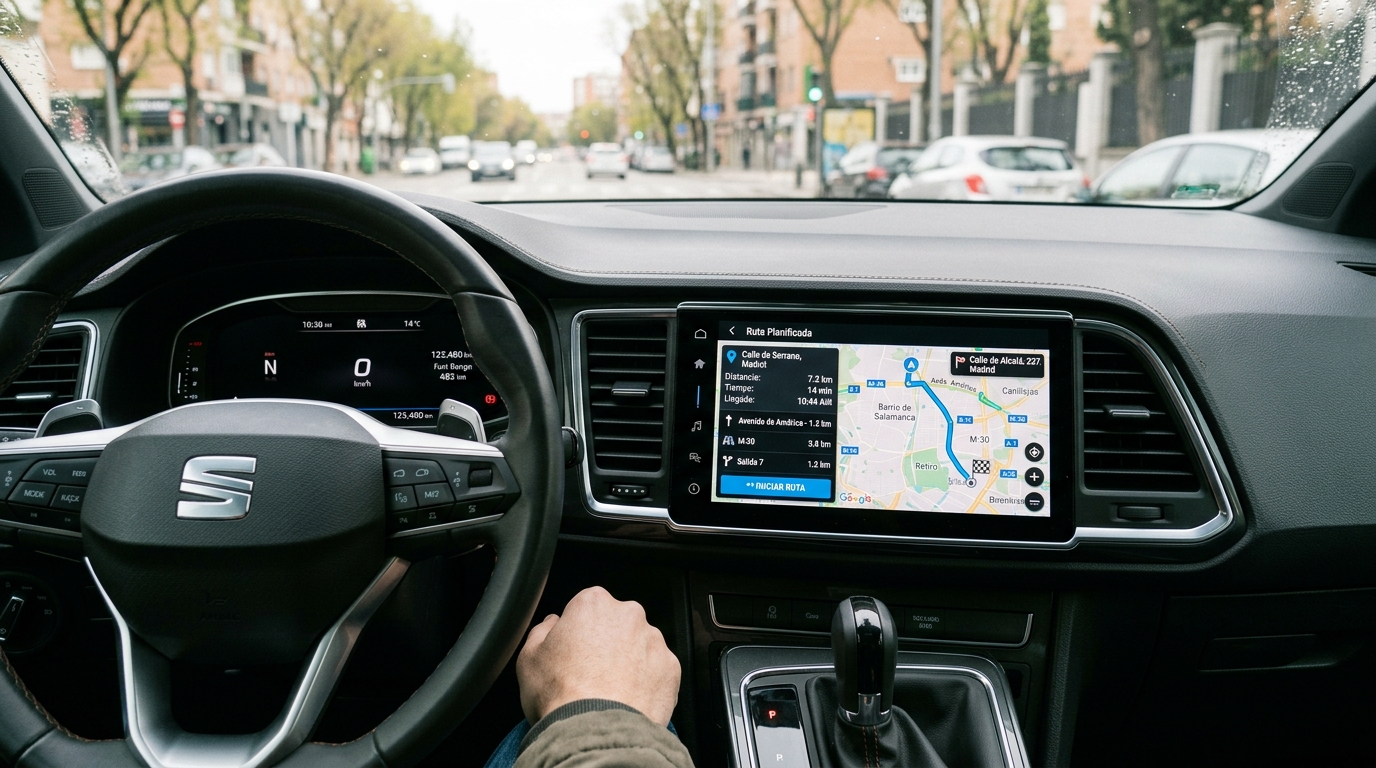

Modern navigation systems have made travelling easier than ever. Whether built into the vehicle or accessed through a mobile phone, GPS guidance helps drivers reach unfamiliar destinations with confidence.
However, this convenience can become a risk when attention shifts from driving to the device.
Interaction Divides Attention
Using a navigation system while driving often involves:
- entering or changing a destination,
- zooming or scrolling the map,
- interpreting instructions while looking at the screen.
Each of these actions requires visual, manual, and cognitive attention — the same resources needed for safe driving.
Even Brief Glances Matter
Looking at a screen for just a moment can mean travelling several metres without full awareness of the road. At higher speeds, this distance increases significantly.
Hazards do not pause while attention is elsewhere.
Unexpected Changes Increase Risk
Navigation systems may suggest route changes, diversions, or recalculations during a journey. These updates can prompt drivers to look at the screen or make adjustments at precisely the wrong moment.
Trying to respond immediately increases distraction.
The Safest Approach Is Preparation
Setting the route before starting the journey ensures that the driver can focus entirely on the road once moving.
If changes are needed:
- stop in a safe location,
- update the route while stationary,
- continue only when ready.
Audio Guidance Supports Focus
Using voice directions allows drivers to keep their eyes on the road. While not a complete solution, it reduces the need for visual interaction.
Familiarity Can Lead to Overconfidence
Drivers who regularly use navigation systems may feel comfortable interacting with them while driving. This familiarity can create a false sense of safety.
The underlying distraction remains, regardless of experience.
Technology Should Support, Not Distract
Navigation systems are designed to assist, not compete for attention. When used correctly, they improve journey planning and reduce stress.
When used incorrectly, they introduce unnecessary risk.
Set It, Then Drive
The principle is simple: prepare before moving, and focus on driving once underway.
A route can be recalculated. A moment of lost attention cannot be undone.
Discover more from N332.es - Driving In Spain
Subscribe to get the latest posts sent to your email.