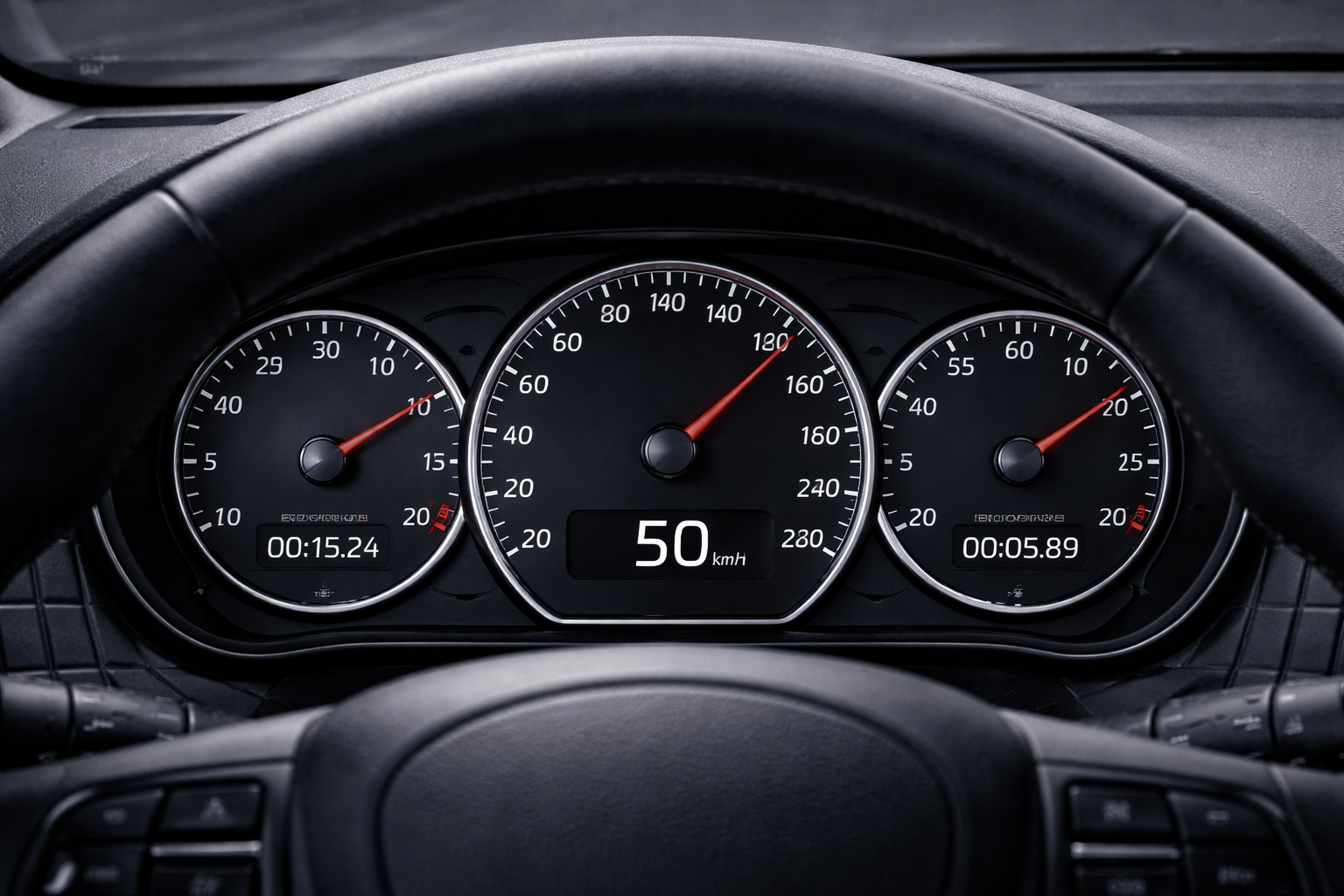

Speed is one of the most discussed factors in road safety, yet it is often misunderstood. Many drivers focus on limits and enforcement, but the real issue lies in how speed affects time — the time needed to recognise a hazard, make a decision, and bring a vehicle to a stop.
That time is limited, and it reduces quickly as speed increases.
The Brain Needs Time to Respond
Driving is a continuous process of observation and decision-making. When a hazard appears — a vehicle braking ahead, a pedestrian stepping into the road, or debris on the surface — the brain must first recognise the danger, then decide how to respond.
This process takes time, typically around one second or more.
During that time, the vehicle continues moving at full speed.
Distance Travelled Before Braking
At 50 km/h, a vehicle travels approximately 14 metres in one second. At 90 km/h, that increases to around 25 metres.
This is the distance covered before the driver even begins to brake.
By increasing speed, drivers reduce the margin available to respond safely.
Braking Adds to the Total Distance
Once braking begins, additional distance is required to bring the vehicle to a stop. This braking distance increases significantly with speed and is affected by road conditions, tyre quality, and vehicle load.
The total stopping distance is therefore a combination of:
- reaction distance,
- braking distance.
Both increase as speed rises.
Small Changes, Big Impact
A difference of just 10 or 20 km/h may feel minor, but it can dramatically increase the distance required to stop.
In situations where hazards appear suddenly, those extra metres can determine whether a collision occurs or is avoided.
Speed and Perception
Modern vehicles are quieter, smoother, and more stable than ever. This can create a false sense of control, making higher speeds feel comfortable and safe.
However, comfort does not change the laws of physics.
Rural Roads and Leaving the Carriageway
On roads outside towns and cities, one of the most common types of serious collision involves vehicles leaving the road. Inappropriate speed is often a contributing factor, reducing the driver’s ability to respond to bends, obstacles, or surface changes.
Every Second Matters
Speed is not only about how quickly a journey is completed. It determines how much time a driver has to avoid danger.
Choosing a slightly lower speed increases reaction time, reduces stopping distance, and improves the chances of avoiding a collision entirely.
Every second gained through lower speed is a second that can save a life.
Discover more from N332.es - Driving In Spain
Subscribe to get the latest posts sent to your email.