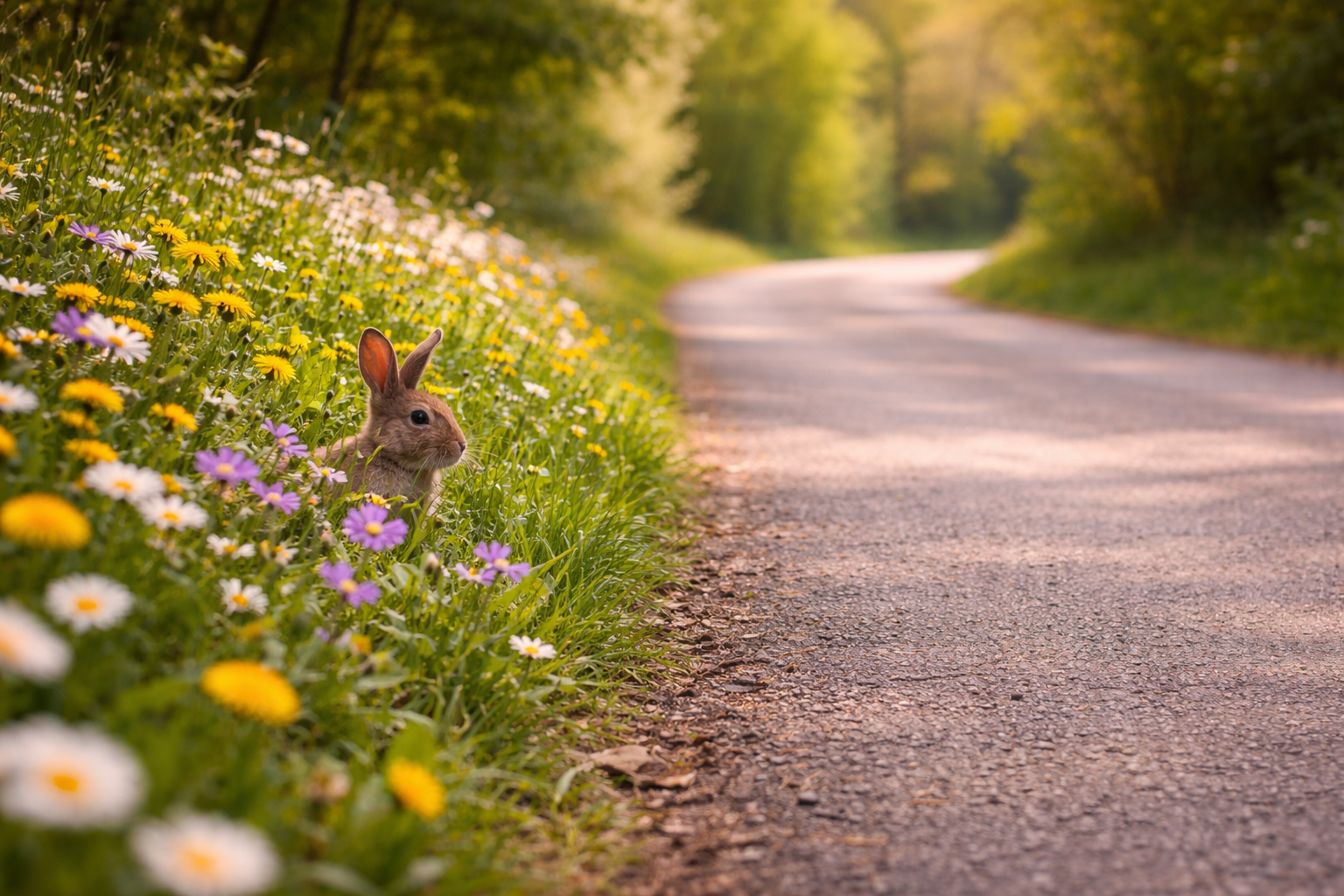

Rural roads often feel less demanding than busy urban routes. Traffic is lighter, the environment is quieter, and the pace can seem more relaxed. However, this perception can mask a range of hazards that become more pronounced during spring.
These roads require a different kind of attention.
Limited Visibility Around Bends
Many rural roads include tight bends, elevation changes, and vegetation close to the carriageway. These features restrict visibility and reduce the time available to react to hazards.
Drivers may encounter:
- oncoming vehicles positioned wide in the lane,
- slow-moving agricultural vehicles,
- cyclists or pedestrians without warning.
Approaching bends at an appropriate speed is essential.
Changing Road Surfaces
Spring can expose the effects of winter damage. Surfaces may include:
- cracks and potholes,
- loose gravel or debris,
- uneven repairs,
- patches of reduced grip.
These variations affect braking and steering, particularly on corners.
Wildlife Activity Increases
As noted earlier in the month, wildlife movement increases during spring. Rural roads pass through natural habitats, making animal encounters more likely.
The combination of limited visibility and unpredictable movement increases risk.
Narrow Lanes and Limited Escape Space
Many rural roads are narrow, with little or no shoulder. When two vehicles meet, especially on bends, available space is limited.
Maintaining a controlled speed allows drivers to adjust position safely and avoid sudden manoeuvres.
False Sense of Security
Lower traffic levels can create a feeling of safety, encouraging higher speeds. This is one of the most common risk factors on rural roads.
Hazards may be less frequent, but when they occur, they often appear suddenly and without warning.
Adapting Driving Style
Safe rural driving involves:
- reducing speed before bends,
- increasing observation of road edges,
- anticipating unexpected obstacles,
- maintaining a position that allows flexibility.
Smooth, controlled driving is more effective than reactive corrections.
Respecting the Environment
Rural roads are shared with a wide range of users, including local residents, farmers, cyclists, and wildlife. Respecting that environment means adapting behaviour rather than imposing speed or expectation.
Quiet roads are not risk-free. They simply present different risks — often less visible, but no less important.
Discover more from N332.es - Driving In Spain
Subscribe to get the latest posts sent to your email.