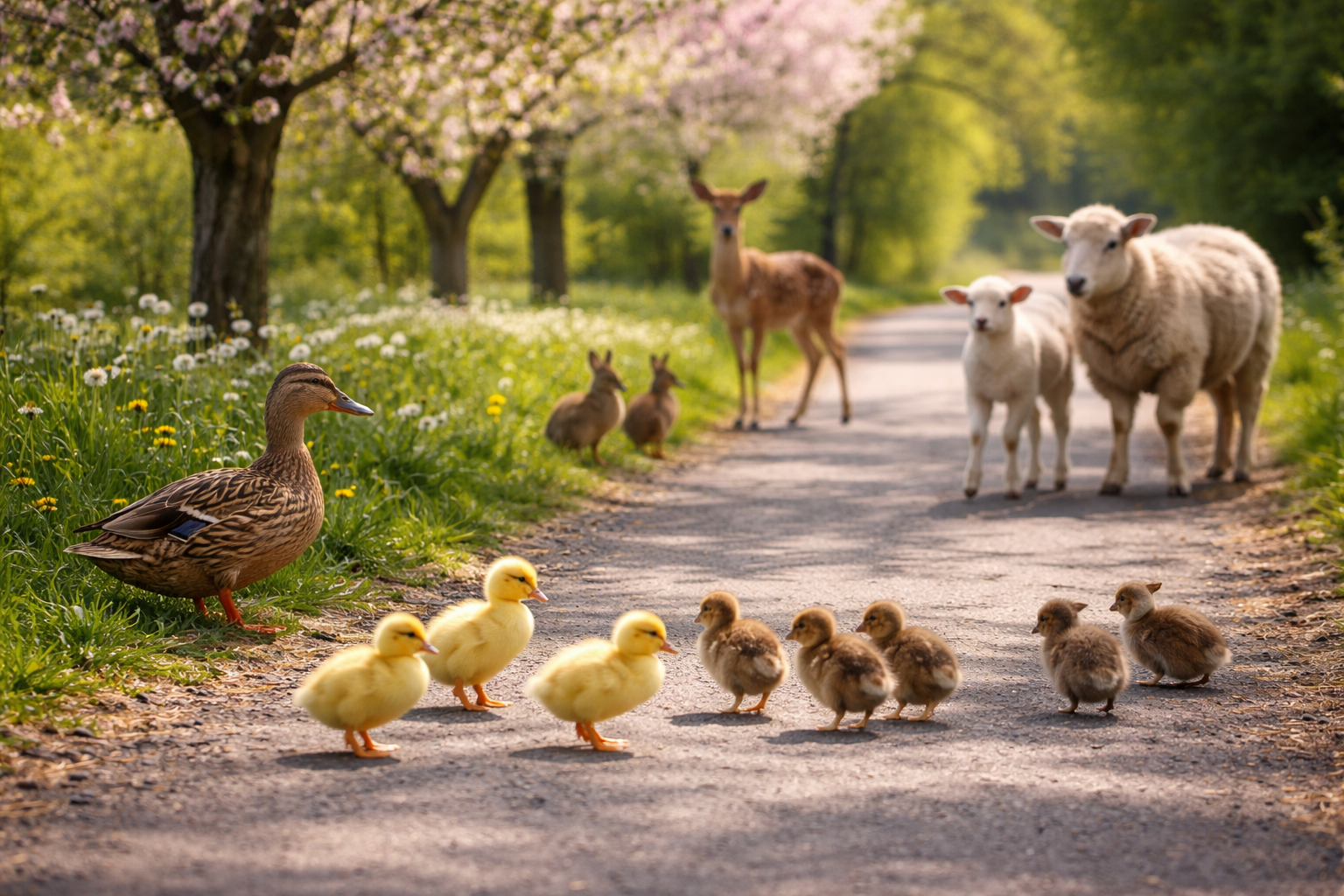

As spring develops, the natural environment becomes more active. New growth, warmer temperatures, and longer days encourage movement among wildlife. For drivers, this seasonal change introduces an important and often underestimated hazard.
Animals do not follow road rules, and in spring, their behaviour becomes even less predictable.
Young Animals Lack Experience
Spring is a time of new life. Young animals are learning to navigate their surroundings and often do so without awareness of danger. Roads that cut through rural areas or natural habitats become crossing points.
Unlike adult animals, younger ones are more likely to:
- run suddenly into the road,
- stop or hesitate unpredictably,
- follow others without awareness of traffic.
These behaviours make them particularly difficult to anticipate.
One Animal Often Means More
Drivers may encounter a single animal crossing and assume the risk has passed. In reality, animals often travel in groups, especially during this time of year.
If one animal crosses, it is important to expect another to follow.
Dawn and Dusk Increase Risk
Wildlife activity is highest during early morning and late evening. These periods also coincide with reduced visibility and changing light conditions, making detection more difficult.
Drivers travelling at these times should reduce speed slightly and increase attention to roadside movement.
Rural Roads Present Greater Hazards
Animal-related incidents are more common on rural roads where:
- vegetation limits visibility,
- there are fewer barriers,
- traffic is lighter, encouraging higher speeds,
- natural habitats are closer to the carriageway.
Familiar routes can lead to reduced vigilance, increasing the likelihood of surprise encounters.
Reacting Safely
If an animal appears on the road:
- brake firmly but smoothly,
- avoid sudden swerving, especially into oncoming traffic,
- remain aware of additional animals nearby.
Maintaining control of the vehicle is always the priority.
Speed Influences Outcome
Lower speeds provide more time to react and reduce the severity of any impact. In areas where wildlife presence is likely, adapting speed is one of the most effective safety measures.
Awareness Is Prevention
Spring wildlife is not an unexpected hazard — it is a predictable seasonal change. Recognising this allows drivers to anticipate rather than react.
A moment of awareness can prevent injury, damage, and distress. Expecting the unexpected is the safest approach when sharing the road with the natural world.
Discover more from N332.es - Driving In Spain
Subscribe to get the latest posts sent to your email.