

As Spain’s towns and cities continue adapting to modern mobility, cycle lanes have become an increasingly familiar part of the urban landscape. Designed to improve safety and encourage sustainable transport, they are now used by cyclists, electric scooter riders, and in some areas other forms of personal mobility.
But one important misunderstanding still exists.
Cycle lanes are not informal spaces. They are part of the road network, and the rules that govern road safety still apply within them.
Many cycle lanes include their own traffic signs, road markings, junction controls, and priority systems. STOP signs, GIVE WAY markings, traffic lights, directional arrows, and pedestrian crossing points are placed there for the same reason they exist elsewhere on the road — to organise movement safely and predictably.
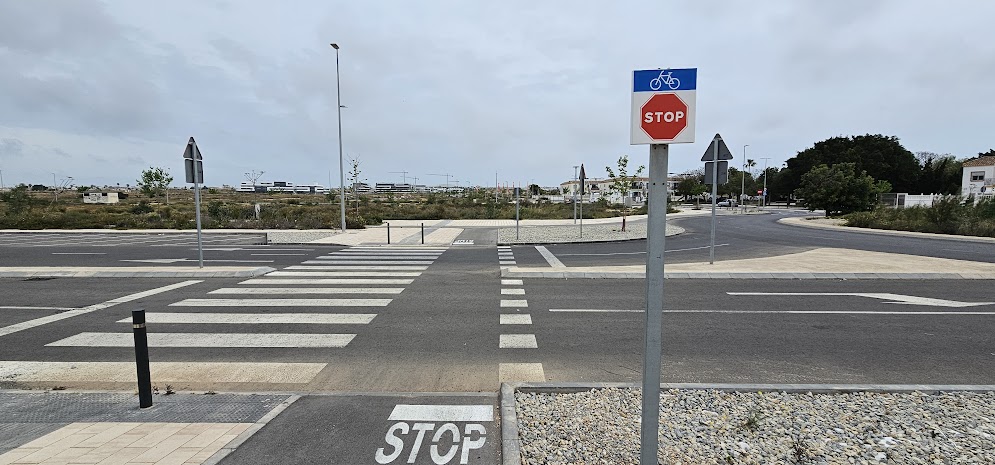
Unfortunately, some riders mistakenly assume cycle infrastructure allows greater freedom from normal road discipline. This can lead to cyclists or scooter riders failing to stop, entering junctions too quickly, ignoring markings, or failing to anticipate pedestrians and other users sharing the environment.
Electric scooters have added further complexity. Their acceleration, quiet operation, and ease of use can create a false sense of simplicity, particularly among inexperienced riders who may never previously have used public roads regularly.
Yet using a cycle lane still requires awareness, observation, and responsibility.
Pedestrians crossing cycle paths may not always realise how quickly bicycles or scooters can approach. Riders themselves may be unfamiliar with local layouts, particularly in tourist areas or cities undergoing rapid infrastructure changes.
Visibility is also important. Parked vehicles, street furniture, trees, delivery vans, and café terraces can all reduce sightlines at crossings and intersections.
The safest traffic systems are based on predictability. When road users follow markings consistently, other people can better anticipate their behaviour and react safely.
This is particularly important in shared urban spaces where bicycles, scooters, pedestrians, and vehicles often interact within very limited distances.
Respecting cycle lane signage is not simply about avoiding fines or enforcement. It is about recognising that smaller, lighter vehicles can still cause injuries, especially when speed, distraction, or poor judgement are involved.
Modern mobility offers enormous benefits to cities. Reduced congestion, cleaner transport, and flexible urban travel all contribute positively to daily life. But successful coexistence depends on all users understanding that roads, cycle lanes, and shared spaces operate safest when everyone accepts both freedom and responsibility together.
Because whether travelling on four wheels, two wheels, or none at all, the rules exist to protect everyone.
Discover more from N332.es - Driving In Spain
Subscribe to get the latest posts sent to your email.

You must be logged in to post a comment.