
Most holidays go exactly as planned.
The journey is uneventful, the accommodation is ready, and the days ahead are filled with relaxation and enjoyment.
Yet when things do go wrong, they are rarely dramatic.
Instead, they usually begin with something surprisingly small.
A flat battery.
A misplaced key.
A mobile phone with no charge.
A forgotten medication.
Running low on fuel.
None of these situations is particularly serious on its own.
The problem is that they often happen at exactly the wrong moment.
Contents
Holidays Change Our Routine
At home, we develop habits without even thinking about them.
We know where we keep our keys.
We know which cupboard contains the first aid kit.
We know where to buy essentials if we need them.
On holiday, those familiar routines disappear.
Suddenly we are relying on memory instead of habit.
That is often where small mistakes begin.
The Stress of Being Somewhere New
Imagine discovering that your phone battery has almost run flat while trying to find your accommodation in an unfamiliar town.
Or realising you have left essential medication in the hotel refrigerator after driving fifty kilometres away.
Neither situation is a major emergency.
Yet both immediately increase stress.
When people become stressed, decision-making changes.
We rush.
We become distracted.
We focus on solving one problem while overlooking another.
That is why preparation is so valuable.
Technology Is Helpful, But Not Perfect
Modern drivers benefit from remarkable technology.
Satellite navigation.
Smartphones.
Online bookings.
Digital payment systems.
All make travelling easier than ever before.
But they also create new dependencies.
A discharged battery can remove access to maps, hotel bookings, emergency contact numbers and travel information all at once.
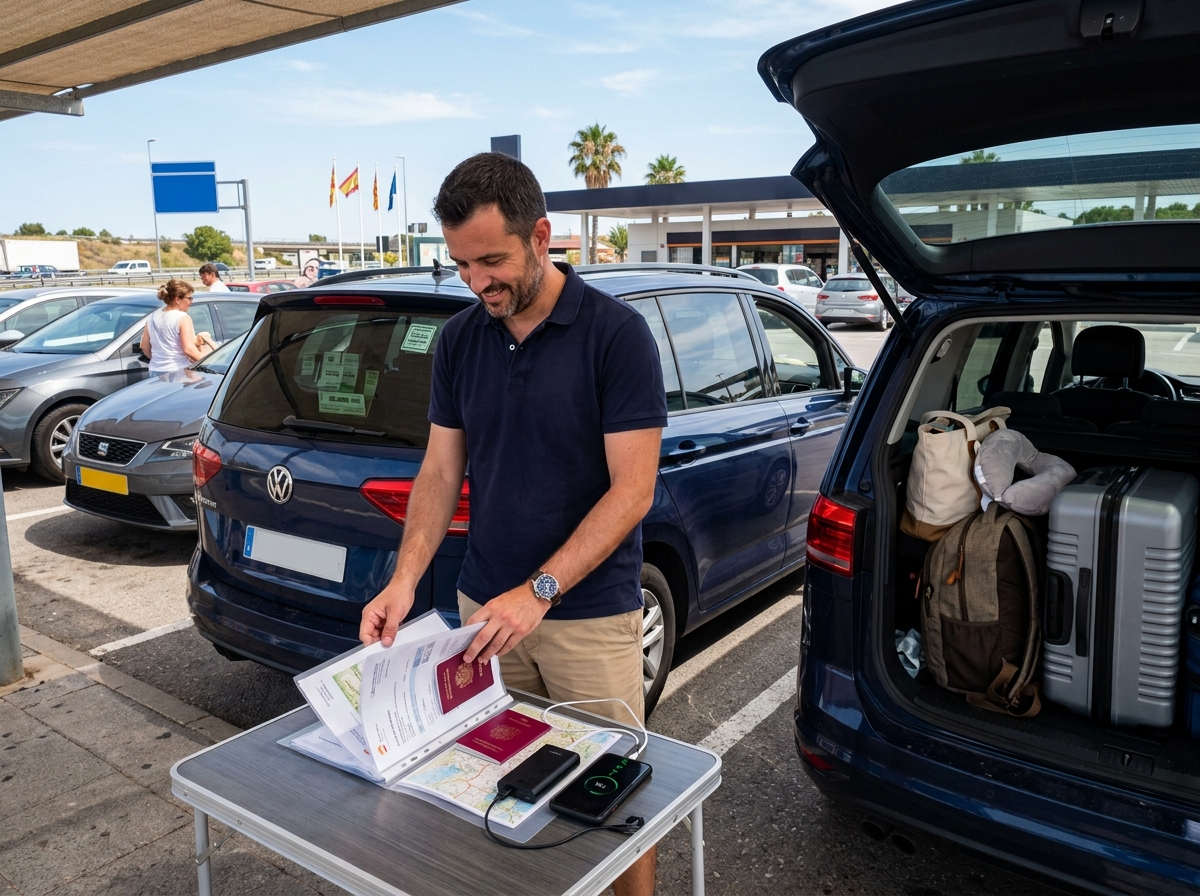
Carrying a charging cable and a small power bank is a simple precaution that many experienced travellers now consider essential.
Keep Important Items Together
One useful habit is creating a dedicated travel wallet or small bag containing everything you may need during the journey.
Driving licence.
Identification.
Vehicle documents.
Insurance details.
Accommodation information.
Emergency contact numbers.
Having everything together reduces the likelihood of searching for individual items when you should be concentrating on driving.
Think Ahead
Ask yourself a few simple questions before setting off.
What happens if we are delayed?
What happens if we lose mobile signal?
What happens if somebody feels unwell?
What happens if we become separated?
None of these questions is designed to create worry.
They simply encourage preparation.
The better prepared we are, the less stressful unexpected situations become.
The Value of Simple Supplies
Some of the most useful travel items cost very little.
A bottle of drinking water.
A torch.
A basic first aid kit.
Phone charging cables.
A paper map.
A notebook and pen.
None occupies much space.
Yet together they provide reassurance when plans change unexpectedly.
Give Yourself Time
Many holiday disruptions become more stressful because people are already working to a tight schedule.
If you have booked a ferry, a flight or accommodation with a fixed arrival time, leave earlier than you think you need to.
Extra time creates flexibility.
Flexibility reduces pressure.
Pressure often leads to poor decisions.
Remember Why You Are Travelling
It is surprisingly easy to become so focused on reaching your destination that you forget why you are travelling in the first place.
Holidays are meant to reduce stress.
Not create it.
Sometimes stopping for an extra coffee, allowing children to stretch their legs or simply taking a few minutes to reorganise the vehicle is exactly what the journey needs.
Preparation Creates Confidence
One of the greatest benefits of planning ahead is not simply avoiding problems.
It is confidence.
Drivers who know they have prepared properly tend to feel calmer.
Passengers feel more relaxed.
Unexpected events become inconveniences rather than crises.
The journey becomes something to enjoy rather than something to endure.
The Best Insurance Is Preparation
Insurance provides valuable protection when unexpected events occur.
But many of the smaller problems that interrupt holidays never become insurance claims.
They become stories.
Stories that begin with, “We forgot…”
Or, “We didn’t think about…”
Fortunately, many of those stories can be avoided altogether.
By preparing carefully, remaining flexible and allowing yourself plenty of time, you greatly increase the likelihood that the only memories you bring home are the ones you intended to make.
Because the smallest preparations often prevent the biggest holiday headaches.
Discover more from N332.es - Driving In Spain
Subscribe to get the latest posts sent to your email.