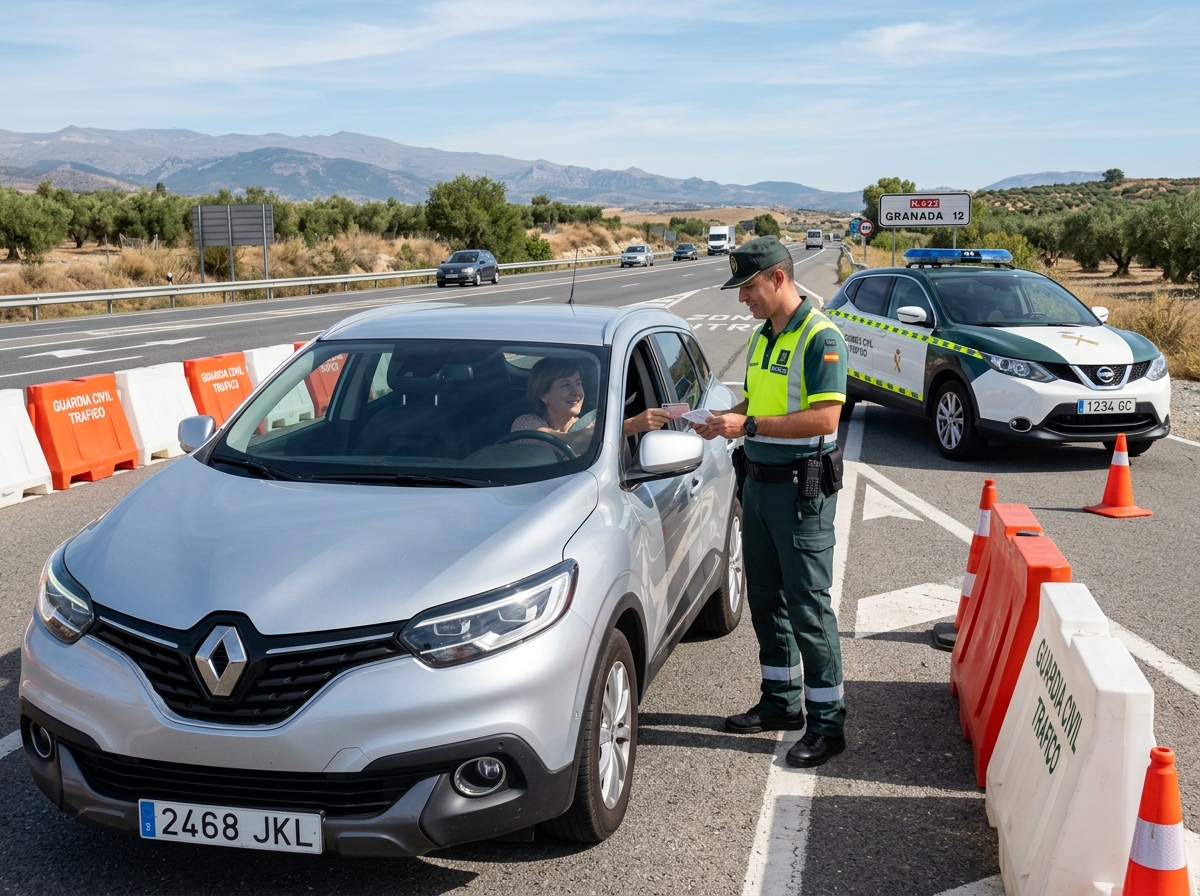

For many visitors to Spain, seeing the distinctive green vehicles of the Guardia Civil Traffic Group can be slightly intimidating. Even long-term residents sometimes become nervous when approaching a roadside checkpoint.
In reality, being stopped by the Guardia Civil is usually nothing to worry about.
Traffic officers carry out thousands of routine checks every year, many of which have nothing to do with offences. Their role is to improve road safety, assist motorists and ensure vehicles using Spanish roads meet the legal requirements.
Knowing what to expect makes the experience straightforward for everyone involved.
Contents
Why Are More Checks Carried Out in Summer?
Spain’s roads become considerably busier during the holiday season.
Millions of additional journeys take place as families travel to coastal resorts, tourists collect hire cars, motorcyclists enjoy the warmer weather and freight traffic continues to operate as normal.
With more vehicles on the road, there is naturally an increase in police operations.
Some checkpoints focus on documentation.
Others target drink or drug driving.
Some concentrate on vehicle condition, seatbelt use or compliance with seasonal enforcement campaigns.
Many are entirely routine.
Being stopped does not necessarily mean you have done anything wrong.
Pull Over Safely
If an officer signals for you to stop, remain calm.
Avoid braking suddenly or stopping immediately if doing so would create a hazard.
Instead, indicate your intentions, reduce your speed steadily and stop where instructed, or in the nearest safe location if appropriate.
Whenever possible, stop on the right-hand side of the road, ensuring your vehicle does not obstruct other traffic.
Stay Inside the Vehicle
One mistake sometimes made by visitors is getting out of the car immediately.
Unless specifically instructed otherwise, remain inside the vehicle with your seatbelt fastened until the officer approaches.
Traffic officers are trained to approach vehicles safely, usually from the side away from passing traffic. Remaining inside the vehicle helps keep everyone safe while the officer explains why you have been stopped.
Have Your Documents Ready
Most roadside checks involve nothing more complicated than confirming that both the driver and vehicle comply with Spanish legal requirements.
Depending on the circumstances, you may be asked to produce:
- your driving licence
- personal identification
- the vehicle registration document
- ITV documentation where applicable
If you are driving a hire vehicle, some documents may already be stored within the vehicle by the rental company.
Having everything organised before travelling helps the process run smoothly.
Listen Carefully
If the officer asks you to switch off the engine, produce documents or move the vehicle, follow the instructions calmly.
Most roadside conversations are brief, professional and courteous.
If you do not fully understand Spanish, explain this politely.
Many officers have experience dealing with international visitors, particularly in tourist areas, and will often communicate clearly or simplify instructions where possible.
Roadside Breath Tests
Drivers are sometimes surprised to learn that breath tests may be carried out during routine checkpoints.
These checks are entirely normal and form part of Spain’s wider road safety strategy.
The quickest way to complete the process is simply to cooperate fully.
Most drivers continue their journey within a few minutes.
Vehicle Condition
During some operations, officers may also carry out basic visual inspections of the vehicle.
This might include checking:
- tyres
- lighting
- number plates
- mirrors
- windscreen condition
- mandatory equipment
These inspections help identify defects that could affect road safety before they contribute to collisions.
Remain Calm
Perhaps the most important advice is also the simplest.
Stay calm.
Traffic officers perform these checks every day.
They are not looking to make the situation stressful.
Be polite.
Answer questions honestly.
Provide documents when requested.
Follow instructions carefully.
A calm, respectful approach usually results in a straightforward and efficient interaction.
Remember Why the Checks Exist
Roadside enforcement is not simply about issuing fines.
Every defective tyre identified.
Every impaired driver removed from the road.
Every unsafe vehicle repaired.
Every seatbelt worn correctly.
All contribute to making Spain’s roads safer for everyone.
Most motorists will experience only a handful of roadside checks throughout the year.
When they do, the process is usually completed quickly and professionally.
A Normal Part of Driving
Being stopped by the Guardia Civil should never be viewed as something to fear.
It is simply one aspect of driving on Spain’s roads.
Understanding the process, carrying the correct documentation and approaching the situation calmly allows you to continue your journey with minimal delay.
Because the safest journeys are built not only on good driving, but also on cooperation, courtesy and mutual respect.
Discover more from N332.es - Driving In Spain
Subscribe to get the latest posts sent to your email.