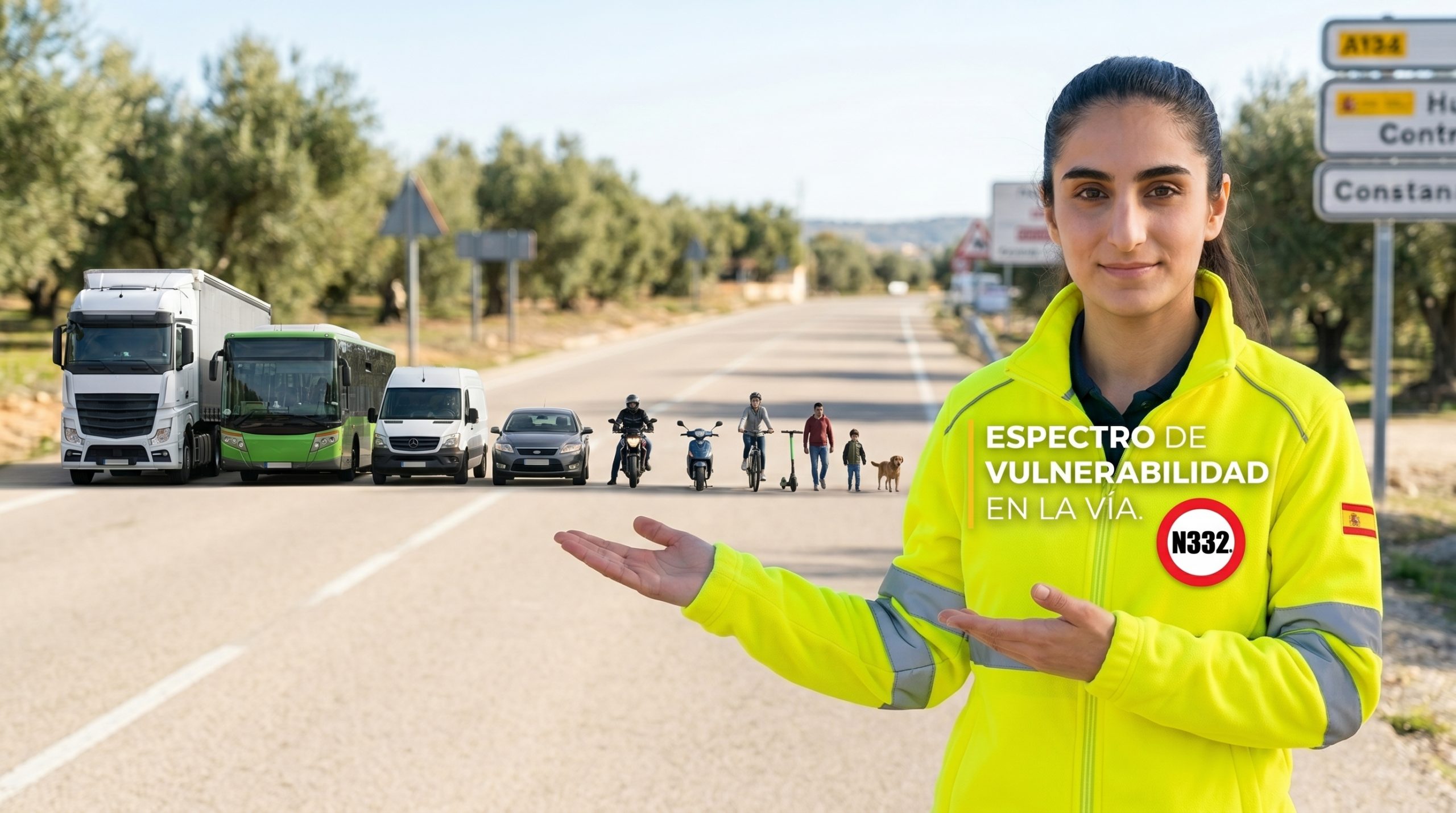

The Spanish Government has approved changes to the General Traffic Regulations aimed at improving protection for vulnerable road users. Most measures take effect on 1 October 2026, with some technical requirements following in October 2027.
Contents
Personal Mobility Vehicles (VMPs)
Electric Scooters and Similar Vehicles
✓ Minimum age: 15 years
✓ Helmet mandatory
✓ Lights must be switched on at all times
✓ Reflective clothing required at night or in reduced visibility
✓ Professional riders must wear reflective clothing at all times
✓ Outside urban areas, VMPs may only use cycle lanes and cycling infrastructure
Cyclists
Equipment and Road Position
✓ Helmet mandatory on interurban roads
✓ Professional riders must wear a helmet and reflective clothing
✓ In urban areas, cyclists should generally ride in the centre of the lane
✓ On certain one-way urban roads with a speed limit of 30 km/h or less, local authorities may permit cyclists to travel in both directions
Overtaking and Separation
✓ Drivers overtaking cyclists on interurban roads must reduce speed by 20 km/h below the posted limit
✓ Minimum lateral separation of 1.5 metres when overtaking
✓ Where more than one lane exists in the same direction, drivers must change lane completely when overtaking
✓ Motor vehicles must maintain at least five metres separation when following a cyclist in the same lane
Motorcyclists and Moped Riders
Protective Equipment
✓ Approved motorcycle helmet mandatory
✓ Closed footwear required on all roads
✓ Gloves mandatory on interurban roads (subject to technical specifications being published)
✓ Professional riders must wear reflective clothing
Traffic Congestion
✓ Use of the right-hand hard shoulder may be permitted during congestion where authorised and signposted
✓ Maximum speed 30 km/h when using the authorised shoulder provision
Drivers of Cars, Vans and Lorries
Protecting Vulnerable Road Users
✓ Reduce speed and allow adequate space when overtaking cyclists
✓ Maintain greater awareness of pedestrians, cyclists, motorcyclists and scooter users
✓ Respect emergency corridors during traffic queues
Overtaking and Separation
✓ Drivers overtaking cyclists on interurban roads must reduce speed by 20 km/h below the posted limit
✓ Minimum lateral separation of 1.5 metres when overtaking
✓ Where more than one lane exists in the same direction, drivers must change lane completely when overtaking
✓ Motor vehicles must maintain at least five metres separation when following a cyclist in the same lane
Passing Immobilised Vehicles
✓ Leave at least 1.5 metres lateral separation
✓ Reduce speed by 20 km/h below the applicable speed limit
All Road Users
Emergency Corridors
✓ During significant traffic queues or stoppages, leave a central passage for emergency vehicles
✓ Do not block access for police, ambulances or fire services
Seat Belts
✓ Certain historical exemptions from seat belt use are removed
School Safety
✓ Safe school routes receive formal legal recognition
Pedestrian Safety
✓ New traffic signal arrangements aim to improve protection at signal-controlled crossings
Why These Changes Matter
The reforms are designed to improve protection for vulnerable road users, including pedestrians, cyclists, motorcyclists and users of personal mobility vehicles.
While regulations can improve safety, they do not remove risk. Drivers, riders, cyclists and pedestrians all remain responsible for staying alert, making safe decisions and sharing the road responsibly.
Source: Directorate-General for Traffic (DGT) – Reforms to the General Traffic Regulations concerning vulnerable road users.
Discover more from N332.es - Driving In Spain
Subscribe to get the latest posts sent to your email.