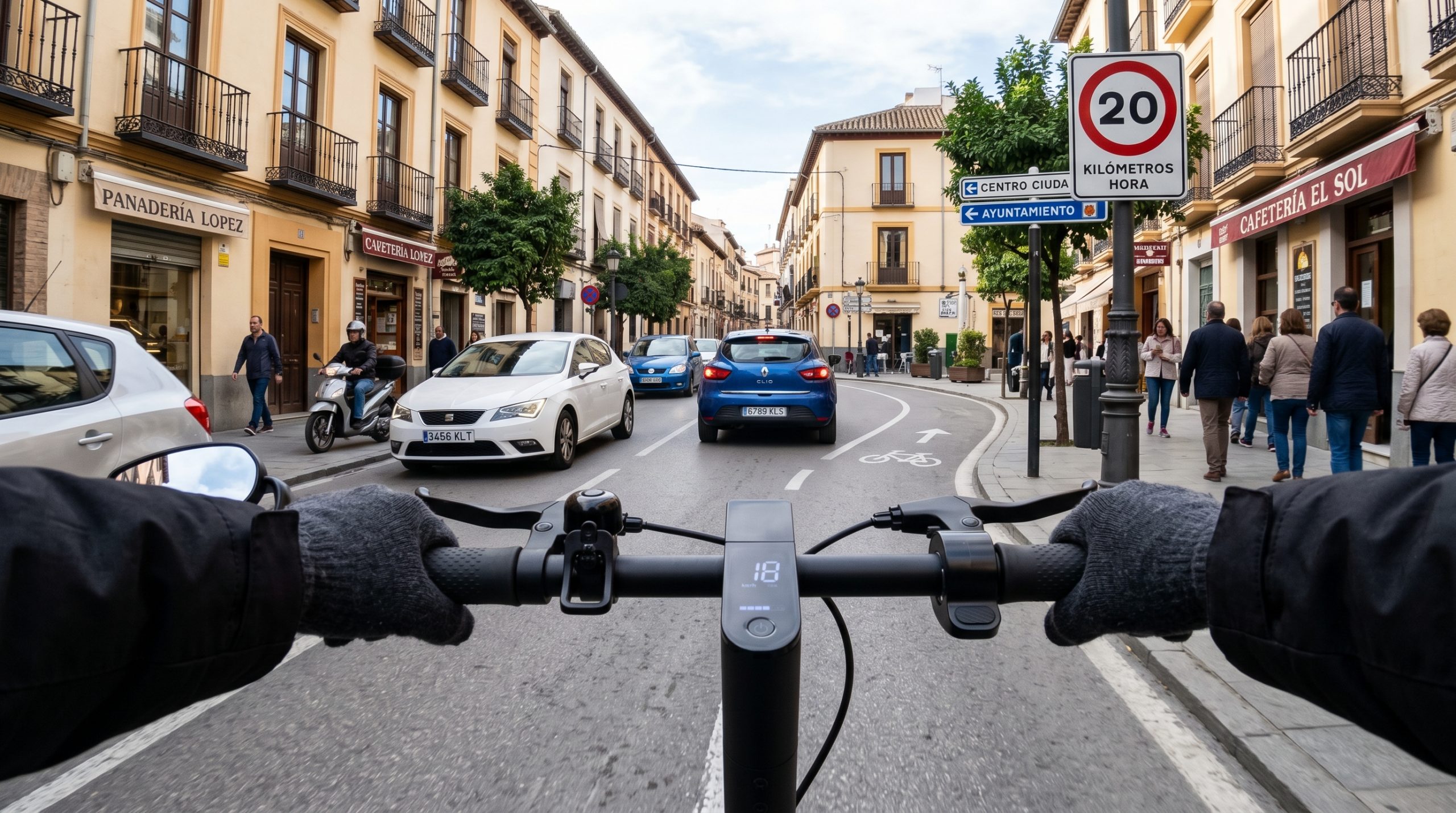

Spain’s roads are changing rapidly.
Alongside traditional cars and motorcycles, towns and cities now include electric scooters, bicycles, delivery riders, mobility vehicles, tourists unfamiliar with local layouts, and increasingly complex urban traffic systems. What was once a relatively predictable road environment has become far more varied and dynamic.
This evolution brings many benefits. Cleaner transport, reduced congestion, flexible urban mobility, and greater transport accessibility are all positive developments. But changing mobility also creates new safety challenges that require adaptation from everyone using the roads.
Electric scooters are perhaps the clearest example. Their popularity has grown quickly, particularly in urban areas where short journeys can often be completed faster than by car. However, many riders have limited experience using public roads and may not fully understand how traffic systems operate around them.
A scooter may feel small and informal, but it still becomes part of the wider traffic environment the moment it enters a road, cycle lane, or shared public space.
Road signs, traffic lights, pedestrian crossings, priority rules, and speed awareness all remain essential. Riders must also understand the limitations of their vehicles, including braking distances, road surface stability, visibility, and vulnerability during collisions.
At the same time, other road users must adapt as well.
Drivers increasingly need to expect smaller, quieter, and slower-moving vehicles in areas where they may not previously have encountered them. Junction observation, mirror checks, and awareness of blind spots have become even more important in mixed mobility environments.
Cyclists and scooter riders also need to recognise that they are less visible to larger vehicles and should avoid assuming they have been seen.
Tourism adds another layer of complexity, particularly during the summer months. Visitors may be unfamiliar with Spanish road layouts, local traffic habits, or the legal rules surrounding electric scooters and bicycles. Rental vehicles, leisure traffic, and seasonal congestion can all increase unpredictability.
Successful road safety increasingly depends on coexistence rather than separation.
No single group owns the road environment. Drivers, riders, pedestrians, cyclists, delivery workers, tourists, and public transport all interact within the same limited space, often with very different speeds and levels of protection.
The safest environments are created when road users remain predictable, patient, and aware of the vulnerabilities around them.
Modern mobility is likely to continue evolving over the coming years. Vehicles may become quieter, smaller, more automated, and increasingly diverse. But the basic principles of road safety will remain unchanged.
Awareness, anticipation, patience, and responsibility will always matter.
Because roads work best when everybody understands they are sharing them together.
Discover more from N332.es - Driving In Spain
Subscribe to get the latest posts sent to your email.