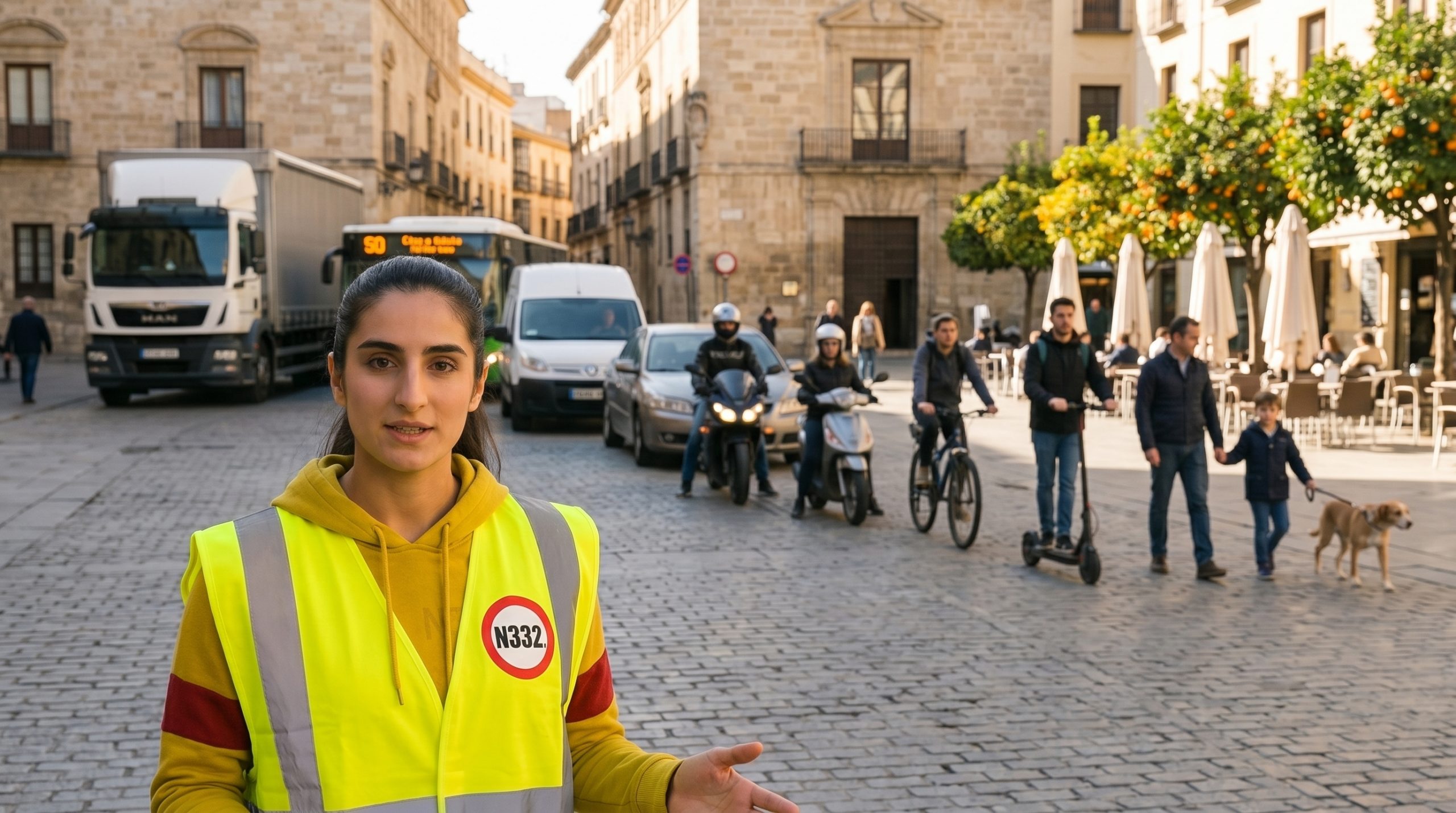

The Spanish Government has approved amendments to the General Traffic Regulations aimed at improving protection for vulnerable road users, reflecting changes in the way people move around towns, cities and rural areas.
According to the Directorate-General for Traffic (DGT), the objective of the reform is to improve the protection of vulnerable road users, reduce risks, and make roads and streets safer and more sustainable.
The changes affect a wide range of road users, including pedestrians, cyclists, motorcyclists and users of Personal Mobility Vehicles (VMPs), such as electric scooters. Most of the new measures are due to come into force on 1 October 2026, with some technical requirements taking effect a year later.
Contents
Putting People at the Centre of Road Safety
Perhaps the most significant aspect of the reform is not any individual rule, but the introduction of the concept of the “vulnerable road user” into the regulations.
A vulnerable road user is someone who has little or no physical protection in the event of a collision. Unlike occupants of cars, vans or lorries, pedestrians, cyclists, motorcyclists and scooter users are directly exposed to the forces involved in a crash.
The consequences of a collision involving a vulnerable road user are often far more severe than those involving two motor vehicles. The new regulations recognise this reality and place greater emphasis on protecting those most at risk.
Changes for Personal Mobility Vehicles
Users of Personal Mobility Vehicles (such as e-scooters) will see several important changes.
The minimum age for use will be set at 15 years old. Helmets will become mandatory and riders will be required to use approved lighting at all times.
Reflective clothing will also be required during hours of darkness or in conditions of reduced visibility. Riders carrying out professional activities, such as deliveries, will be required to wear reflective clothing at all times.
Outside urban areas, VMPs will only be permitted to travel on cycling infrastructure such as cycle lanes and cycle tracks.
Greater Protection for Cyclists
The reform introduces additional measures designed to improve cyclist safety.
When overtaking a cyclist on an interurban road, drivers will be required to reduce their speed by 20 km/h below the posted speed limit and maintain a minimum lateral separation of 1.5 metres.
Where there is more than one lane in the same direction, drivers will be expected to move completely into the adjacent lane when overtaking.
The regulations also establish a minimum following distance of five metres behind cyclists travelling in the same lane.
Within urban areas, cyclists will generally be encouraged to position themselves in the centre of the lane, helping to improve visibility and discourage unsafe overtaking manoeuvres.
New Requirements for Motorcyclists
Motorcyclists will also be affected by the changes.
Approved motorcycle helmets will be mandatory, together with closed footwear on all roads. The regulations also introduce mandatory glove use on interurban roads, although this measure will come into force once the relevant technical specifications have been established.
Professional riders will be required to wear reflective clothing.
The reform also provides for the possibility of motorcycles using the right-hand hard shoulder during congestion, where authorised and signposted, at speeds not exceeding 30 km/h.
Other Measures Affecting Drivers
The reform extends beyond vulnerable road users themselves.
Drivers passing immobilised vehicles, whether due to breakdowns, collisions or roadside assistance operations, will be required to maintain a lateral separation of at least 1.5 metres and reduce speed by 20 km/h below the applicable speed limit.
New provisions reinforce the creation of emergency corridors during traffic queues, helping police, ambulance and fire services reach incidents more quickly.
The regulations also formally recognise the concept of the safe school route, promoting infrastructure and environments that allow children to travel safely to school on foot, by public transport or using non-motorised means of transport.
In addition, several historic exemptions from seat belt use will be removed, and specific rules will be introduced regarding the parking of motorhomes and campervans.
Safety Beyond Rules
While regulations can help improve safety, they do not eliminate risk.
Every road user continues to share responsibility for making roads safer. Drivers must remain attentive and considerate towards those who are more exposed, while cyclists, motorcyclists and scooter users should continue to ride responsibly and use appropriate safety equipment.
The new measures recognise an important reality: when a collision involves a vulnerable road user, the consequences can be devastating. By focusing on those most at risk, Spain is taking another step towards reducing serious injuries and fatalities on its roads.
Your Free Guide to the New Traffic Laws
Discover more from N332.es - Driving In Spain
Subscribe to get the latest posts sent to your email.