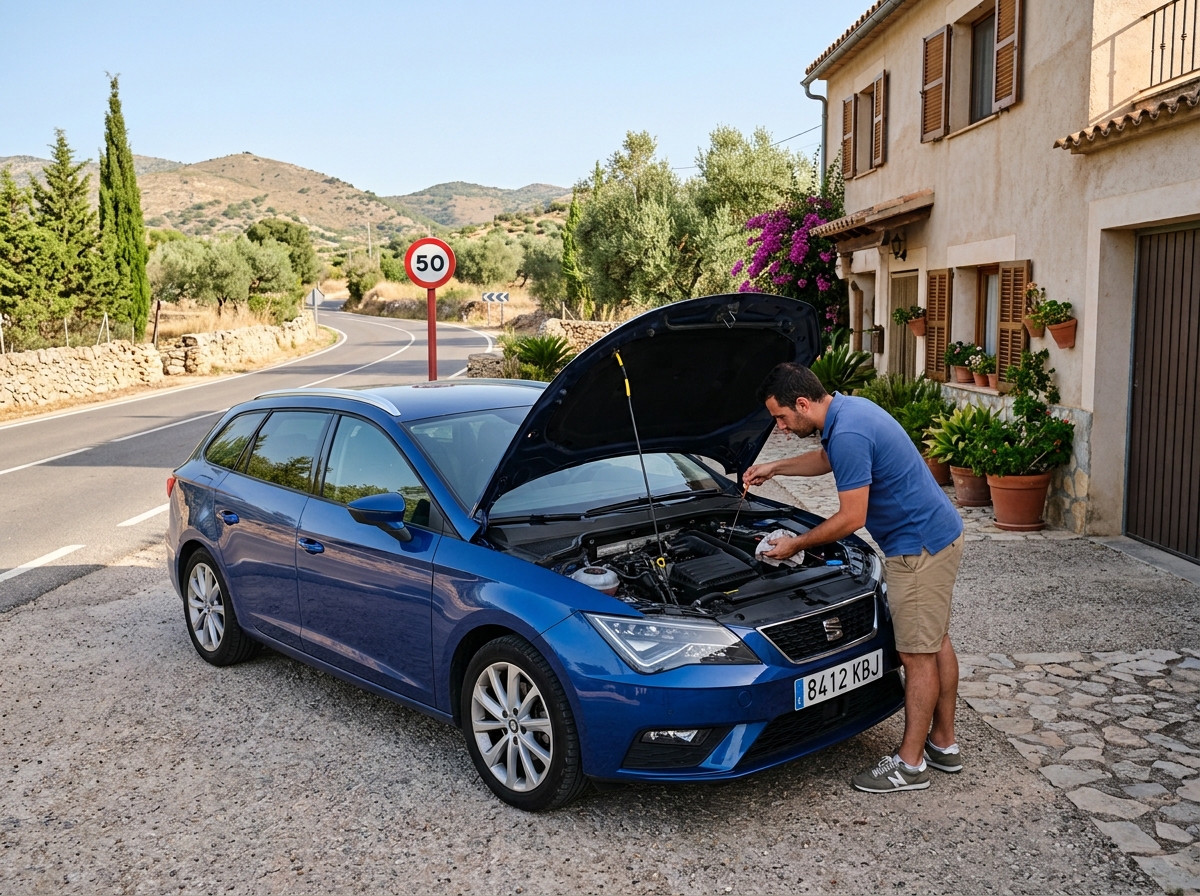

There is something special about driving in Spain during the summer. Long daylight hours, dry roads and the opportunity to explore the country make it one of the best times of year to travel. Yet the same conditions that make summer driving so enjoyable also place additional demands on both drivers and vehicles.
High temperatures, longer journeys, heavier traffic and fully loaded vehicles all combine to increase wear and tear. Fortunately, a little preparation before setting off can help prevent many of the most common problems experienced during the holiday season.
Contents
Summer Is Hard Work for Your Car
Modern vehicles are remarkably reliable, but they still rely on hundreds of components working together under increasingly demanding conditions.
On a typical summer journey your car may spend hours travelling at motorway speeds, climbing mountain roads, sitting in traffic queues and operating in temperatures well above 30°C. Every one of those conditions increases the workload on your engine, cooling system, tyres and brakes.
Preparing your vehicle before you travel is not simply about reducing the chance of a breakdown.
It is about improving safety.
Start Under the Bonnet
You do not need to be a qualified mechanic to carry out some basic visual checks before travelling.
Begin with the engine oil.
Oil lubricates moving parts, helps remove heat and protects the engine from unnecessary wear. Check the level on a level surface with the engine switched off and cooled. If it requires topping up, always use the grade recommended by the manufacturer.
Next, check the coolant.
The cooling system works harder during summer than at any other time of year. Low coolant levels can quickly lead to overheating, particularly in slow-moving traffic or during long climbs. Always check coolant when the engine is completely cold, never immediately after driving.
Finally, refill the windscreen washer reservoir.
It may seem insignificant, but insects, dust and road grime build up quickly during summer, particularly on motorways. Good visibility is essential.
Your Tyres Deserve Special Attention
Your tyres are the only part of the vehicle touching the road.
They support the entire weight of the vehicle, provide grip during braking and cornering, and become significantly hotter during summer journeys.
Before travelling, inspect every tyre carefully.
Look for:
- sufficient tread depth
- cuts or bulges
- uneven wear
- signs of ageing
- correct inflation pressures
Remember that tyre pressures should always be checked when the tyres are cold.
If you are carrying additional passengers or luggage, your vehicle manufacturer may recommend slightly higher tyre pressures. These figures are usually found inside the driver’s door frame or in the owner’s handbook.
Do not forget the spare wheel if your vehicle has one.
Can Your Battery Cope?
Hot weather is often associated with overheating, but many drivers are surprised to learn that high temperatures also shorten battery life.
If your battery has been showing signs of weakness during recent months, summer may expose the problem completely.
Slow starting, dim lights or warning messages should never be ignored before a long journey.
Air Conditioning Is More Than Comfort
Many people think of air conditioning simply as a luxury.
In reality, it is also a safety feature.
A comfortable driver remains more alert than one struggling with excessive heat. If your air conditioning has become less effective or develops unpleasant smells, consider having it serviced before travelling.
Replacing a cabin filter is relatively inexpensive and can significantly improve airflow and comfort.
Check Your Lights
Summer brings longer days, but lights remain essential.
Unexpected storms, tunnels, mountain roads and early morning departures all require good lighting.
Walk around the vehicle and check:
- headlights
- brake lights
- indicators
- reversing lights
- fog lights where fitted
Replacing a failed bulb before travelling is considerably easier than discovering the problem during a journey.
Don’t Forget Your Windscreen
A small stone chip may seem insignificant today.
After several hours of motorway driving and repeated temperature changes, it may become a cracked windscreen.
If you already have damage, consider repairing it before your holiday rather than hoping it will survive another journey.
Carry the Right Equipment
Every vehicle should carry the legally required emergency equipment together with a few sensible additions.
Water, a mobile phone charger, sunglasses, any necessary medication and a basic first aid kit can all prove invaluable during longer journeys.
If travelling through more remote areas, particularly inland during periods of extreme heat, carrying extra drinking water for everyone in the vehicle is simply common sense.
Preparation Saves Time
Many roadside assistance call-outs every summer involve problems that could have been prevented with a few minutes of preparation.
Low tyre pressures.
Flat batteries.
Overheating.
Poor visibility.
Low fluid levels.
None of these are particularly complicated, but all have the potential to spoil a holiday before it has really begun.
The Journey Starts Before You Leave
Preparing your vehicle should never feel like an inconvenience.
It is simply part of travelling responsibly.
A few simple checks before leaving home can reduce the likelihood of delays, improve safety and allow you to concentrate on what really matters — enjoying the journey.
Because the best summer memories are made at your destination, not waiting beside the hard shoulder for recovery assistance.
Discover more from N332.es - Driving In Spain
Subscribe to get the latest posts sent to your email.