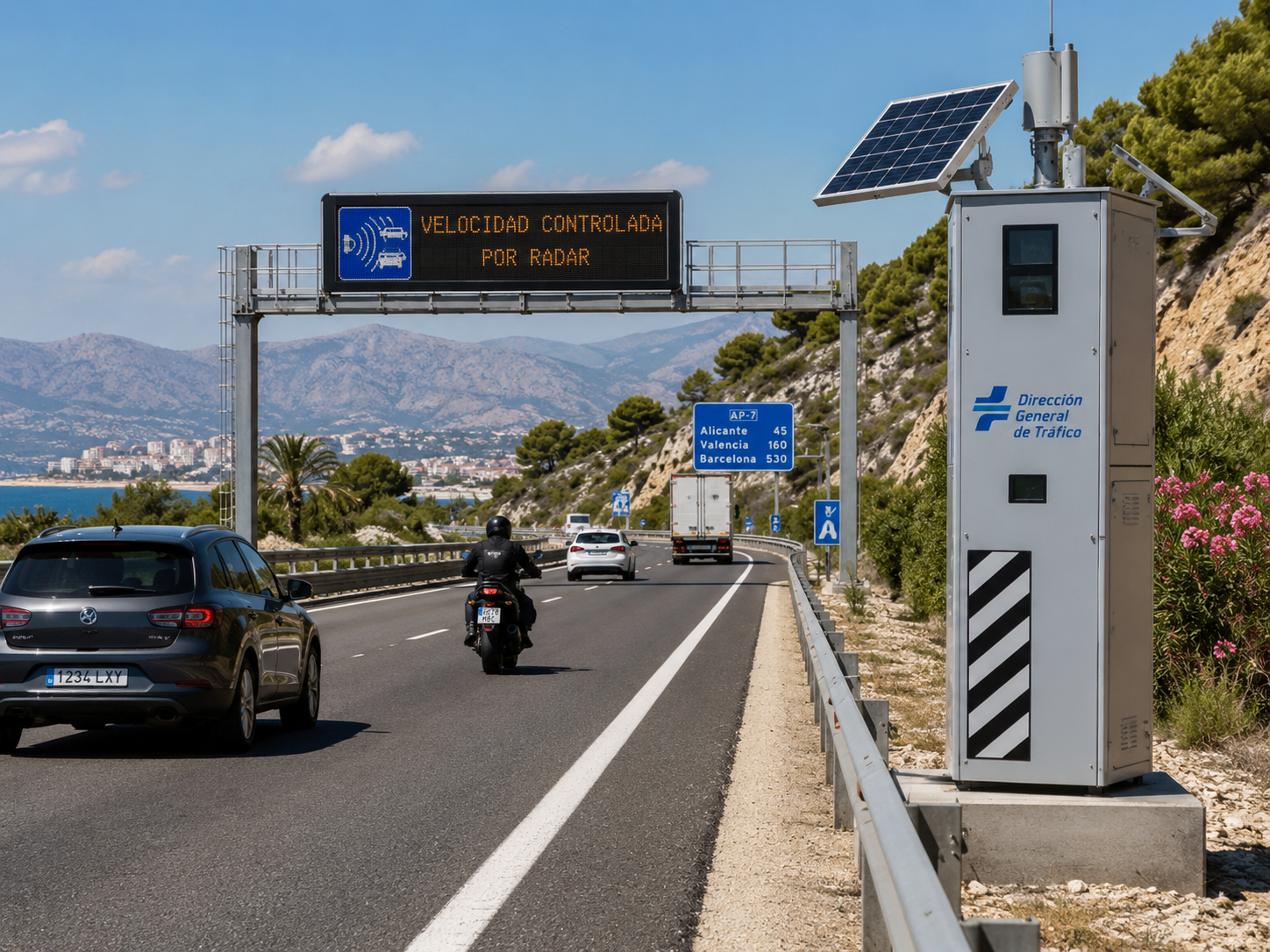

Spain’s traffic authority, the Dirección General de Tráfico, continues to modernise road enforcement technology with the wider introduction of advanced LIDAR-based traffic monitoring systems across the country.
The new systems are designed to improve road safety, traffic monitoring, and incident detection, while also increasing the accuracy of speed enforcement for all vehicle types, including cars, motorcycles, vans, and heavy goods vehicles.
Contents
What Is LIDAR?
LIDAR stands for “Light Detection and Ranging”. Unlike traditional radar systems that typically measure speed at a single point, LIDAR technology uses laser pulses to build a detailed three-dimensional profile of traffic movement.
This allows the system to:
- Measure vehicle speed with high precision
- Identify different types of vehicles
- Monitor traffic flow in real time
- Detect unusual behaviour or incidents on the road
- Improve enforcement accuracy compared to older systems
According to reports, some of these systems are capable of detecting vehicles from distances of up to 200 metres before drivers can clearly identify the enforcement point itself.
Preventing Camera Reactions
For many years, some motorists relied on slowing down only when approaching a visible speed camera, often an offence in itself. However, newer enforcement technology makes that approach increasingly ineffective, so vehicles are forced to slow down, as they should, for longer.
With LIDAR-based monitoring, speed may already have been recorded before the camera unit becomes visible to the driver. As a result, maintaining a safe and legal speed consistently is becoming more important than ever.
The systems are also said to improve the monitoring of motorcycles and smaller vehicles, which historically have sometimes been more difficult for older radar technology to classify accurately.
More Than Just Speed Enforcement
Although speed detection remains one of the primary functions, the technology also supports wider traffic management and road safety operations.
Real-time analysis of traffic conditions can help authorities identify:
- Stationary vehicles
- Sudden congestion
- Possible collisions
- Abnormal traffic patterns
- Dangerous driving behaviour
This information may allow traffic control centres to respond more quickly to incidents and improve overall traffic flow.
Deployment Across Spain
Spain already operates a large network of fixed radars, section control systems, mobile enforcement units, and aerial monitoring. The addition of advanced LIDAR technology forms part of a broader strategy aimed at improving road safety and reducing serious collisions.
Drivers may encounter these systems on motorways, dual carriageways, and secondary roads across various autonomous communities.
Key Advice for Motorists
The introduction of more advanced monitoring technology reinforces some simple but important road safety principles:
- Respect posted speed limits at all times
- Avoid sudden braking when approaching enforcement zones
- Pay attention to changing speed limits and road signs
- Maintain safe distances and smoother driving habits
- Stay alert, especially in variable traffic conditions
Consistent and attentive driving not only reduces the risk of fines, but also contributes to safer roads for everyone.
Technology and Road Safety
The Dirección General de Tráfico continues to emphasise that the purpose of modern enforcement systems is road safety rather than punishment alone.
Advanced technologies such as LIDAR provide authorities with more accurate information, better traffic analysis, and faster incident detection. At the same time, they encourage drivers to adopt safer and more predictable driving habits.
As Spain continues to expand and modernise its traffic monitoring infrastructure, motorists should expect enforcement systems to become increasingly sophisticated, connected, and proactive in the years ahead.
Discover more from N332.es - Driving In Spain
Subscribe to get the latest posts sent to your email.