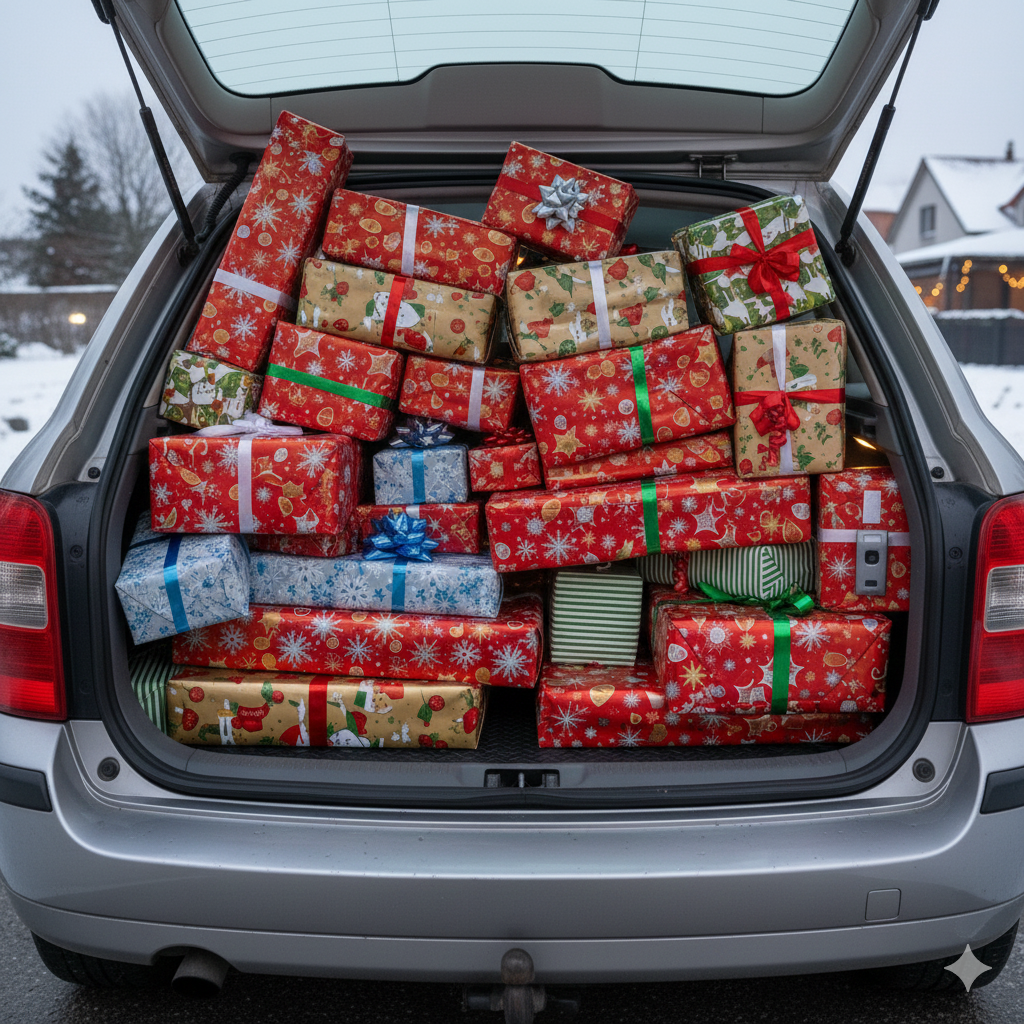

December brings a surge in luggage-laden vehicles across Spain. Families travel for Christmas, visitors arrive from abroad, and car boots fill with gifts, suitcases, and seasonal shopping. While most drivers focus on reaching their destination, few consider how the way they load their car could affect both safety and insurance outcomes. Improperly secured items can transform a minor incident into a serious collision — and may influence how an insurer interprets liability.
Loose Items Can Turn Dangerous
In sudden braking or a collision, unsecured objects behave unpredictably. A small suitcase, toolbox, or Christmas hamper can suddenly be thrown forward with enormous force. Items striking passengers can cause injury and create chaos inside the car, increasing the severity of the incident.
From an insurance perspective, this raises questions around driver negligence. If poor loading contributed to the consequences of a crash, an insurer may take this into account during assessment.
Weight Distribution Affects Handling
Overloading a vehicle, or placing too much weight on one side, compromises stability. A heavily packed boot reduces rear grip, increases braking distances, and alters steering response — especially in cold or wet conditions. Drivers may find themselves struggling to control the car on bends or during emergency manoeuvres.
Insurers expect drivers to maintain their vehicles in a safe condition. If an accident occurs because the car was overloaded or handled unpredictably due to poor loading, the claim may become more complex.
Obstructed Visibility Leads to Claims
Stacking bags or shopping on the rear parcel shelf is a common festive-season habit. However, it significantly reduces rear visibility and increases the risk of misjudging distances or failing to spot vehicles or pedestrians when reversing.
Reduced visibility can be considered contributory negligence, meaning the driver failed to take reasonable steps to ensure safe operation of the vehicle.
Tips for Safe and Insurable Loading
To avoid safety problems and potential claim complications:
- Place heavy items low and as far forward as possible.
- Secure bags using straps or cargo nets.
- Keep the passenger cabin clear of loose items.
- Maintain full rear visibility by keeping shelves and seats unobstructed.
- Check the vehicle’s maximum load rating in the handbook.
Safer Loading, Stronger Protection
Festive travel increases risks for everyone, and the way a car is loaded plays a bigger role in accident prevention than most drivers realise. By organising luggage properly, maintaining clear visibility, and respecting vehicle limits, drivers not only protect themselves and their passengers — they also ensure that, should something go wrong, their insurance works exactly as expected.
Discover more from N332.es - Driving In Spain
Subscribe to get the latest posts sent to your email.