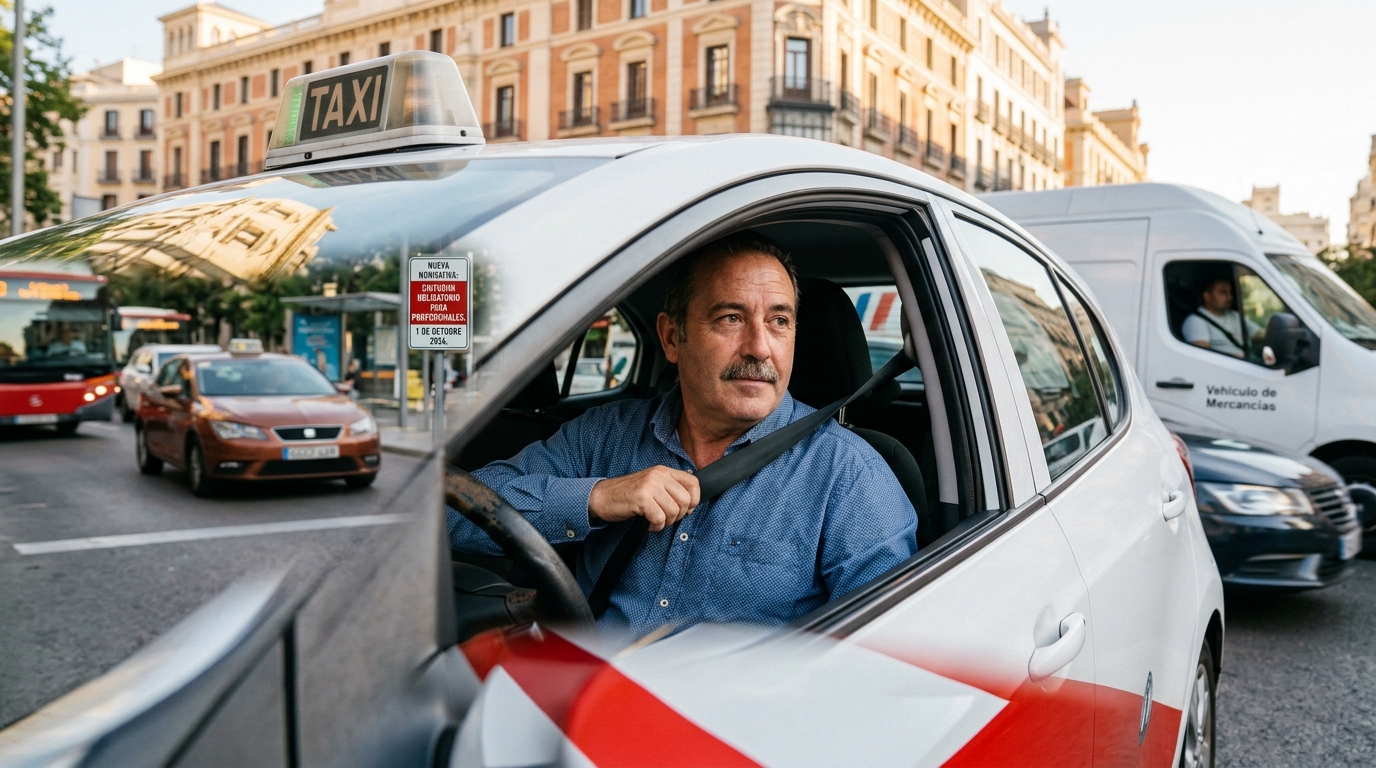

There are few things in a car more familiar than a seat belt.
Most drivers have been putting one on automatically for years.
Click.
Start the engine.
Drive.
Because it has become such a normal part of driving, it is easy to forget just how important that simple action is.
A seat belt is not there because a collision is expected.
It is there because nobody can predict when one might happen.
A few seconds can make the difference
A collision happens remarkably quickly.
There is no time to decide whether you would like to put your seat belt on.
There is no opportunity to reach across the cabin.
There is certainly no time to brace yourself.
The belt needs to be in position before anything happens.
That is why “I’ll put it on in a minute” is such a poor decision.
So is assuming that a journey is too short for it to matter.
The short journey is still a journey
Perhaps the most common psychological trap is familiarity.
You are driving to the local shop.
The school is five minutes away.
The taxi journey is only around the corner.
You have driven this road hundreds of times.
None of that changes the laws of physics.
Another vehicle can make a mistake.
A pedestrian can step into the road.
A tyre can fail.
A vehicle can lose control.
The unexpected does not care how long the journey is.
The law is changing too
From 1 October 2026, Spain removes several of the exemptions that previously allowed certain drivers to travel without a seat belt in particular circumstances.
The changes specifically remove the exemptions applying to drivers of taxis, goods vehicles and vehicles used for driving instruction. They will therefore be required to wear the belt while driving.
That is an important change.
But perhaps the more interesting question is why those exemptions existed in the first place.
Familiarity is not protection
Professional drivers spend enormous amounts of time behind the wheel.
A taxi driver may complete dozens of journeys in a day.
A delivery driver may spend most of their working day inside a van or lorry.
A driving instructor may spend hours in a vehicle.
That familiarity can create a sense that the vehicle is a workplace rather than a potential source of serious injury.
But a collision does not distinguish between a professional and occasional driver.
The seat belt works in exactly the same way for both.
The belt and the airbag work together
Modern vehicles contain multiple safety systems.
Airbags.
Seat-belt pretensioners.
Head restraints.
Crumple zones.
Electronic stability systems.
They are designed to work together.
The seat belt is an essential part of that system.
An airbag is not a replacement for a belt.
The vehicle is designed around the occupant being restrained in the correct position.
What about passengers?
The responsibility does not stop with the driver.
Passengers should wear their belts too.
A passenger who is unrestrained can become a serious danger to themselves and to other occupants during a collision.
Parents should make sure children are properly secured using the appropriate child restraint.
Adults should set the example.
And nobody should treat the back seat as somehow safer simply because it is further from the steering wheel.
There are still limited exemptions
The October changes do not mean that every conceivable exemption disappears.
The revised rules retain limited circumstances in which belt use is not required, including certain manoeuvres such as reversing or parking and specified emergency-service circumstances.
That is very different from saying that a driver can choose not to wear a belt because they are working, travelling slowly or making a short journey.
Convenience is not a safety argument
There are many reasons people give for not wearing a seat belt.
It is uncomfortable.
I am only going a short distance.
I need to get in and out frequently.
I have done this for years.
None of those reasons changes the risk.
The belt does not need to be convenient.
It needs to be there when it is needed.
Make it automatic
The best approach is not to think about whether you should wear your seat belt.
Make it part of starting the vehicle.
Door closed.
Seat adjusted.
Belt fastened.
Then drive.
It is one of the simplest habits any driver can develop.
The new rule reinforces an old lesson
The law is changing because some of the previous exemptions are no longer considered justified.
But the underlying principle has not changed.
The person inside the vehicle remains vulnerable when a collision occurs.
The seat belt is there to reduce that vulnerability.
It does not matter whether you are a taxi driver, delivery driver, instructor, commuter or someone driving to the supermarket.
It does not matter whether the journey takes two minutes or two hours.
It does not matter whether you know the road.
The belt should already be fastened before the vehicle moves.
Because the simplest safety measures are often the ones we are most likely to take for granted.
Discover more from N332.es - Driving In Spain
Subscribe to get the latest posts sent to your email.