

Following the tragic death of a driver whose car was swept away by a flooded riverbed in Olivella, Barcelona, this safety guide highlights the crucial steps to take during severe weather. Drivers are urged to heed official warnings and never attempt to cross flooded roads, as even shallow water can disable an engine or sweep a car away. If your vehicle does become trapped, doors will not open due to water pressure, making windows your primary escape route; staying calm, avoiding knee-jerk reactions, and knowing how to utilise air pockets can save your life.
Emergency services in Catalunya have confirmed the tragic death of a motorist in Olivella, Barcelona, after his vehicle was swept away while attempting to cross a flooded dry riverbed (riera). Bombers de la Generalitat located the man’s body approximately 500 metres from the vehicle, and the identification was subsequently confirmed by Mossos d’Esquadra. The incident occurred during an episode of violent weather, which prompted Protecció Civil to issue emergency mobile phone alerts across several comarcas, including Garraf.
While tragic incidents like the one in Olivella serve as a stark reminder of the immense power of moving water, understanding the risks and knowing how to respond can be life-saving.
Contents
How to manage flooding on the roads
1. Avoid the risk before setting off
The most critical safety measure is prevention. Whenever adverse weather is forecast, monitor official meteorological bulletins and heed all instructions issued by authorities and emergency agencies. When red or orange alerts are active, travel should be restricted entirely to essential journeys. If you do not need to be on the road, stay at home until conditions improve.
2. Never drive into standing or flowing water
If you encounter a flooded stretch of road, a submerged dip, or a flooded rambla or riera, do not attempt to cross. Turn around and find an alternative route.
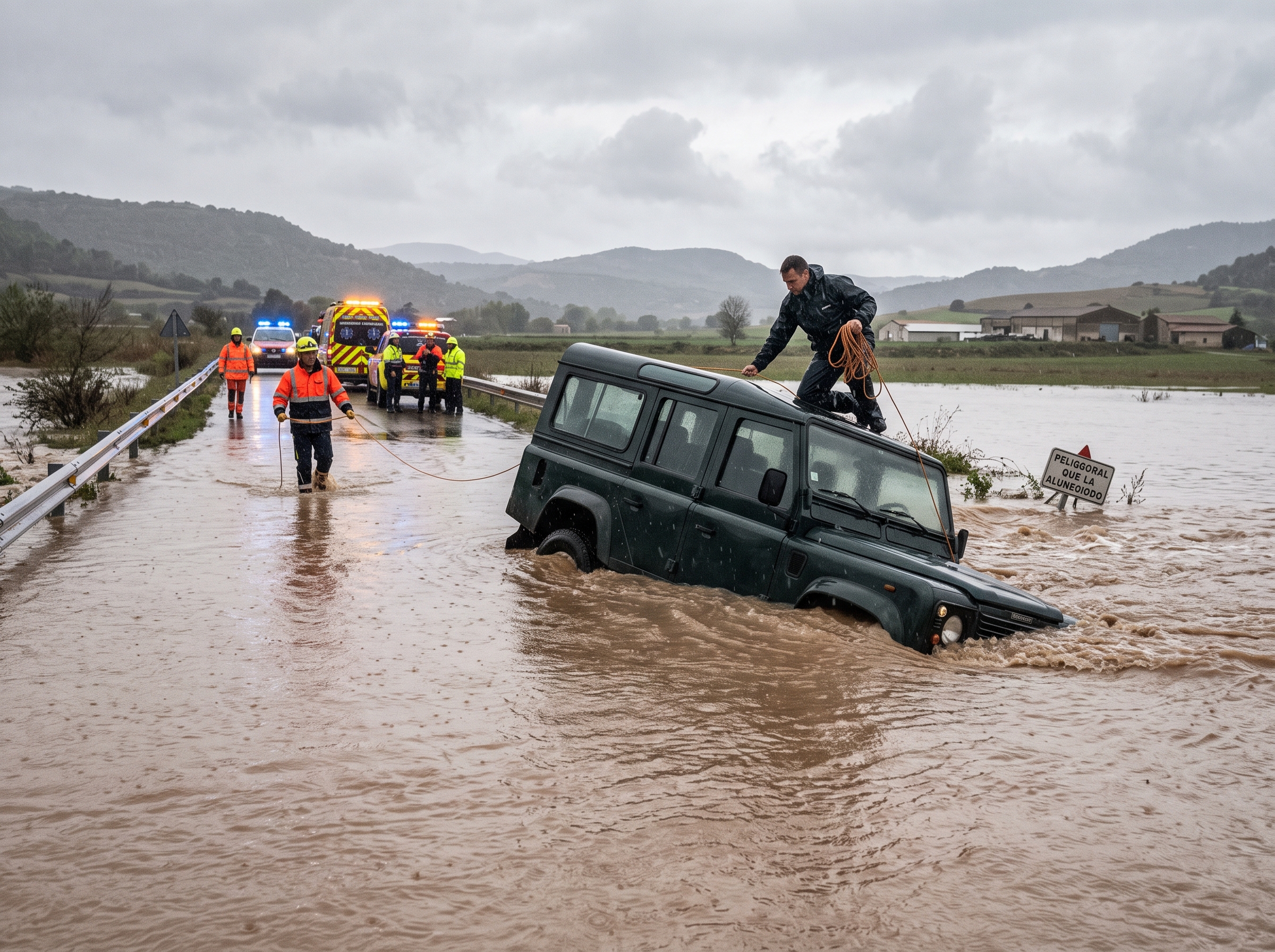
It takes only a few centimetres of water to enter an air intake, stall an engine, or disrupt critical electrical systems, leaving a vehicle completely immobilised. Furthermore, flash floods can escalate within seconds. A shallow trickle across the tarmac can rapidly become a violent torrent capable of lifting, rotating, and sweeping away even large four-wheel-drive vehicles.
3. What to do if your vehicle is trapped
If the unthinkable happens and your car becomes surrounded or swept away by flood water, remaining calm is your single most important defence. Panic leads to rushed, knee-jerk decisions that can increase danger.
Assess the situation carefully and act methodically:
- Call for help immediately: Contact emergency services on 112 as soon as you realise you are stranded, providing your exact location before water disrupts communications.
- Undo seatbelts: Unfasten your seatbelt and instruct all passengers to do the same immediately.
- Understand the doors will not open: As water levels rise outside the vehicle, external water pressure makes pushing car doors open physically impossible. Do not waste energy and time trying to force the doors.
- Escape through the windows: Your primary route of escape is through the glass. Open electric windows immediately before the electrical system fails. If the windows will not roll down, you must break the glass. While side windows are designed to shatter with dedicated emergency escape tools, striking the glass firmly with a pointed object can clear an exit. The windscreen can also be targeted with an impact tool, offering the largest exit aperture to climb out onto the vehicle’s roof.
- Utilise air pockets if the car submerges: In the worst-case scenario where the car begins to submerge rapidly before you can exit, an air pocket will form near the roof lining. Breathe steadily in this pocket while preparing to unlatch or break a window, waiting until pressure equalises if a door must ultimately be pushed open.
- Get to higher ground: Once out of the cabin, climb onto the car roof to stay above rising water and make yourself visible to rescue teams, rather than jumping into rapid, unpredictable currents.
Above all, do not underestimate the speed and force of water on Spanish roads during intense downpours. Staying informed and refusing to enter flooded crossings remains the ultimate guarantee of safety.
Understanding the R-100 road sign
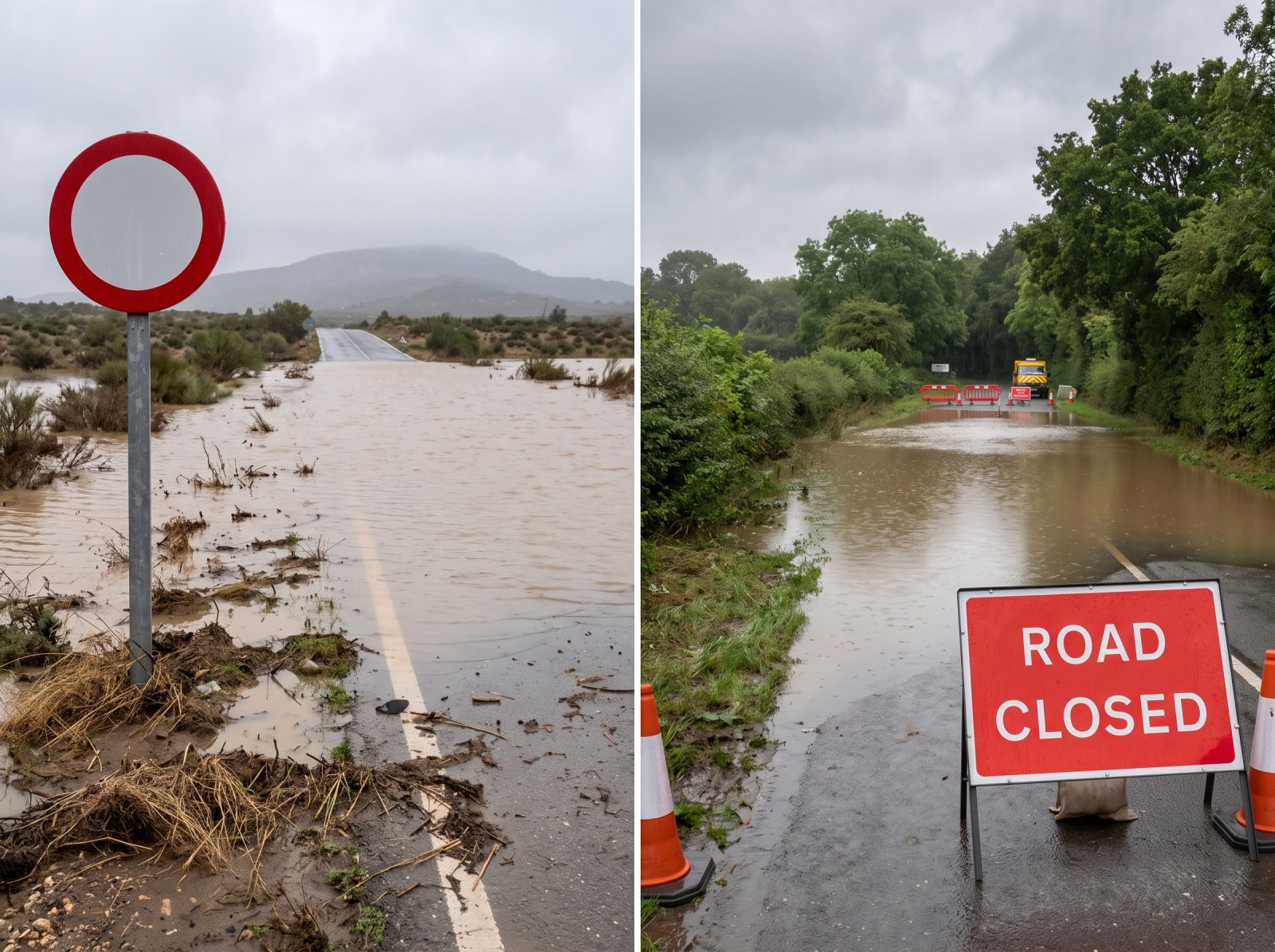
During periods of heavy rain, flooding, or infrastructure damage, road safety authorities regularly close affected routes. In Spain, this is frequently marked by the R-100 road sign: a circular white disc with a red border and no pictograms or text in the centre.
The R-100 signifies circulation prohibited, meaning no vehicles of any type are permitted to travel in either direction. While it shares visual similarities with the R-101 No Entry sign (a solid red circle with a horizontal white bar), the R-100 is far more restrictive. The R-101 restricts access from one specific direction whilst allowing traffic to travel towards you, whereas the R-100 closes the road entirely to all vehicles in both directions.
For UK-qualified drivers, this sign represents a crucial difference from the familiar British red rectangular sign displaying the words “ROAD CLOSED”. Although road closure signs in any country are too often ignored by impatient drivers, the R-100 must be respected without exception. Seeing the R-100 indicates that the road ahead is impassable, unsafe, or actively hazardous, and ignoring it puts lives at risk.
Discover more from N332.es - Driving In Spain
Subscribe to get the latest posts sent to your email.

You must be logged in to post a comment.