As the new school year begins, sharing first-day uniform pictures on social media has become a proud family tradition, but innocent photos can reveal a startling amount of private data. Trafford the N332 Road Safety Raccoon helps illustrate how a single snapshot can disclose a child’s name, school, exact home address, vehicle details, local bus routes and even embedded GPS coordinates. Taking a moment to crop out identifiable background markers helps keep back to school milestones safe and secure for the entire family.
As children head back to the classroom, proud parents across Europe take to social media to share that classic front doorstep picture. It is a traditional milestone moment, capturing fresh uniforms, shiny shoes and excited smiles. However, road safety and child protection advocates, including the Guardia Civil, consistently remind families that innocent snapshots shared online can inadvertently hand strangers a complete dossier of personal information.
To highlight these risks without causing unnecessary alarm, Trafford the N332 Road Safety Raccoon has stepped in to help illustrate a vital privacy lesson. Looking closely at an everyday back to school photograph reveals three distinct layers of information that are routinely exposed to the public domain.
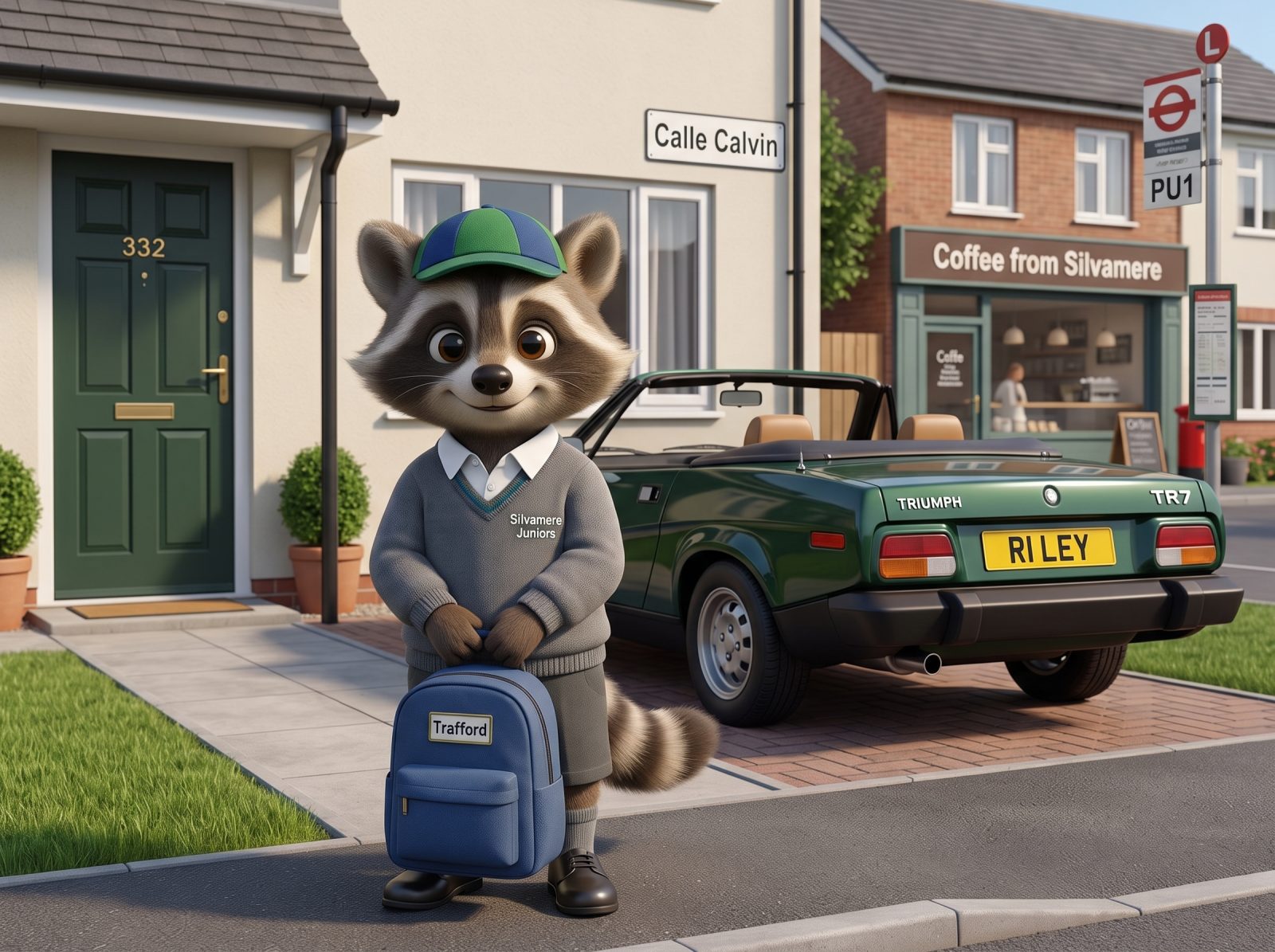
The first layer involves the obvious visual details. The photograph clearly reveals the child’s facial features and appearance, making them instantly identifiable in public. Long before the rise of modern digital tools, photographs could be manipulated, cropped or reused without consent. Once an identifiable image is published online, control over how that likeness is saved, circulated or repurposed is largely lost.
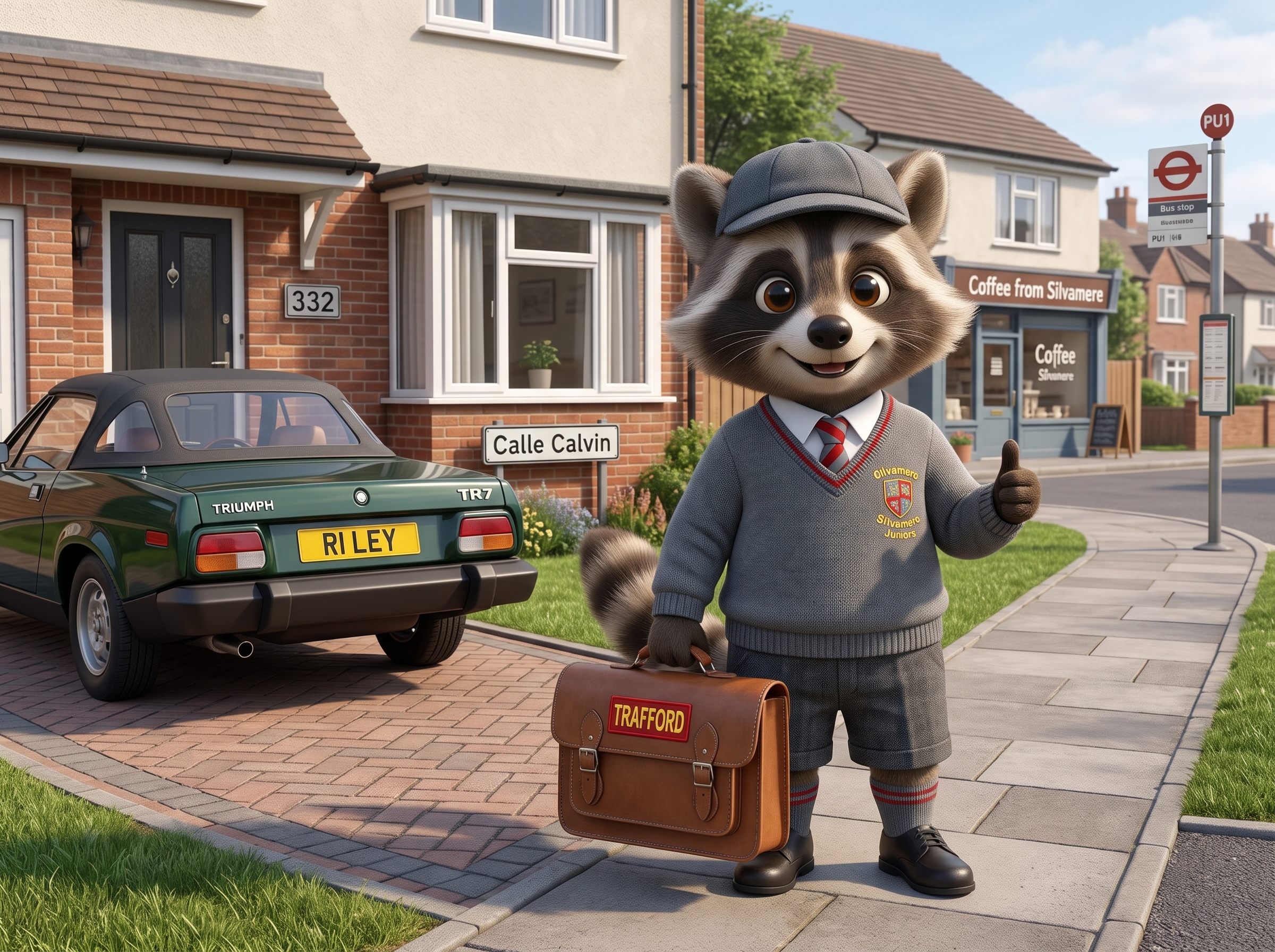
The second layer consists of details hidden in plain sight, scattered across the background and clothing. In this single frame, the child’s first name is boldly displayed across the school bag, while the jumper clearly identifies the specific school, “Silvamere Juniors”. This combination alone provides a child’s name and weekday location. Looking slightly further back, the door shows the house number 332, positioned right next to an official street nameplate reading “Calle Calvin”, pinpointing an exact residential address.
The background clues do not end there. A parked car displays the complete registration plate “RI LEY”, which can connect the vehicle directly to registered keeper records. The car in our fictional scene here belongs to Riley Via, hence the personal number plate, but any registration plate can be an identifying factor, and even the car itself can be a reassuring point of conversation that shows an element of personal knowledge. Nearby landmarks, including a local business named “Coffee from Silvamere” and a dedicated bus stop sign clearly marking route “PU1”, provide distinct reference points that allow anyone viewing the picture to confirm geographic areas, daily routines and transport corridors. What feels like a private family photograph outside the front door quickly becomes an open map of a family’s daily movements.
The third layer is invisible to the human eye. Digital photographs taken on modern mobile devices often embed hidden technical data known as EXIF data. Unless stripped automatically by privacy-conscious platforms or disabled on device settings, this information can log the exact camera model, timestamp, and precise GPS coordinates indicating where the picture was taken down to the nearest metre.
The goal of this campaign is not to generate fear, but to encourage healthy caution. Review privacy settings on social media accounts, check mobile location permissions, and take a quick moment to crop out house numbers, vehicle registration plates, street signs and school emblems before pressing share. A simple cropping tool can keep personal milestones special without compromising safety.
Discover more from N332.es - Driving In Spain
Subscribe to get the latest posts sent to your email.

You must be logged in to post a comment.